
Daderot / Public domain, via Wikimedia Commons
Fibrous tussock sedge: complete guide
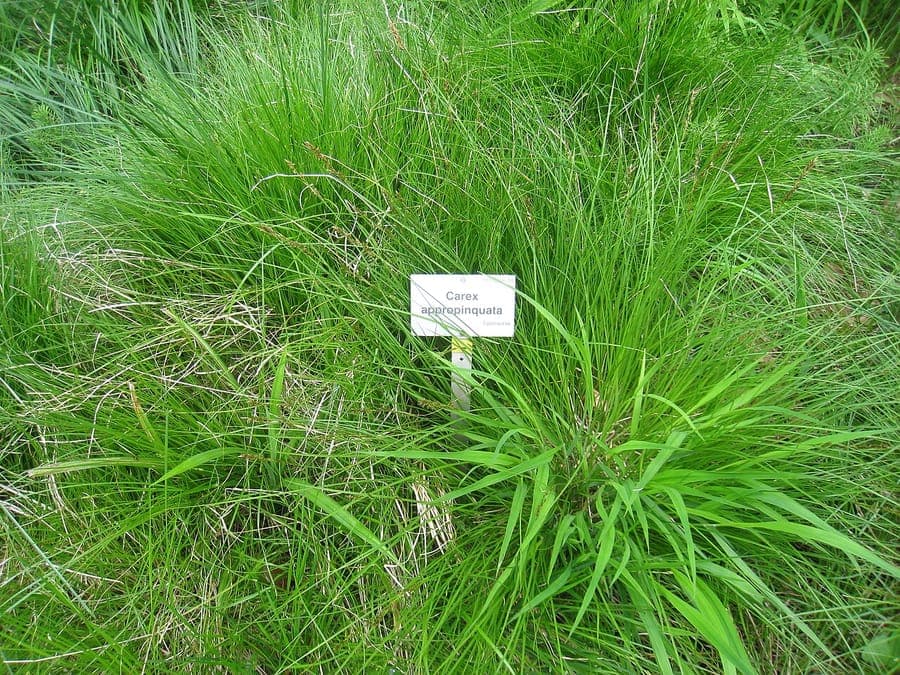
Carex appropinquata
Want to see Fibrous tussock sedge: complete guide in your garden?
1 minute, no credit card
Overview
Carex appropinquata, commonly known as fibrous tussock sedge, is a clump-forming perennial sedge that thrives in moist to wet soils across temperate regions. Native to parts of Central and Eastern Europe - including Austria, Belarus, and the Baltic States - this Cyperaceae species brings a refined texture to garden landscapes. It forms tight, arching mounds of narrow leaves and produces dark brown flowering spikes from April through July. As an evergreen sedge, it maintains structure and interest in the garden year-round, making it a smart pick for low-maintenance and wildlife-friendly designs.
On gardenworld.app you can create a custom garden layout that highlights the natural appeal of fibrous tussock sedge, especially in areas prone to seasonal moisture or in rain garden schemes where drainage is slow.
Appearance & bloom cycle
Fibrous tussock sedge reaches a mature height of 40 to 60 cm, with fine, linear leaves that arch gracefully outward. The foliage is mid-green, turning slightly golden in autumn but staying largely evergreen through winter. In April, densely packed flower spikes emerge - dark brown to nearly black - and remain visible through summer. These spikes are held close together on short stems, giving rise to the species name appropinquata, meaning 'drawn near'. While not showy like flowering perennials, the spikes add architectural contrast and attract small pollinators.
Seed heads mature in early summer and may persist into fall, providing visual interest and food for finches and other small birds. The plant maintains a tidy form throughout the seasons, with minimal dieback.
Ideal location
This sedge thrives in full sun to light shade, scoring an 8 out of 10 on the light scale. It performs best with at least 6 hours of direct sunlight daily. In full sun, the clumps stay dense and upright; in deep shade, they tend to sprawl and lose vigor. It's ideal for the front of moist borders, along pond edges, or in damp meadow plantings.
It excels in wetland gardens, rain gardens, or areas with poor drainage. Avoid dry, sandy spots unless irrigated frequently. Plant in groups of 5–7 for a naturalistic effect, spacing each clump 30–40 cm apart.
Soil requirements
Fibrous tussock sedge prefers alkaline soils with a pH between 7.5 and 8. It grows well in loamy or sandy loam soils that retain moisture but drain moderately. Avoid acidic or heavily humus-rich soils unless amended with ground limestone to raise pH. The plant does not tolerate waterlogged conditions for extended periods, but consistent moisture is key.
Before planting, test your soil pH with a simple kit. If below 7.5, apply a light dressing of garden lime in autumn or early spring. Work compost into the planting hole to improve soil structure, but avoid excessive organic matter that may encourage rot.
Free design
Want to see Fibrous tussock sedge: complete guide in your garden? Make a free design now.
Watering
This sedge has moderate to high water needs. During the growing season (April to September), keep the soil evenly moist. In dry spells, water deeply 2–3 times per week, especially for young plants. Established clumps are somewhat resilient but still benefit from supplemental watering in prolonged droughts.
Reduce watering in winter, as the plant enters dormancy. However, in mild, frost-free winters with little rainfall, occasional watering may be needed to prevent desiccation.
Pruning
Minimal pruning is required. In late winter or early spring (February to March), gently comb through the foliage with a hand rake to remove dead or damaged leaves. This encourages fresh growth and keeps the clump neat. Avoid cutting back hard - the plant grows from the crown, and severe pruning can weaken it.
Leave flower spikes intact over winter for visual interest and to support overwintering insects. Remove them in early spring if they become ragged.
Maintenance calendar
- Jan: Check for frost damage, add light mulch if needed
- Feb: Rake out old foliage
- Mar: Divide or plant new clumps
- Apr: Begin regular watering, monitor for new shoots
- May: Maintain moisture, watch for drooping leaves
- Jun: Peak bloom, ensure adequate shade in heatwaves
- Jul: Flowering fades, trim spent spikes if desired
- Aug: Low maintenance, check for dryness
- Sep: Reduce watering as growth slows
- Oct: Stop fertilizing, clear fallen leaves from clumps
- Nov: No action needed, monitor soil moisture
- Dec: Protect young plants with mulch in severe cold
On gardenworld.app you can generate a personalized maintenance calendar tailored to your local climate and Carex appropinquata's needs.
Winter hardiness
Fibrous tussock sedge is hardy in USDA zones 5 to 8, tolerating winter temperatures down to -20°C. Mature plants usually survive without protection, but young or recently planted specimens benefit from a light mulch of straw or leaf litter in harsh winters. Foliage may bronze in cold weather but rebounds in spring.
Companion plants
Pair this sedge with other moisture-loving perennials such as Carex vulpinoidea, Filipendula ulmaria, Eutrochium maculatum, and Iris versicolor. For contrast, include golden grasses like Hakonechloa macra 'Aureola' or silver-foliage plants like Artemisia ludoviciana. It also works well with sedges and rushes in naturalistic planting schemes.
Avoid pairing with aggressive spreaders that may outcompete the sedge. Plant in drifts for best effect, and avoid overcrowding to ensure good air circulation.
Closing
Fibrous tussock sedge is a dependable, textural plant for moist, sunny garden spots. Its fine foliage, dark flower spikes, and year-round presence make it a standout in wetland gardens and low-maintenance landscapes. With minimal pruning and moderate water needs, it's a practical choice for gardeners seeking beauty with little fuss.
You can find Carex appropinquata at garden centres across the UK and Europe. Look for healthy, well-rooted plants with vibrant green foliage. Avoid dried-out or yellowing specimens. With proper placement and care, this sedge will thrive for years, adding subtle elegance to your garden design.
Want to see Fibrous tussock sedge: complete guide in your garden? Make a free design now.
Upload a photo, pick a style, and get a photorealistic design with plant list in under a minute.
No credit card required


Similar plants
Flat-stemmed club-rush: complete guide
Bolboschoenus planiculmis
Everything about Bolboschoenus planiculmis: growing conditions, watering, care, and use as a pond margin or wetland plant in garden design.
Great Plains flatsedge: complete guide
Cyperus lupulinus
Everything about Great Plains flatsedge (Cyperus lupulinus): growing conditions, care, garden uses, and ecological value. Tips for pond margins and dry sandy soils.
Golden beak sedge: complete guide
Rhynchospora corymbosa
Everything about golden beak sedge (Rhynchospora corymbosa): a dramatic tropical marginal for pond edges, bog gardens, and wet habitats.