
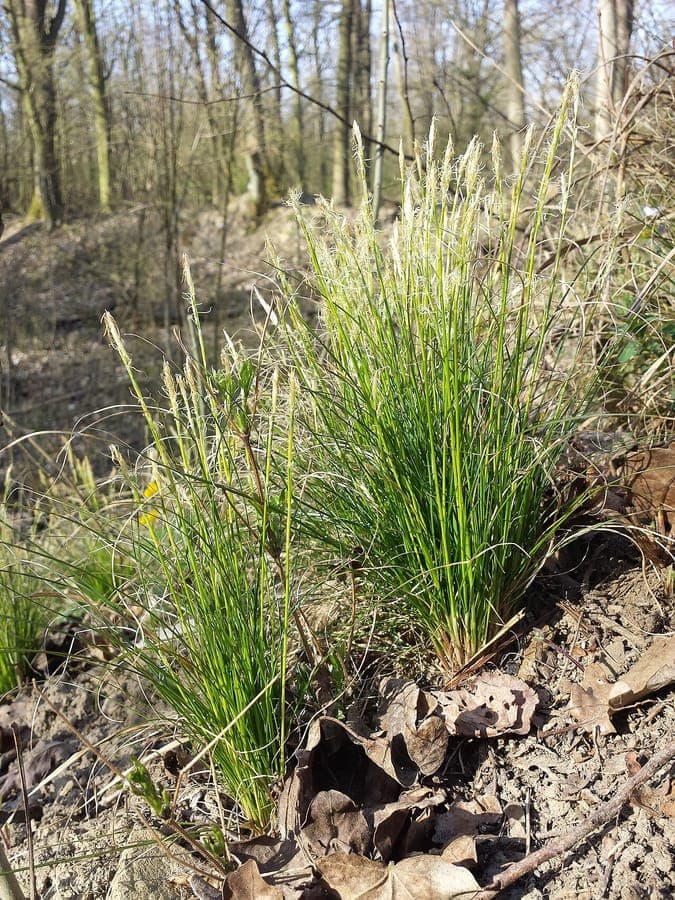
Stefan.lefnaer / CC BY-SA 4.0, via Wikimedia Commons
White sedge: complete guide
Carex alba
Want to see White sedge: complete guide in your garden?
1 minute, no credit card
Overview
Carex alba, or White sedge, is a quiet achiever in the world of ornamental grasses. Native to forested regions across central and eastern Europe - from Austria to Kazakhstan - it thrives in cool, shaded conditions where many other plants struggle. If you've got a tricky spot under trees or along a north-facing wall, this sedge might be your best bet. It's not flashy, but it brings texture, year-round presence, and resilience to low-light gardens.
What sets White sedge apart is its ability to form dense, neat clumps without spreading aggressively. It stays where you plant it, making it ideal for structured naturalistic borders. On gardenworld.app, you can design a planting scheme that integrates Carex alba seamlessly into shaded garden layers, balancing height and texture with ease.
Appearance & bloom cycle
White sedge grows in compact, radiating tufts of fine, bright green foliage, reaching 20–35 cm in height. The leaves are narrow and slightly arching, giving the plant a soft, flowing look. In late spring (May to June), slender stems rise to about 50 cm, bearing small, inconspicuous flowers that range from pale beige to light brown. Despite the name 'white', the blooms aren't truly white - they're more of a silvery cream, which catches the light beautifully in dappled shade.
After flowering, the seed heads mature and gradually fade. The foliage remains evergreen in milder climates, turning a subtle olive-green in winter. In colder areas, it may brown slightly but still holds its form. There's no dramatic dieback, which means your garden keeps its structure through the colder months.
Ideal location
White sedge prefers partial to full shade. It performs best under deciduous trees or on the shady side of shrubs, where it gets filtered sunlight. In full sun, it demands consistent moisture - otherwise, the leaves can scorch and dry out. Morning sun with afternoon shade works well in cooler zones.
Avoid hot, south-facing spots unless the soil stays reliably damp. This plant is not drought-tolerant in exposed conditions. If you're unsure about light levels in your garden, gardenworld.app has tools to help map sun exposure and recommend shade-tolerant plants like Carex alba.
Soil requirements
It likes fertile, humus-rich soil that's well-draining but moisture-retentive. Loamy or clay-loam soils are ideal, as long as they don't become waterlogged. A pH between 5.5 and 7.0 suits it perfectly. Avoid very sandy soils unless you amend them with compost or leaf mould to improve water-holding capacity.
When planting, mix in a generous amount of organic matter. This boosts root establishment and helps young plants withstand dry spells. Once established, Carex alba handles normal garden soil with ease.
Free design
Want to see White sedge: complete guide in your garden? Make a free design now.
Watering
Keep the soil consistently moist, especially during the first two growing seasons. Water weekly during dry spells in summer, giving a deep soak to encourage deep root growth. After establishment, it tolerates short dry periods but looks best when not stressed.
Mulching with leaf litter or compost in spring helps retain moisture and reduces watering needs. Avoid overhead watering in winter, as wet foliage in cold weather can promote fungal issues.
Pruning
Pruning is minimal. Since the plant is semi-evergreen, don't cut it back in autumn. In early spring (March), comb through the clump by hand to remove any dead, damaged, or tatty leaves. This encourages fresh growth and keeps the plant looking tidy. Use your fingers or a fine-tooth rake - never hedge trimmers, which can shred the delicate blades.
No fertiliser is needed unless the soil is very poor. A light top-dressing of compost in spring is sufficient.
Maintenance calendar
- Jan: Check for winter damage, ensure no water pooling
- Feb: Monitor for compaction under snow
- Mar: Remove old foliage, apply light compost
- Apr: New growth emerges, increase watering
- May: Flower stems appear, watch for slugs
- Jun: Peak bloom, minimal care needed
- Jul: Monitor for drought stress in sunnier spots
- Aug: Growth slows, reduce watering gradually
- Sep: Foliage starts to firm, avoid feeding
- Oct: Leave fallen leaves as natural mulch
- Nov: Protect young clumps with leaf litter
- Dec: Winter check, ensure good drainage
Winter hardiness
Carex alba is hardy in USDA zones 4–8 (-34°C to -12°C). It survives harsh winters with little issue, especially once established. In zone 4, a light mulch of dry leaves or straw helps protect new shoots. Avoid wet soils in winter - that's the real enemy.
Companion plants
Pair White sedge with other shade-loving perennials: Hosta, Lamium maculatum, or Brunnera macrophylla. It also works well under taller grasses like Calamagrostis or as a groundcover beneath shrubs like Viburnum or Fatsia japonica. The fine texture contrasts beautifully with broad-leaved plants and adds movement to still areas.
Use it to soften hardscaping - it looks great spilling over a stone step or edging a woodland path.
Closing
Carex alba isn't going to win any beauty contests, but it's a reliable, graceful worker in the shade garden. It asks for little and gives back structure, texture, and year-round interest. Buy it from garden centres in spring or early autumn - look for 1-litre pots with healthy green foliage. Plant in groups of three or five for best effect. Whether you're refreshing a border or designing a new woodland garden, this sedge earns its place.
Want to see White sedge: complete guide in your garden? Make a free design now.
Upload a photo, pick a style, and get a photorealistic design with plant list in under a minute.
No credit card required


Similar plants
Flat-stemmed club-rush: complete guide
Bolboschoenus planiculmis
Everything about Bolboschoenus planiculmis: growing conditions, watering, care, and use as a pond margin or wetland plant in garden design.
Great Plains flatsedge: complete guide
Cyperus lupulinus
Everything about Great Plains flatsedge (Cyperus lupulinus): growing conditions, care, garden uses, and ecological value. Tips for pond margins and dry sandy soils.
Golden beak sedge: complete guide
Rhynchospora corymbosa
Everything about golden beak sedge (Rhynchospora corymbosa): a dramatic tropical marginal for pond edges, bog gardens, and wet habitats.