
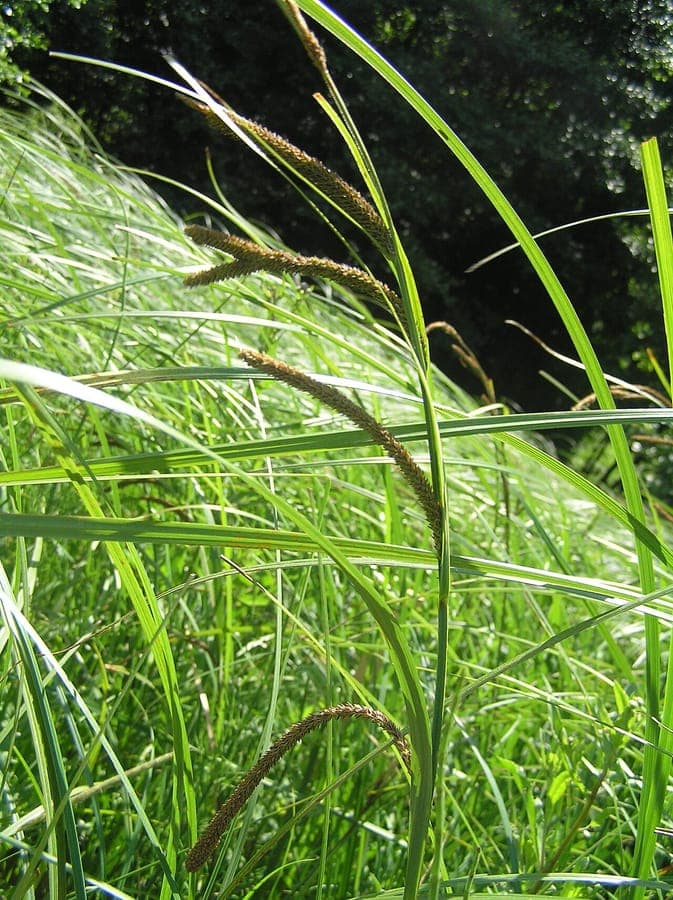
Petr Filippov / CC BY-SA 3.0, via Wikimedia Commons
Slender tufted-sedge: complete guide
Carex acuta
Want to see Slender tufted-sedge: complete guide in your garden?
1 minute, no credit card
Overview
Carex acuta, commonly known as slender tufted-sedge, is a quiet achiever in the garden - not flashy, but incredibly reliable. Native across much of central and northern Europe, including the Baltic states and parts of Russia, this grass-like perennial thrives where others struggle: in consistently moist to wet soils with partial shade. It forms tight, upright clumps of narrow, bright green leaves, reaching 40–60 cm in height, and spreads slowly via short rhizomes. Perfect for naturalistic plantings, rain gardens, or damp corners that resist conventional landscaping.
If you're designing a wetland-friendly garden, gardenworld.app offers visual planning tools to map out how Carex acuta fits into your space, especially along pond edges or in bioswales. Its subtle texture contrasts beautifully with bolder foliage, and the platform helps you preview combinations before planting.
Appearance & bloom cycle
The plant maintains a neat, fountain-like habit year-round. Leaves are 2–3 mm wide, stiff, and linear, creating a dense tuft. From May to June, slender greenish-brown spikes emerge, standing just above the foliage. These are the flower structures - not showy, but ecologically valuable. They mature to a soft grey-brown and persist through winter, adding structure to the dormant garden.
There's no fragrance, and it doesn't attract pollinators in large numbers, but it does provide shelter for small invertebrates and overwintering insects. The plant grows slowly, taking 2–3 years to form a full clump, and doesn't self-seed aggressively.
Ideal location
Aim for light level 7 - meaning partial sun to light shade. In full sun (8–10), it demands constant moisture; in deep shade (3 or below), the clump opens up and looks leggy. Best performance is in areas with morning sun and afternoon shade, or dappled light under open-canopy trees.
Ideal spots: pond margins, damp borders, low-lying areas, or rain gardens. Avoid dry slopes or sandy beds. In USDA zones 5–9, it's reliably hardy and stays evergreen in milder winters. In colder zones, foliage may die back but regrows in spring.
Use gardenworld.app to simulate light patterns in your garden and find the perfect microclimate for this sedge, especially if you're layering it with other moisture-loving plants.
Soil requirements
Soil should be moist to wet, rich in organic matter, and neutral to slightly alkaline (pH 7.0–7.5). It tolerates clay and heavy loam but struggles in acidic sands or drought-prone soils. Avoid amending with peat - this plant prefers mineral-rich, calcareous conditions.
If your soil is too sandy, mix in 20% composted bark or leaf mould to improve water retention. No feeding needed - a thin mulch of compost in early spring is plenty. Over-fertilizing leads to floppy growth and weak clumps.
Free design
Want to see Slender tufted-sedge: complete guide in your garden? Make a free design now.
Watering
Keep the root zone consistently damp. During dry spells in July and August, water weekly if the top 2 cm of soil feels dry. It tolerates temporary inundation (up to 5 cm of standing water for short periods) but not permanent flooding. Use rainwater when possible - tap water with high calcium content may alter soil pH over time.
In containers, this sedge needs daily checking in summer. Pots dry out fast, and the plant won't recover well from severe drought.
Pruning
No pruning is required for flowering, but in late winter (February to early March), cut back old foliage to 10 cm above ground. This clears space for fresh growth and prevents the center from becoming too dense or woody. Use sharp shears, and don't remove more than two-thirds of the plant at once.
After 4–5 years, if the center dies out, divide the clump in early spring. Lift with a fork, split with a knife, and replant divisions 30 cm apart. This reinvigorates growth and spreads the plant sustainably.
Maintenance calendar
- Jan: Check for frost heave; keep mulch in place
- Feb: Cut back old growth; apply compost mulch
- Mar: Divide if needed; watch for new shoots
- Apr: Monitor soil moisture as temps rise
- May: Flower spikes emerge; no feeding
- Jun: Peak bloom; maintain moisture
- Jul: Water weekly in dry spells
- Aug: Final watering check; avoid late feeding
- Sep: Let foliage stand; natural dieback begins
- Oct: No pruning; add leaf litter for habitat
- Nov: Final inspection; protect young plants
- Dec: Leave standing for winter interest
Winter hardiness
Hardy in USDA zones 5–9. In zone 5, mulch young plants with straw for the first winter. Mature clumps survive -23°C without damage. Foliage may brown in harsh winters but rebounds in spring. Avoid heavy snow compaction - use breathable covers if needed.
Companion plants
Pair with moisture-loving species: Carex riparia, Molinia caerulea, Filipendula ulmaria, or Iris versicolor. For contrast: Eutrochium maculatum or Persicaria bistorta. Low-growers: Ophioglossum or Hydrocotyle vulgaris. Avoid drought-tolerant plants like lavender or sedum.
Works well in layered plantings - place in front of tall grasses or behind moisture-rich perennials.
Closing
Slender tufted-sedge isn't a head-turner, but it's a backbone plant for wet areas. It solves drainage issues, needs little care, and blends seamlessly into natural designs. Available at most garden centres in spring and fall, or through specialist nurseries. In the UK and US, look for it at local independents rather than big chains.
On gardenworld.app, you can test how Carex acuta performs in your garden layout, including seasonal changes and companion suggestions. A quiet plant, but one that earns its place.
Want to see Slender tufted-sedge: complete guide in your garden? Make a free design now.
Upload a photo, pick a style, and get a photorealistic design with plant list in under a minute.
No credit card required


Similar plants
Flat-stemmed club-rush: complete guide
Bolboschoenus planiculmis
Everything about Bolboschoenus planiculmis: growing conditions, watering, care, and use as a pond margin or wetland plant in garden design.
Great Plains flatsedge: complete guide
Cyperus lupulinus
Everything about Great Plains flatsedge (Cyperus lupulinus): growing conditions, care, garden uses, and ecological value. Tips for pond margins and dry sandy soils.
Golden beak sedge: complete guide
Rhynchospora corymbosa
Everything about golden beak sedge (Rhynchospora corymbosa): a dramatic tropical marginal for pond edges, bog gardens, and wet habitats.