
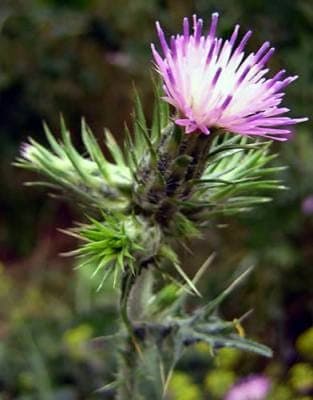
Aroche / CC BY-SA 3.0, via Wikimedia Commons
Carduus tenuiflorus: complete guide
Carduus tenuiflorus
Want to see Carduus tenuiflorus: complete guide in your garden?
1 minute, no credit card
Overview
Carduus tenuiflorus, commonly known as Slender Thistle, is a remarkable wildflower belonging to the Asteraceae family. This biennial to perennial plant grows naturally across Macaronesia, Northwest Africa, and various parts of Europe. It stands out for its delicate purple flowers and fine structure that sets it apart from other thistles.
Appearance & Bloom Cycle
The Slender Thistle reaches heights of 30 to 120 cm and displays slender, branched stems with fine spines. Flowers emerge from July through October and serve as an important food source for bees and butterflies. Each flower measures approximately 1.5 to 2 cm in diameter and grows in clusters along the stem. The plant thrives best on locations with regularly disturbed soil.
Ideal Location
This plant flourishes in sunny to semi-shaded positions. In the temperate climate, Carduus tenuiflorus feels at home on wastelands, roadsides, and in ruderal habitats. The plant prefers dry to moderately moist soils. Position it where it receives several hours of direct sunlight daily for optimal growth and flowering.
Soil Requirements
The Slender Thistle makes no high demands on soil quality. It grows well in poor, sandy, and calcareous soils. Maintain a pH between 5.5 and 7.5. The plant tolerates poor drainage and low nutrient content well, making it ideal for difficult corners in the garden. Preference exists for loose, well-draining soil.
Watering
Once established, the plant requires minimal supplemental watering. During dry periods in the growing season (May through September), infrequent watering may help. The plant is drought-tolerant and develops a deep root system. Excessive moisture should be avoided, especially in winter.
Free design
Want to see Carduus tenuiflorus: complete guide in your garden? Make a free design now.
Pruning
Pruning is generally unnecessary. You can remove spent flowers to encourage more blooms. Remove the entire above-ground portion in autumn after seeds have dispersed to prevent unwanted self-seeding in subsequent years. In wilder garden areas, you can let this process occur naturally.
Maintenance Calendar
March-April: Sow seeds directly outdoors or under glass for early start.
May-June: Seedlings appear; ensure consistent moisture.
July-October: Flowering period; remove spent flowers for extended bloom.
November: Seed dispersal; allow natural decline or harvest seeds.
Winter Hardiness
Carduus tenuiflorus is generally winter hardy to -15°C. In harsher winters, protection may be beneficial in USDA zones 7 and colder. Many specimens die back after flowering, typical of biennial species. The plant reproduces through self-seeding under favorable conditions.
Companion Plants
This thistle works well with other wildflowers and herbaceous growers. Combine with purple coneflower, daisy, and ornamental grasses. The flowers attract numerous pollinator species and serve as food for many butterfly and bee species. Ideal for natural gardens and pollinator-friendly borders.
Closing
Carduus tenuiflorus is a valuable addition to any ecological garden. With minimal maintenance requirements and attractive flowers, this plant offers years of enjoyment. Visit gardenworld.app for more plant tips and designs. At local garden centers you can find seeds or young plants in stock. Let this beautiful thistle transform your garden through the seasons.
Want to see Carduus tenuiflorus: complete guide in your garden? Make a free design now.
Upload a photo, pick a style, and get a photorealistic design with plant list in under a minute.
No credit card required


Similar plants
Calendula stellata: complete guide
Calendula stellata
Complete guide to Calendula stellata, the star-flowered marigold from Sicily: location, soil, watering and companion planting tips.
Korean chrysanthemum: complete guide
Chrysanthemum x rubellum
Chrysanthemum x rubellum is a hardy autumn perennial with single pink to copper flowers from August to November. Care and combinations.
Helianthus divaricatus: complete guide
Helianthus divaricatus
Helianthus divaricatus is a North American woodland sunflower with yellow summer blooms, ideal for naturalistic borders and shady edges.