
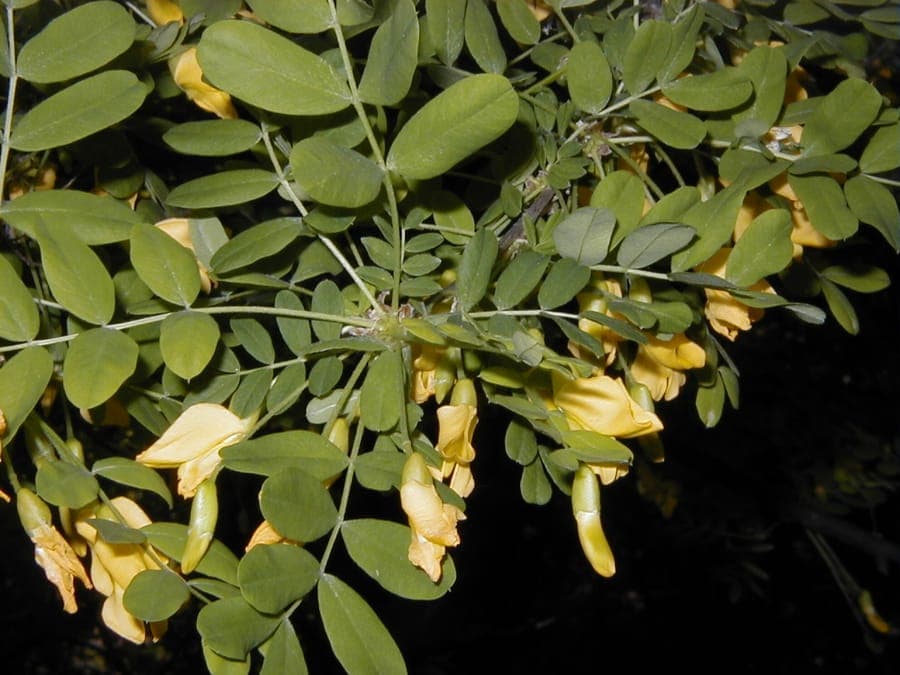
A. Barra / CC BY 3.0, via Wikimedia Commons
Siberian peatree: complete guide
Caragana arborescens
Want to see Siberian peatree: complete guide in your garden?
1 minute, no credit card
Overview
Caragana arborescens, commonly known as the Siberian peatree, is a resilient, fast-growing shrub or small tree native to the harsh climates of Siberia and Central Asia. It thrives in USDA hardiness zones 2 to 7, enduring winter lows down to -40°C. In gardens across temperate regions, it's valued for its adaptability, low maintenance, and ability to act as a windbreak or informal hedge. Mature plants reach 4 to 6 meters in height and 3 to 4 meters in spread, growing at a steady 30–50 cm per year. On gardenworld.app you can design a garden layout that maximizes its structural potential in your outdoor space.
As a member of the Fabaceae family, this plant fixes nitrogen through root nodules, enriching poor soils naturally. That makes it ideal for newly developed plots, sandy soils, or land recovering from erosion. It's also a smart choice for eco-conscious gardeners who want to reduce fertilizer use without sacrificing plant health.
Appearance & bloom cycle
The Siberian peatree has delicate, pinnate leaves composed of 4–8 pairs of narrow, light green leaflets. In late spring, usually mid to late May, it bursts into bloom with clusters of bright yellow, pea-shaped flowers about 1.5 cm wide. These fragrant blooms last 3–4 weeks and attract bees and other pollinators.
After flowering, slender seed pods 5–7 cm long develop, maturing to brown by late summer. These pods often persist into winter, adding visual texture. In autumn, the foliage turns a soft golden yellow before dropping. Older specimens develop a rugged, greyish bark with shallow fissures, giving them a distinctive character in winter landscapes.
Ideal location
This plant thrives in full sun - aim for at least 8 hours of direct sunlight daily for best flowering and density. It tolerates light shade but may become leggy and bloom less. Give it plenty of space to grow, especially if you're using it as a hedge or screen. Plant specimens at least 1.5 meters apart to allow for air circulation and full development.
Its tolerance for wind and cold makes it excellent for exposed sites, such as rural boundaries, coastal gardens, or open fields. Avoid planting too close to buildings or large trees to prevent root competition.
Soil requirements
Caragana arborescens is highly adaptable, growing well in sandy, loamy, or clay soils as long as drainage is adequate. It handles pH levels from 5 to 8.5, so both slightly acidic and alkaline conditions are fine. Avoid waterlogged areas - prolonged wet feet lead to root rot.
Because it fixes its own nitrogen, additional fertilizing is rarely needed. A light top-dressing of compost in the first year can help young plants establish, but beyond that, it thrives on neglect.
Free design
Want to see Siberian peatree: complete guide in your garden? Make a free design now.
Watering
Once established (after the first year), the Siberian peatree is extremely drought tolerant. During the first growing season, water weekly with about 10 liters per plant, especially during dry spells. After that, rainfall is usually sufficient. Overwatering, particularly in heavy soils, can do more harm than good.
Pruning
Pruning isn't required for survival, but it helps maintain shape and density. The best time is right after flowering, from late May to early June. Avoid late summer or fall pruning, as it may stimulate new growth that won't harden before winter.
For hedges: trim lightly to shape, removing no more than one-third of the growth. For tree form: select a strong central leader and remove lower branches up to 1.5 meters to create a trunk. Remove any dead, crossing, or damaged wood at the base each year.
Maintenance calendar
- January–February: Inspect for winter damage. Remove dead or broken branches.
- March: Prepare planting sites. Apply compost to young plants.
- April: Light shaping if needed. Watch for aphids on new growth.
- May: Peak bloom period. No pruning during flowering.
- June: Prune immediately after bloom. Monitor for pests.
- July–August: Minimal care. Water only young plants in extreme drought.
- September: Stop fertilizing. Check for signs of disease.
- October: Collect seed pods if propagating. Leave fallen leaves as mulch.
- November–December: Protect young plants with burlap in harsh winters. No pruning.
Winter hardiness
Exceptionally cold hardy, thriving in USDA zones 2–7. It tolerates extreme cold and wind exposure, making it a go-to for northern gardens. In milder regions, it still performs well but may grow more vigorously. No winter protection is needed for mature plants.
Companion plants
Pair the Siberian peatree with other tough, low-maintenance plants like Juniperus horizontalis, Cornus sericea, or ornamental grasses such as Calamagrostis x acutiflora. For a flowering hedge, combine with Rosa rugosa or Berberis thunbergii.
Because it casts moderate shade, avoid planting shallow-rooted or sun-hungry perennials too close. Instead, use drought-tolerant groundcovers like Thymus vulgaris or Sedum spurium beneath it.
Closing
The Siberian peatree is a no-fuss, high-reward plant that earns its place in any garden focused on resilience and function. Whether you need a fast-growing screen, a nitrogen-enriching pioneer species, or a tough ornamental shrub, it delivers year after year. With minimal pruning and no need for rich soil, it's perfect for gardeners who want beauty without the hassle.
If you're planning where to place it in your garden, check out gardenworld.app. You can generate a custom garden design that includes spacing, companion plants, and seasonal interest tailored to your plot.
Want to see Siberian peatree: complete guide in your garden? Make a free design now.
Upload a photo, pick a style, and get a photorealistic design with plant list in under a minute.
No credit card required


Similar plants
Tall Silky Lupine: complete guide
Lupinus elatus
Tall silky lupine is a fast-growing Californian perennial with silvery foliage and blue-purple flower spikes, ideal for a prairie-style garden.
Garfield Lupine: complete guide
Lupinus garfieldensis
The Garfield lupine is a rare, fast-growing American perennial for alkaline, dry grassland gardens, with striking blue flower spikes.
Lupinus elegans: complete guide
Lupinus elegans
Lupinus elegans, the elegant lupine, is a spectacular blooming plant from Mexico with blue flower spikes. Care, cultivation and garden use.