
Franz Eugen Köhler, Köhler's Medizinal-Pflanzen / Public domain, via Wikimedia Commons
Red capsicum: complete guide
Capsicum annuum
Want to see Red capsicum: complete guide in your garden?
1 minute, no credit card
Overview
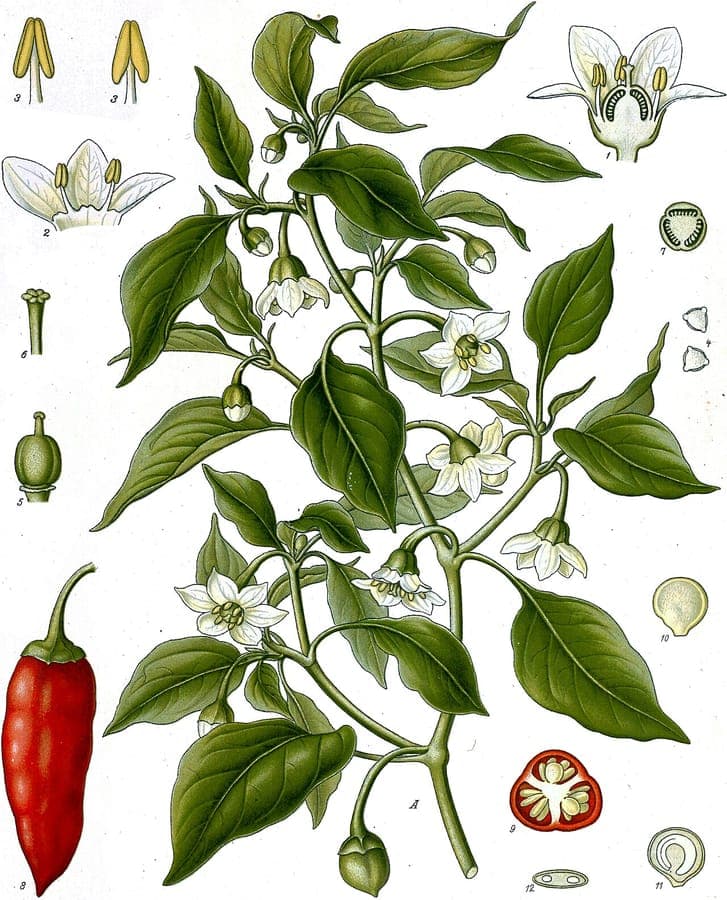
Capsicum annuum, commonly known as red capsicum or sweet pepper, is a warm-season plant native to Central America, particularly Guatemala and various regions across Mexico. It's a member of the Solanaceae family, making it a relative of tomatoes, potatoes, and eggplants. In temperate climates like the UK and northern Europe, it's grown as an annual, though in its native habitat it can survive for several years as a subshrub.
Typically reaching heights of 60–90 cm, capsicum plants grow upright with sturdy stems and a bushy canopy of glossy green leaves. They're prized for their thick-walled, fleshy fruits that start green and mature to vibrant red, yellow, or orange. Some ornamental varieties even turn deep purple or brown at peak ripeness.
On gardenworld.app, you can design a custom vegetable layout that integrates capsicum with companion herbs and ensures optimal sun exposure for robust fruit development.
Appearance & bloom cycle
The plant produces small, star-shaped white flowers in early summer, usually from late June onwards, provided temperatures stay above 18°C. These flowers are self-pollinating but benefit from gentle shaking or visiting pollinators like bees. After successful pollination, tiny green peppers begin to form.
Fruit development takes 60–80 days depending on variety and growing conditions. As capsicums ripen, their sugar content increases, resulting in sweeter taste. Mature fruits are typically 8–12 cm long and 6–10 cm wide, with a blocky or slightly tapered shape. Harvest them when fully coloured and firm to the touch.
Ideal location
Red capsicum thrives in full sun - a minimum of 6 to 8 hours daily. Choose a sheltered, south- or southwest-facing spot in your garden, greenhouse, or on a sunny patio. Consistent warmth is critical; temperatures below 15°C slow growth, while night temps under 10°C can stunt fruiting.
If your summers are cool or unpredictable, grow capsicum in a greenhouse or polytunnel. This extends the growing season and protects plants from wind and rain, both of which can damage foliage and promote fungal diseases.
Soil requirements
Well-draining, fertile soil with a pH between 6.0 and 6.8 is ideal. Enrich the ground with well-rotted compost or manure before planting. Avoid heavy clay soils that retain too much moisture, as this leads to root rot.
For container growing, use a high-quality potting mix with added perlite or coconut coir for improved aeration. Pots should be at least 30 cm deep and wide, with adequate drainage holes.
Free design
Want to see Red capsicum: complete guide in your garden? Make a free design now.
Watering
Capsicum needs consistent moisture but dislikes soggy roots. Water when the top 2–3 cm of soil feels dry. In hot weather, this may mean watering every other day, especially in pots which dry out faster.
Always water at the base to prevent leaf wetness and reduce the risk of fungal infections like blight. Early morning is the best time to water, allowing foliage to dry quickly in sunlight.
Pruning
While not essential, light pruning improves air circulation and reduces disease risk. Remove lower leaves that touch the soil and any inward-growing or crowded branches. Pinch out the growing tips when plants are about 20 cm tall to encourage bushier growth and more fruiting sites.
Avoid heavy pruning, as this can stress the plant and reduce yield.
Maintenance calendar
- March–April: Sow seeds indoors at 20–25°C. Use a heat mat if needed.
- May: Transplant seedlings into larger pots. Harden off before moving outdoors.
- June: Plant out after last frost (typically after June 1 in USDA zones 7–8). Use cloches or row covers if nights are still cool.
- July–August: Feed every 10–14 days with liquid tomato or vegetable fertiliser. Water consistently.
- September–October: Harvest ripe peppers. Watch for aphids and spider mites.
- November: Remove spent plants. Compost healthy material; discard diseased parts.
Gardenworld.app offers a dynamic seasonal planner tailored to your location, helping you track sowing, planting, and harvesting dates for capsicum with precision.
Winter hardiness
Capsicum annuum is not frost-tolerant and will not survive winter outdoors in temperate zones (USDA 6 and below). While it's possible to overwinter healthy plants indoors, they often struggle due to low light and dry air. Most gardeners treat it as an annual and start fresh each spring.
Companion plants
Good companions include basil, oregano, and marigolds, which repel pests like aphids and whiteflies. Onions and carrots can also share space without competing heavily for nutrients. Avoid planting near fennel or kohl crops, which may inhibit growth.
Tomatoes are often grown alongside capsicum, but ensure good spacing to prevent disease spread.
Closing
Growing red capsicum successfully comes down to warmth, sunlight, and consistent care. Whether in a garden bed, raised container, or greenhouse, this rewarding plant produces delicious, homegrown peppers with minimal effort if conditions are right.
Buy young plants in late spring from trusted garden centres, or start your own from seed for a head start. With the right setup, you'll enjoy a steady harvest from late summer into autumn. And remember: gardenworld.app lets you visualise your ideal capsicum layout, from spacing to companion planting, all in one intuitive design platform.
Want to see Red capsicum: complete guide in your garden? Make a free design now.
Upload a photo, pick a style, and get a photorealistic design with plant list in under a minute.
No credit card required


Similar plants
Solanum dolichosepalum: complete guide
Solanum dolichosepalum
Discover Solanum dolichosepalum, an Andean nightshade with striking long sepals. Growing tips, hardiness, and companion planting for your patio.
Solanum ripense: complete guide
Solanum ripense
Discover Solanum ripense, a moisture-loving Andean nightshade for pond edges and conservatories. Growing tips, hardiness, and companions.
Solanum tomentosum: complete guide
Solanum tomentosum
Discover Solanum tomentosum, a thorny South African nightshade with felted leaves. Growing tips, hardiness, and companion planting ideas.