
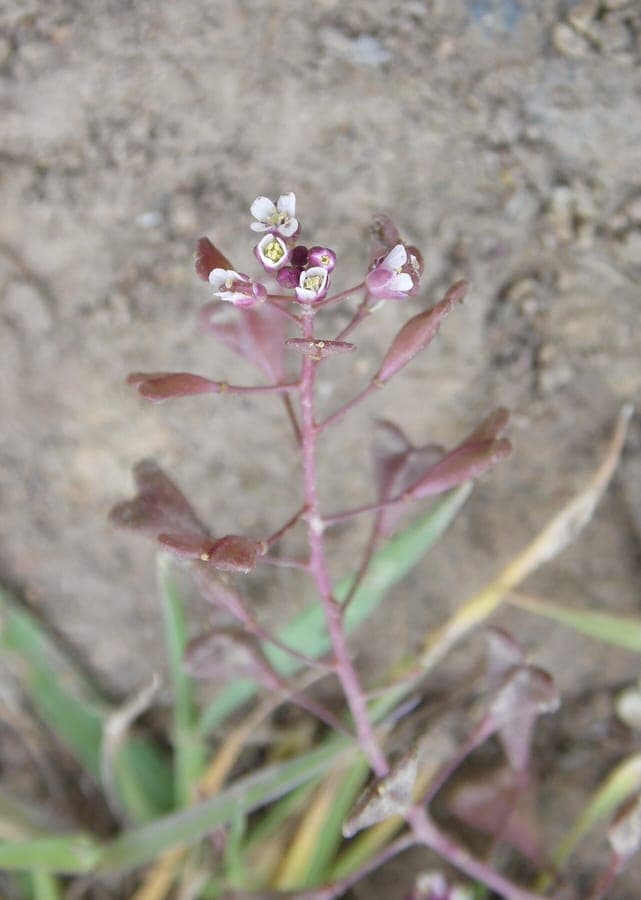
Krzysztof Ziarnek, Kenraiz / CC BY-SA 4.0, via Wikimedia Commons
Pink shepherd's-purse: complete guide
Capsella rubella
Want to see Pink shepherd's-purse: complete guide in your garden?
1 minute, no credit card
Overview
Pink shepherd's-purse (Capsella rubella) isn't the flashiest plant in the garden, but it's one of the most reliable. Native to southern Europe and the Mediterranean basin, this hardy annual or short-lived perennial thrives where many others struggle – dry, sunny spots with poor soil. Unlike its common cousin Capsella bursa-pastoris, which has white flowers, C. rubella blooms in soft pink to pale magenta, adding a delicate touch to rock gardens, borders, and gravel beds. It's not widely sold yet, but you'll find it at independent garden centres and specialist nurseries, especially in spring.
On gardenworld.app, you can visualise how Pink shepherd's-purse fits into a drought-resistant planting scheme with complementary textures and bloom times.
Appearance & bloom cycle
This plant forms a low rosette of narrow, grey-green, slightly hairy leaves close to the ground. From late May through August, it sends up slender, branched stems reaching 25–40 cm in height. The tiny flowers, about 5–8 mm wide, appear in loose racemes and open in a pleasing rosy pink. Each bloom has four petals arranged in a cross – typical of the Brassicaceae family. After flowering, the plant develops the signature heart-shaped seed pods that give the genus its common name. These start green, then dry to a papery beige.
The bloom period is impressively long, especially if you deadhead regularly. Even without intervention, it often produces a second flush in late summer. Its airy structure makes it ideal for softening edges and adding movement to a planting.
Ideal location
Full sun is non-negotiable. Pink shepherd's-purse needs at least 6–8 hours of direct sunlight daily to bloom well and stay compact. It tolerates partial shade, but plants become leggy and flop over. It's perfect for south-facing slopes, rock gardens, crevices in dry stone walls, or the front of sunny borders. It also works well in gravel gardens and green roofs, thanks to its shallow root system and drought tolerance.
Avoid damp, shady corners – this plant simply won't survive there. In USDA zones 7–10, it often self-seeds modestly, creating natural drifts over time. In cooler zones, treat it as an annual or protect it with a dry mulch.
Soil requirements
Well-drained soil is key. Think sandy, gravelly, or chalky soils with low to moderate fertility. It prefers a neutral to slightly alkaline pH (6.8–8.0). Heavy clay soils or water-retentive loams will rot the roots, especially in winter. If your soil is dense, amend it with horticultural grit or coarse sand at a 1:3 ratio. Raised beds or sloped ground help with drainage.
Avoid enriching the soil too much – rich compost can lead to lush foliage at the expense of flowers.
Free design
Want to see Pink shepherd's-purse: complete guide in your garden? Make a free design now.
Watering
Once established, Pink shepherd's-purse is extremely drought tolerant. Water young plants weekly for the first month after planting, giving about 1 litre per plant. After that, rainfall is usually sufficient, even during dry summers. Only water during prolonged droughts (3+ weeks without rain), and always at the base to prevent fungal issues.
Overwatering is the main cause of failure. This plant evolved in Mediterranean conditions – it's built to survive dry spells, not soggy feet.
Pruning
Deadheading extends the bloom season and prevents excessive self-seeding. Cut back flowering stems just above the basal rosette once most flowers have faded. Use clean, sharp secateurs to avoid disease. If you want natural reseeding, leave a few pods to mature and scatter.
No other pruning is needed. The plant dies back naturally in late autumn.
Maintenance calendar
- January: Dormant. No action needed.
- February: Check for overwintering pests like aphids.
- March: Clear away old debris. Prepare soil for new plantings.
- April: Sow seeds directly or transplant young plants. Light feed with balanced organic fertiliser.
- May: Blooms begin. Watch for slugs on young growth.
- June: Start deadheading. Monitor for dry spells.
- July: Peak bloom. Continue removing spent flowers.
- August: Allow some seed pods to form if reseeding is desired.
- September: Seedlings may appear. Transplant or thin as needed.
- October: Leave standing for wildlife; seed heads feed small birds.
- November: Cut back any remaining stems if desired.
- December: Dormant. Protect from waterlogging.
Winter hardiness
Hardy in USDA zones 7–10. In zone 7, it usually survives with minimal protection. In colder zones, it can be grown as an annual or overwintered under a dry mulch like straw or gravel. The main threat isn't cold, but wet soil. Ensure good drainage to prevent crown rot.
Companion plants
Pair Pink shepherd's-purse with other sun-loving, drought-tolerant plants:
- Lavandula angustifolia (English lavender)
- Eryngium variifolium (sea holly)
- Sedum 'Autumn Joy'
- Achillea millefolium (yarrow)
- Thymus serpyllum (creeping thyme)
These combinations create a naturalistic, low-water garden that supports pollinators. Avoid aggressive spreaders that might smother its delicate form.
Closing
Pink shepherd's-purse is a quiet achiever – unassuming but incredibly resilient. It brings soft colour and structure to challenging sites where little else grows. You can find it at garden centres like those in the UK or through online nurseries. Start with a few plants, and you might soon have a self-sustaining patch.
On gardenworld.app, you can design a planting plan that uses Capsella rubella to bridge seasons and textures. Give it sun, keep the soil lean, and you'll be rewarded with months of gentle bloom.
Want to see Pink shepherd's-purse: complete guide in your garden? Make a free design now.
Upload a photo, pick a style, and get a photorealistic design with plant list in under a minute.
No credit card required


Similar plants
Brassica cretica: complete guide
Brassica cretica
Brassica cretica, the Cretan cabbage, grows wild on Aegean cliffs. Discover how to grow this drought-tolerant, yellow-flowered Mediterranean perennial.
Corsican cabbage: complete guide
Brassica insularis
Corsican cabbage is a rare Mediterranean rock cabbage with white flowers and blue-green leaves. Location, soil and winter protection.
Prostrate cabbage: complete guide
Brassica procumbens
Prostrate cabbage is a creeping North African cliff plant with yellow flowers. Discover location, soil type and winter protection.