
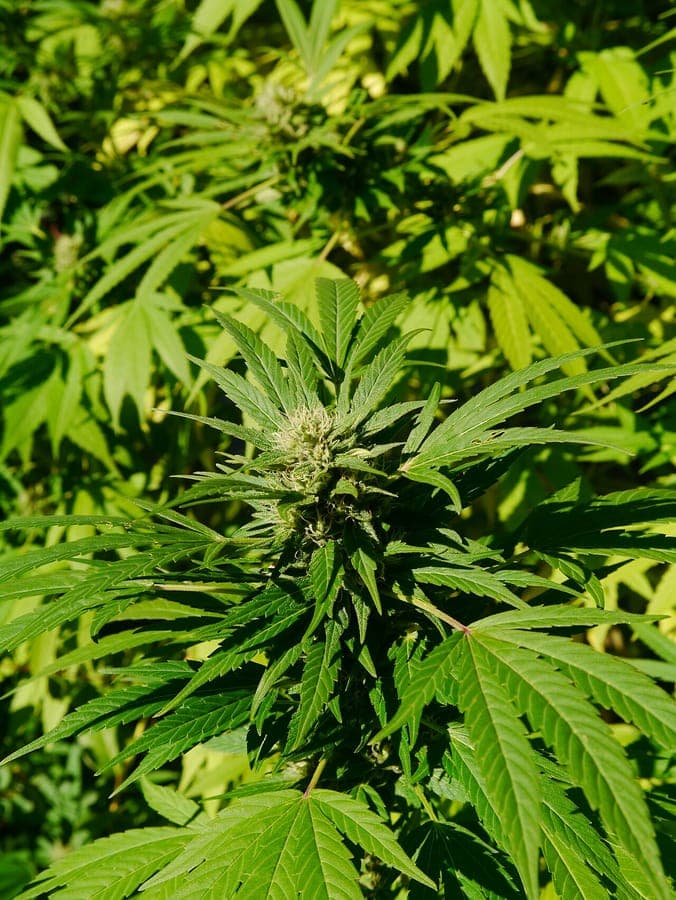
Thayne Tuason / CC BY-SA 4.0, via Wikimedia Commons
Hemp: complete guide
Cannabis sativa
Want to see Hemp: complete guide in your garden?
1 minute, no credit card
Overview
Hemp, or Cannabis sativa, is a fast-growing herbaceous plant with a long history in agriculture and traditional gardening. While often associated with its chemical properties, in the garden it stands out for its tall, dramatic structure and resilience. It's crucial to note that in most countries, growing Cannabis sativa is regulated. In the UK and US, only industrial hemp with less than 0.3% THC is legally allowed for cultivation. Always check your local laws before planting.
In cultivation, hemp behaves as an annual, completing its life cycle in one growing season. It thrives outdoors, where it can reach heights of 1.5 to over 3 meters, depending on the strain and conditions. Its upright, fibrous stems and slender, palmate leaves give it a distinctive look that adds vertical interest to garden layouts.
Using gardenworld.app, you can design a garden plan that accounts for hemp's height, spread, and seasonal timeline, ensuring it fits harmoniously with other plants.
Appearance & bloom cycle
Hemp features long, rigid stems with lance-shaped leaflets arranged in a hand-like pattern. Leaves are typically bright to deep green, sometimes with a bluish tint. Young plants grow rapidly from late spring, adding up to 5 cm per day in peak summer.
Flowering occurs from late August through October, triggered by decreasing daylight. Male plants develop dangling pollen sacs, while females form dense, resinous flower clusters at leaf nodes and stem tips. These buds are the focus of harvest in legal grows.
If seed production isn't desired, remove male plants early to prevent pollination. Feminized seeds are available through licensed suppliers and select garden centres, though availability varies by region. In the US and UK, certified industrial hemp seeds can sometimes be found at garden centres or online, but always ensure compliance with local regulations.
Ideal location
Hemp needs plenty of sun-rate it an 8 out of 10. Choose a spot with full sun exposure, meaning at least 6 to 8 hours of direct light daily. Insufficient light leads to leggy growth and weak stems.
The plant tolerates breezy conditions but may require staking in exposed gardens. Use bamboo stakes or trellis netting for support, especially when plants exceed 2 meters. In urban or visible gardens, consider screening with taller perennials or fencing, both for privacy and to avoid unwanted attention.
Plan placement carefully-on gardenworld.app, you can simulate sun patterns and plant spacing to optimize layout before planting.
Free design
Want to see Hemp: complete guide in your garden? Make a free design now.
Soil requirements
Hemp prefers well-drained, loamy to sandy soil with a pH between 7.0 and 7.5. Avoid heavy clay soils that retain water, as they promote root rot. The plant is a heavy feeder, so soil fertility matters.
Prepare the ground by tilling to 30 cm and mixing in compost or well-rotted manure. This boosts nutrient availability and soil structure. For container growing, use pots of at least 40 liters with a high-quality potting mix containing perlite or coco coir for drainage.
Watering
During the first 4 to 6 weeks, keep soil consistently moist to support root establishment. Water deeply once a week, adjusting based on rainfall.
From July onward, water every 3 to 5 days during dry spells. Mature plants have high transpiration rates. Check soil moisture by inserting a finger 5 cm deep-water only if dry. Avoid overhead watering to reduce fungal risks; drip irrigation or soaker hoses work best.
Pruning
Pruning isn't mandatory but improves airflow and shape. Top plants when they have 4 to 6 nodes to encourage lateral branching. This creates a bushier form and increases yield in legal grows.
Remove lower leaves and weak branches to prevent mold, especially in humid climates. Sanitize pruning tools between cuts to avoid spreading disease.
Maintenance calendar
- March–April: Start seeds indoors or in a greenhouse at 20–25°C.
- May: Transplant outdoors after the last frost (mid to late May in USDA zones 6–8).
- June–July: Vegetative growth phase. Apply balanced organic fertilizer every 2–3 weeks.
- August–October: Flowering stage. Switch to a low-nitrogen, high-phosphorus feed. Monitor for pests like spider mites.
- November: Harvest when trichomes turn milky or amber. Dry buds in a dark, ventilated space for 7–10 days.
Winter hardiness
Hemp is a true annual and dies after the first hard frost, typically in November. It does not survive winter in zones below 9. Re-sow each spring. No overwintering strategies apply.
Companion plants
Hemp can coexist with several garden allies:
- Clover: Fixes nitrogen and acts as living mulch
- Dill: Attracts beneficial wasps
- Basil: Repels certain pests with its scent
- Nasturtium: Traps aphids away from hemp
Avoid planting near potatoes or tomatoes, which share common pests like aphids and fungal diseases.
Closing
Hemp brings bold texture and height to the garden, but requires informed decisions. Respect legal limits and choose certified, low-THC varieties when permitted.
Garden centres in the US and UK may carry industrial hemp seeds or related products, but availability is limited. For visual planning, tools like gardenworld.app help integrate hemp into a balanced, functional garden design-perfect for structure, screening, or seasonal interest.
Want to see Hemp: complete guide in your garden? Make a free design now.
Upload a photo, pick a style, and get a photorealistic design with plant list in under a minute.
No credit card required


Similar plants
Celtis sinensis: complete guide
Celtis sinensis
Chinese hackberry (enoki): comprehensive care guide. Discover this elegant Asian tree with fine leaves and bird food. Perfect for large gardens and parks.
Humulus scandens: complete guide
Humulus scandens
Japanese hop - a vigorous climbing plant with characteristic hop cones and exceptional ornamental value.
Humulus lupulus: complete guide
Humulus lupulus
Discover the common hop: a very vigorous climbing plant for pergolas and tall fences. Comprehensive guide with training, harvesting and care.