
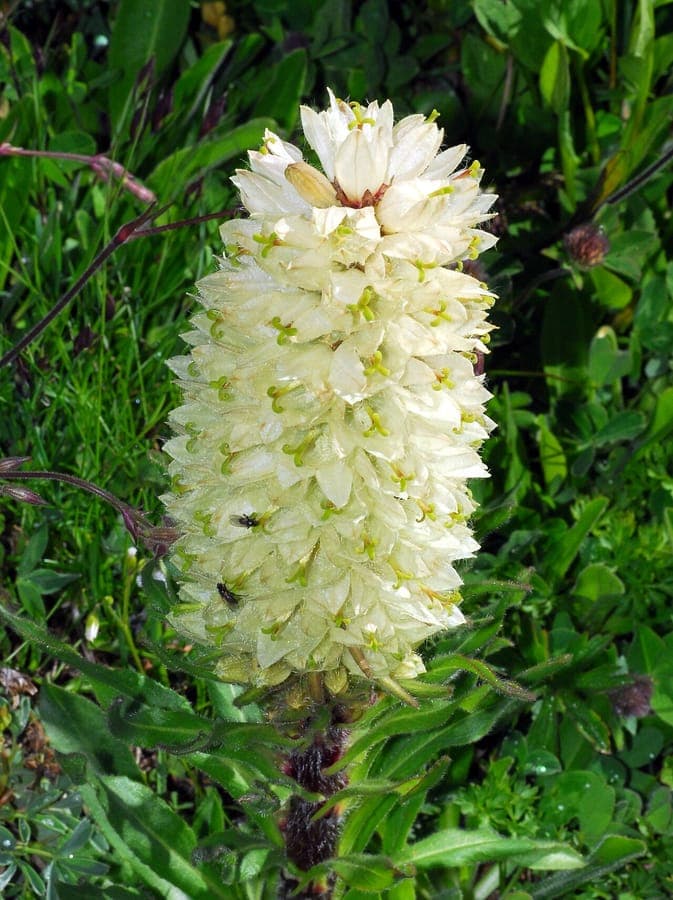
Hectonichus / CC BY-SA 4.0, via Wikimedia Commons
Yellow bellflower: complete guide
Campanula thyrsoides
Want to see Yellow bellflower: complete guide in your garden?
1 minute, no credit card
Overview
Campanula thyrsoides, known commonly as yellow bellflower, stands out in the Campanulaceae family for its rare yellow blooms - a departure from the typical blue or purple hues of most bellflowers. Native to alpine regions of Austria, Switzerland, Italy, and the former Yugoslavia, this perennial thrives in rocky, well-drained slopes where moisture doesn't linger. In cultivation, it reaches 30–50 cm in height and performs best in rock gardens, dry borders, or on stone walls where sun exposure is strong and soils are lean.
On gardenworld.app, you can design a custom planting scheme that highlights this plant's sun-loving nature and unique bloom color.
Appearance & bloom cycle
The yellow bellflower produces upright, sturdy stems topped with dense, thyrse-like flower clusters from July to August. Each individual flower is bell-shaped, about 1.5 cm long, and a soft, clear yellow. The foliage forms a basal rosette of dark green, lanceolate leaves with finely toothed margins. Stems are sparsely leafed and hold the blooms above the foliage, creating a striking vertical accent.
The flowering period lasts 4–6 weeks, attracting pollinators like bumblebees and butterflies. After blooming, seed capsules form and may self-sow in crevices or gravel, giving rise to new plants the following spring. While not invasive, it can establish small colonies over time in favorable conditions.
Ideal location
This plant demands full sun - a solid 8 out of 10 on the light scale. That translates to at least 6 hours of direct sunlight daily. In hotter climates like southern Europe, light afternoon shade can prevent scorching, but in the UK and northern Europe, full exposure is essential for compact growth and abundant flowering.
Avoid shaded or damp corners. It excels in south-facing borders, gravel gardens, or on raised stone walls. Good air circulation is critical; stagnant, humid air increases the risk of powdery mildew. Use gardenworld.app to map sun patterns in your garden and pinpoint the ideal spot for Campanula thyrsoides.
Soil requirements
It prefers alkaline, well-drained soils with a pH of 7.0–7.5. Heavy clay or water-retentive soils will rot the roots. Improve drainage by mixing in grit, crushed limestone, or perlite - especially in garden beds with poor natural drainage. A lean soil with minimal organic matter is best; overly rich compost encourages leafy growth at the expense of flowers.
In containers, use a mix of two parts loam-based compost, one part horticultural grit, and one part coarse sand. Avoid moisture-retaining additives like peat.
Free design
Want to see Yellow bellflower: complete guide in your garden? Make a free design now.
Watering
Once established, yellow bellflower is highly drought-tolerant. During the first growing season and in prolonged dry spells, water deeply but infrequently. Let the soil dry out completely between waterings. Overwatering is the most common cause of failure.
Water at the base to keep foliage dry and reduce fungal risks. In drought-prone gardens, this plant is a reliable performer with minimal irrigation needs.
Pruning
Pruning isn't essential, but cutting back flower stems to just above the basal rosette in late August encourages tidiness and may prevent unwanted self-seeding. If you want to collect seeds, leave a few stems intact until early September when capsules turn brown and dry.
Remove any discolored or diseased foliage promptly. Use clean, sharp shears to avoid spreading pathogens.
Maintenance calendar
- March–April: Clear away old foliage. Check for emerging seedlings in rock crevices.
- May–June: Water young plants during dry periods. No feeding required.
- July–August: Peak bloom. Monitor for pollinators and signs of mildew.
- September: Cut back spent stems. Harvest seeds if desired.
- October–February: Minimal care. Leave basal leaves for winter insulation.
Winter hardiness
Hardy in USDA zones 4–8, Campanula thyrsoides survives cold winters with ease, provided the soil drains well. In zone 8 (UK, Netherlands), no winter protection is needed. In colder zones, a light mulch of gravel or crushed stone helps prevent freeze-thaw damage.
Avoid organic mulches like bark - they retain moisture and can promote rot. In pots, elevate containers or wrap them to protect roots from deep frost.
Companion plants
Pair with plants that share its preference for sun, lean soil, and dry conditions:
- Sedum spectabile
- Eryngium planum
- Nepeta racemosa
- Thymus serpyllum
- Allium sphaerocephalon
Avoid moisture-loving perennials like hostas or astilbes. The yellow bellflower shines in simple, open plantings where its form and color can stand out.
Closing
Campanula thyrsoides brings a rare splash of yellow to the perennial border, blooming reliably in midsummer when many other plants are still building momentum. Its upright form and clean color make it ideal for modern or alpine-style gardens.
Purchase from reputable garden centres across the UK or online nurseries that propagate sustainably. Avoid wild-collected stock - this species is protected in parts of its native range. For tailored planting advice, use gardenworld.app to generate a garden plan based on your soil type, aspect, and existing plants.
Want to see Yellow bellflower: complete guide in your garden? Make a free design now.
Upload a photo, pick a style, and get a photorealistic design with plant list in under a minute.
No credit card required


Similar plants
Campanula alaskana: complete guide
Campanula alaskana
Discover Campanula alaskana, the delicate alpine bellflower from Alaska. Growing tips, hardy requirements, and design ideas for rock gardens and alpine troughs.
Campanula scouleri: complete guide
Campanula scouleri
Discover Campanula scouleri, the refined Pacific bellflower. Growing tips, care requirements, and design ideas for woodland and mountain gardens.
Doublehorn calicoflower: complete guide
Downingia bicornuta
All about Downingia bicornuta - the doublehorn calicoflower: sowing, location, bloom and care for this rare annual in your garden.