
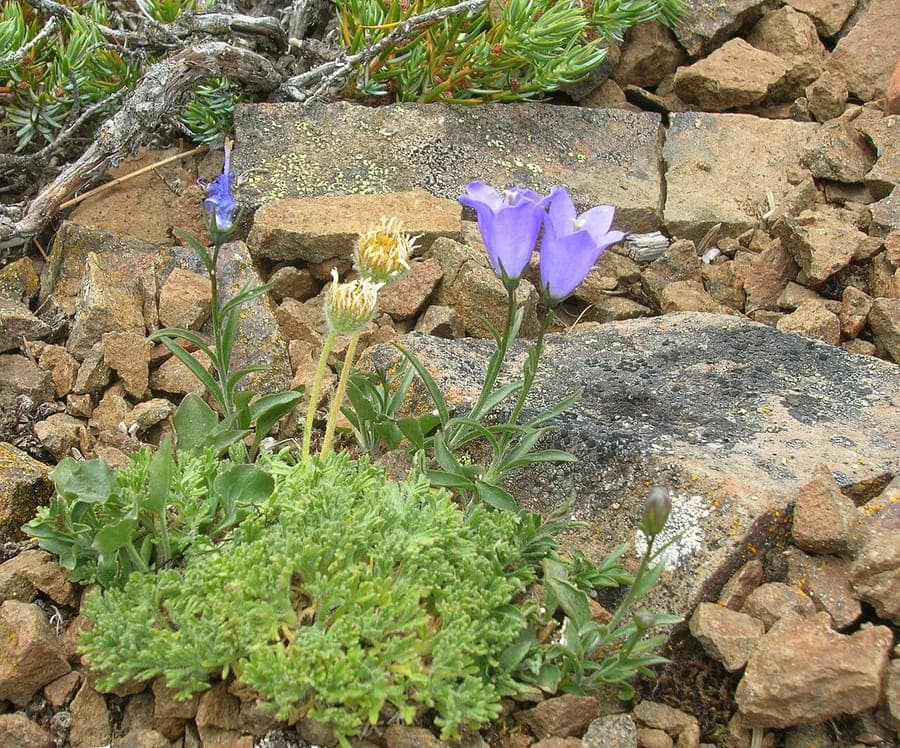
J Brew / CC BY-SA 2.0, via Wikimedia Commons
Campanula scabrella: complete guide
Campanula scabrella
Want to see Campanula scabrella: complete guide in your garden?
1 minute, no credit card
Overview
Campanula scabrella, commonly called downy alpine bellflower, is a delightful compact plant from the Pacific Northwest of the United States. From Oregon to Montana, this alpine species grows on rocky slopes and mountain meadows. It belongs to Campanulaceae and is beloved by rock gardeners for its attractive flowering display and modest proportions.
Appearance and Bloom
The downy alpine bellflower forms compact cushions approximately 10 to 15 centimeters tall. Slender leaves bear fine hairs, explaining the downy appearance. Flowers emerge July through August in clusters atop thin stems. They are small but striking, in shades of lilac to deep purple, sometimes with white centers. Flowering is abundant and lasts several weeks.
Ideal Location
Place this species in full sun (minimum six hours daily) in a spot with good air circulation. A south or west-facing location is ideal. Avoid damp, moist locations. In very warm climates, light afternoon shade provides protection. Wind is not problematic; actually helps keep the plant healthy by reducing fungal risk.
Soil
The downy alpine bellflower demands excellent drainage, like all alpine campanulas. A mixture of garden soil with 50 percent coarse sand or perlite is ideal. In container cultivation: avoid heavy soil; use alpine soil mix with generous drainage additives. The plant prefers slightly nutrient-rich to lean soil. pH between 6.0 and 7.5 is acceptable.
Watering
This mountain plant prefers dry conditions. During growing season, water moderately, allowing the soil surface to dry before rewatering. During bloom, water slightly more regularly. After September, reduce water drastically; in winter, water only minimally. Excess water is the greatest threat to this species.
Free design
Want to see Campanula scabrella: complete guide in your garden? Make a free design now.
Pruning
Light removal of spent flowers after blooming helps maintain appearance. The plant requires little to no formal pruning. In early spring, dead material may be removed. Heavy pruning is not recommended; this plant naturally forms a lovely compact cushion needing no further reduction.
Maintenance Calendar
April to May: growth resumes; gradually increase water. June to August: blooming period; regular moisture. September to October: reduce water; discontinue feeding. November to March: minimal watering; frost protection consideration in very severe winters.
Winter Hardiness
The downy alpine bellflower is quite hardy to approximately minus 18 degrees Celsius when kept dry. Wet winters pose more risk than severe frost. In extremely moist winters, protection with gravel or dry leaves offers defense. In containers, better to overwinter indoors in climates outside USDA zones 4-5. As it originates from mountains, it feels at home in colder climates when drainage is perfect.
Companion Plants
Harmonize it with other drought-tolerant alpines like Sempervivum, Sedum and Saxifraga. Low-growing Dianthus and Thymus fit well. Silene and Armeria also form successful partnerships. Ensure all companions share preference for full sun and dry soil. This prevents competition and disease.
Closing
Campanula scabrella is a magnificent addition to rock gardens, alpine containers in full sun. Its compact form and extended blooming period make it valuable. Both novice and experienced gardeners will enjoy it. Check specialist alpine nurseries for seeds. Visit gardenworld.app for design inspiration. With dry feet and full sun, this American beauty blooms reliably year after year. This frost-hardy mountain plant gives structure without maintenance. Explore gardenworld.app for inspiration with permanent alpines.
Want to see Campanula scabrella: complete guide in your garden? Make a free design now.
Upload a photo, pick a style, and get a photorealistic design with plant list in under a minute.
No credit card required


Similar plants
Campanula alaskana: complete guide
Campanula alaskana
Discover Campanula alaskana, the delicate alpine bellflower from Alaska. Growing tips, hardy requirements, and design ideas for rock gardens and alpine troughs.
Campanula scouleri: complete guide
Campanula scouleri
Discover Campanula scouleri, the refined Pacific bellflower. Growing tips, care requirements, and design ideas for woodland and mountain gardens.
Doublehorn calicoflower: complete guide
Downingia bicornuta
All about Downingia bicornuta - the doublehorn calicoflower: sowing, location, bloom and care for this rare annual in your garden.