
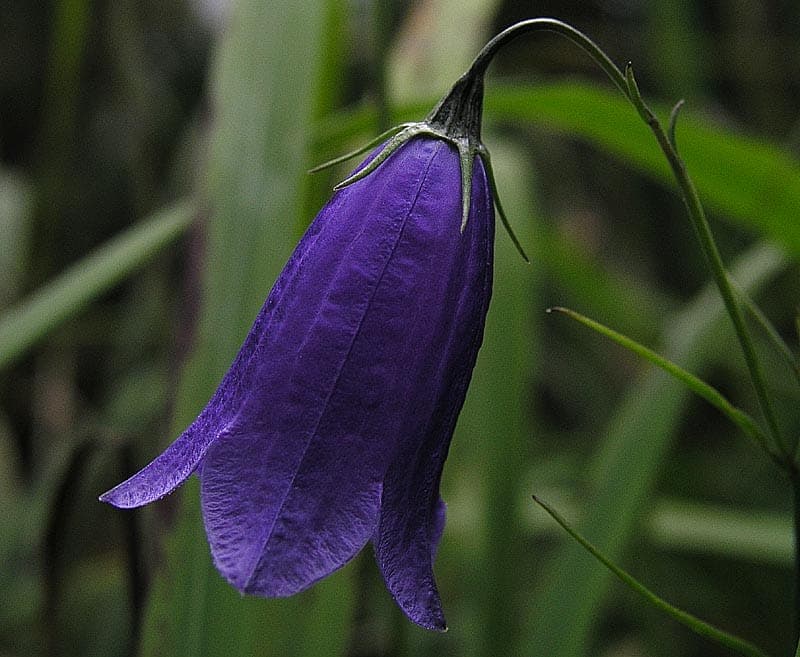
Michael H. Lemmer / CC BY-SA 2.5, via Wikimedia Commons
Campanula pulla: complete guide
Campanula pulla
Want to see Campanula pulla: complete guide in your garden?
1 minute, no credit card
Overview
Campanula pulla, also known as the Dark Bellflower or Svartklocka, is a lovely miniature alpine bloomer from the northeastern Alps, primarily in Austria. This hardy perennial belongs to the Campanulaceae family and is renowned for her deep dark-purple, almost blackish flowers.
This robust alpine campanula is perfect for anyone wanting alpine flora in a compact form. She forms attractive dense mats and blooms faithfully each year. With proper care, you can enjoy years of these beautiful, dark-violet blooms that give your garden alpine elegance.
On gardenworld.app, we help you select and grow this species. Place her in a well-drained, acidic rock garden or alpine trough. The plant thrives in bright conditions but tolerates light shade. This is a winterhardy plant needing minimal care.
Appearance & bloom
Campanula pulla grows as a compact, low cushion of fine, dark-green leaves. The plant reaches only 10-15 centimetres high and forms dense clusters. The flower stems are thin and gracefully arched, hanging her dark flowers elegantly downward.
The flowers are small but striking for their deep purple-violet, almost black color. This rare dark flower tone distinguishes her from many other campanulas. The blooms have the characteristic bell shape of the Campanula genus.
The bloom period falls in summer, typically June through August. A well-cultivated plant is laden with flowers throughout this entire period. The foliage remains decorative year-round and provides nice contrast against white gravel or other gray stone materials.
Ideal location
Campanula pulla prefers brightness but can tolerate light shade. In areas with warm summers, she will benefit from protection against full midday sun. In temperate climates, she grows excellently in full sun, provided the soil remains moist enough.
Choose a spot with good air circulation. Alpine environments are ideal. Place her in a raised bed, alpine trough, or rock garden where water drains well. Avoid low, damp spots where water pools.
The plant thrives well in cool, alpine-like conditions. If you live in a warmer region, you can place her under roof cover or in light shelter from larger shrubs.
Soil
The ideal soil for Campanula pulla is well-drained and mineral-rich. Mix your planting hole with 50% gravel, sand and small stones, 30% garden soil, and 20% compost. The soil should be acidic to neutral (pH 6.0-7.0) - she tolerates limy soils less well.
A rocky soil is perfect. Place a layer of gravel several centimetres deep in the bottom of your planting hole for improved drainage. In very wet soils, you can apply additional drainage material (leca pellets).
Avoid heavy, clay-heavy soils. Sand and gravel are your friends here. Regularly added compost keeps the plant nourished without holding excessive moisture.
Free design
Want to see Campanula pulla: complete guide in your garden? Make a free design now.
Watering
Campanula pulla tolerates drought reasonably well. Water regularly during the growing season, especially in dry periods, but ensure water does not pool. The soil may feel somewhat moist but should not be waterlogged.
In very hot summers, daily watering may be needed. Always water at the base of the plant, not from above. This prevents leaf damage and fungal development.
In autumn and winter, reduce drastically. In this season, minimal water is appropriate. Ensure the winter pot or winter bed is absolutely not wet. A well-drained location is crucial here.
Pruning
Campanula pulla does not require intensive pruning. Spent flowers can be gently pinched off. This encourages more blooms later in the same summer.
If the plant becomes unattractive or leggy after several years, you can lightly cut her back after blooming. Most plants recover well and form compact growth again.
Dead leaves can be gently removed. Ensure you do not damage healthy tissue. In spring, you can lightly comb through with a fine brush to remove dead material.
Maintenance calendar
April-May: Begin watering gently; check winter damage; apply dilute feed.
June-July: Bloom period at peak; water regularly; remove spent flowers.
August-September: Gradually reduce water; blooming ends; stop feeding.
October-March: Minimal water; no feeding; winter protection if needed; no pruning work.
Winter hardiness
Campanula pulla is very winterhardy and tolerates frost to -20 degrees Celsius or lower. In her natural alpine habitat, she must withstand much harsher winters. This makes her ideal for North and Central European gardens.
As long as the plant is not waterlogged in winter, she will have no problems. Heavy snow can damage very fragile young plants, but most recover in spring.
For pot plants: place the pot against a protected wall or in an unheated greenhouse. Ensure rainwater does not fall directly on the plant bed. Slightly adjusted drainage material helps.
Companion plants
Campanula pulla combines nicely with other alpine species with similar requirements: Saxifraga, Dianthus alpinus, Armeria alpina, Androsace, and small Sedum species. These share the same soil, light, and water needs.
In an alpine trough or rock garden, group her with silvery herbs like Artemisia schmidtiana, gray-leaved types like Cerastium tomentosum, and yellow or white mountain flowers for contrast.
Avoid vigorous neighbors that will overshadow her. Staying small is the theme here.
Closing
Campanula pulla is a valuable addition to any rock garden, alpine trough, or shaded mountain spot. Her deep dark-purple flowers give a unique color punch. With well-drained soil, careful watering, and winter shelter, she will grow and bloom faithfully for years.
You can find these plants at specialized alpine nurseries and online plant shops. On gardenworld.app, we help you with selection and care tips. Her compact form and alpine elegance make her a perfect choice for minimalist garden designs.
Want to see Campanula pulla: complete guide in your garden? Make a free design now.
Upload a photo, pick a style, and get a photorealistic design with plant list in under a minute.
No credit card required


Similar plants
Campanula alaskana: complete guide
Campanula alaskana
Discover Campanula alaskana, the delicate alpine bellflower from Alaska. Growing tips, hardy requirements, and design ideas for rock gardens and alpine troughs.
Campanula scouleri: complete guide
Campanula scouleri
Discover Campanula scouleri, the refined Pacific bellflower. Growing tips, care requirements, and design ideas for woodland and mountain gardens.
Doublehorn calicoflower: complete guide
Downingia bicornuta
All about Downingia bicornuta - the doublehorn calicoflower: sowing, location, bloom and care for this rare annual in your garden.