
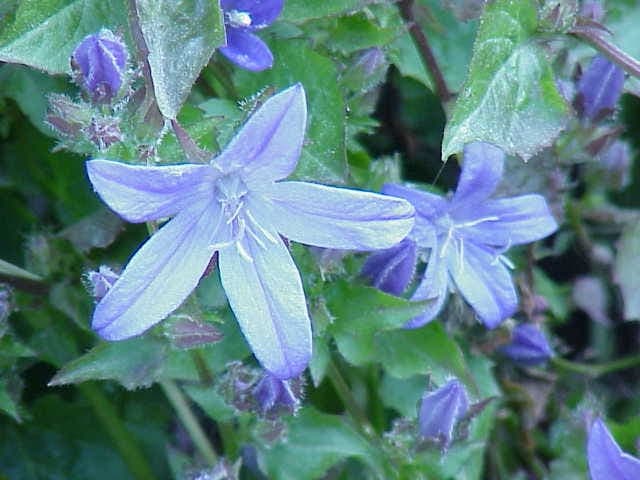
Kurt Stüber [1] / CC BY-SA 3.0, via Wikimedia Commons
Trailing bellflower: complete guide
Campanula poscharskyana
Want to see Trailing bellflower: complete guide in your garden?
1 minute, no credit card
Overview
Trailing bellflower (Campanula poscharskyana) is one of those unassuming plants that quietly steals the show in the garden. Native to the rocky hills of former Yugoslavia, this creeping perennial thrives in tough spots where other plants struggle. It's a member of the Campanulaceae family and earns its name from the way it spills over edges, walls, and rock crevices with ease. With its delicate, star-shaped blooms and low, spreading habit, it's a top pick for rock gardens, borders, and container edges. At just 10–15 cm tall but spreading up to 50 cm wide, it forms a soft, flowering carpet that lasts all summer. On gardenworld.app you can design a layered planting scheme that highlights this plant's cascading beauty.
Appearance & bloom cycle
The plant features slender, trailing stems clothed in small, heart-shaped to triangular green leaves. From late spring to early autumn - typically June through August - it produces masses of pale lavender to deep violet, star-shaped flowers. Each bloom is about 2–3 cm across, with five flared petals and a soft, open face. The flowers appear in loose clusters at the stem tips, creating a waterfall effect when grown on walls or in hanging baskets. Deadheading isn't essential, but trimming back spent stems encourages a second, lighter flush of blooms in September. The overall effect is informal and romantic, perfect for cottage or naturalistic gardens.
Ideal location
Trailing bellflower grows best in full sun to light shade. For the densest growth and most prolific flowering, aim for at least 6 hours of direct sunlight per day. It's especially effective on rock walls, stone steps, raised beds, or as a spiller in mixed containers. It also works well in dry, sunny slopes where grass struggles. Avoid deep shade, as this leads to leggy growth and fewer flowers. Because it trails so gracefully, it's a favourite for softening hardscaping. Try pairing it with gravel paths or flagstone patios. Use gardenworld.app to visualise how this plant can enhance your garden's structure with flowing, natural lines.
Soil requirements
This plant isn't fussy about soil richness but demands good drainage. It excels in poor, gritty, or sandy soils - the kind that dry out quickly. Avoid heavy clay unless amended with grit or compost. A pH between 6.0 and 7.5 is ideal. In containers, use a standard potting mix with added perlite or pumice for extra drainage. It's an excellent choice for xeriscaping or low-water gardens, as it becomes drought-tolerant once established.
Free design
Want to see Trailing bellflower: complete guide in your garden? Make a free design now.
Watering
During the first few weeks after planting, keep the soil evenly moist to help roots establish. After that, watering is minimal. Established plants can handle dry spells of two weeks or more without stress. Water only when the top 2–3 cm of soil feels dry. Overwatering, especially in poorly drained soil, is the main cause of failure - it invites root rot. In hot summers, container plants may need watering once or twice a week.
Pruning
After the main bloom period, cut back the stems by about half using sharp shears. This promotes bushier growth and can trigger a second bloom. If the plant looks tired in midsummer, a hard prune to 5 cm above the ground revives it. Avoid pruning in late autumn - leave the old growth to protect crowns over winter. In spring, remove any winter-damaged foliage before new growth starts.
Maintenance calendar
- March–April: Remove old foliage; apply light fertiliser as growth resumes.
- May: Plant new specimens. Water regularly for first month.
- June–August: Peak bloom. Deadhead lightly to encourage repeat flowering.
- September: Trim back after flowering. Watch for second bloom.
- October: Leave stems intact for winter protection.
- November–February: Dormant period. No action needed in USDA zones 3–8.
Winter hardiness
Trailing bellflower is hardy in USDA zones 3 to 8. It survives temperatures down to -40°C when properly sited. In colder zones, a light mulch helps prevent frost heave. In wet winters, especially in clay soils, crown rot can be an issue. Elevating the planting area or using raised beds improves survival. Container-grown plants should be moved to a sheltered spot or against a house wall in harsh climates.
Companion plants
Pair with drought-tolerant perennials like sedum, thyme, creeping phlox, or yarrow. It contrasts beautifully with silver-foliage plants like lamb's ear or artemisia. In rock gardens, combine with dwarf iris, aubrieta, or sempervivum. Avoid planting near aggressive spreaders like mint or ground ivy that can overwhelm it.
Closing
Trailing bellflower is a reliable, low-effort plant that delivers high impact. Its graceful habit and long bloom time make it a staple in informal gardens. It's easy to propagate from cuttings or division, and once settled, it asks for little. Find it at local garden centres or online retailers, and give it a sunny, well-drained spot to shine. For layout ideas and planting combinations, gardenworld.app offers custom garden plans that make the most of this plant's flowing form.
Want to see Trailing bellflower: complete guide in your garden? Make a free design now.
Upload a photo, pick a style, and get a photorealistic design with plant list in under a minute.
No credit card required


Similar plants
Campanula alaskana: complete guide
Campanula alaskana
Discover Campanula alaskana, the delicate alpine bellflower from Alaska. Growing tips, hardy requirements, and design ideas for rock gardens and alpine troughs.
Campanula scouleri: complete guide
Campanula scouleri
Discover Campanula scouleri, the refined Pacific bellflower. Growing tips, care requirements, and design ideas for woodland and mountain gardens.
Doublehorn calicoflower: complete guide
Downingia bicornuta
All about Downingia bicornuta - the doublehorn calicoflower: sowing, location, bloom and care for this rare annual in your garden.