
Skalle-Per Hedenhös / CC BY-SA 4.0, via Wikimedia Commons
Peach-bells: complete guide
Campanula persicifolia
Want to see Peach-bells: complete guide in your garden?
1 minute, no credit card
Overview
Campanula persicifolia, commonly known as Peach-bells, is a standout among garden perennials for its tall, airy presence and long bloom season. Native to woodlands and meadows across central and eastern Europe, this herbaceous perennial thrives in temperate climates and brings vertical elegance to garden beds. It grows 60 to 90 cm tall, making it ideal for mid- to back-of-border placements. Unlike more aggressive spreading campanulas, Peach-bells forms neat clumps and doesn't run wild, which makes it perfect for structured designs or smaller gardens.
The plant dies back completely in winter and returns reliably each spring, usually emerging in late March to early April in USDA zones 4–8. Once established, it's a low-fuss plant that asks for little but gives back in spades - especially when massed in drifts along a path or paired with contrasting foliage. Its upright habit means it rarely needs staking, even in windy spots, as long as it's not overwatered or shaded too deeply.
On gardenworld.app, you can map out a planting scheme where Peach-bells complement other mid-height perennials, ensuring balanced structure and seasonal interest.
Appearance & bloom cycle
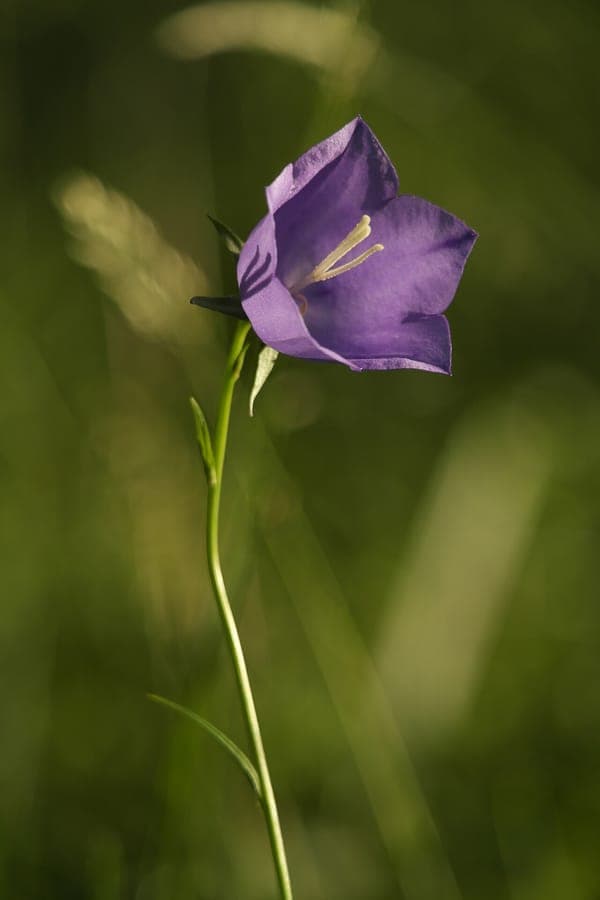
Peach-bells earns its name from its narrow, lance-shaped leaves that resemble those of a peach tree (persica = peach). The foliage is deep green, smooth, and clustered at the base, while the flowering stems rise cleanly above, carrying clusters of downward-facing, bell-shaped flowers. Each bloom is 3–4 cm long and comes in a rich, sky-blue shade - though white cultivars like 'Alba' are also widely available.
Flowering kicks off in May and can last through August, peaking in June and July. The blooms are held on slender, branching stems that sway gently in the breeze, adding movement to the garden. They also make excellent cut flowers - long-lasting in a vase with just a few sprigs for a minimalist arrangement.
Deadheading spent stems encourages a second, lighter flush of blooms in late summer. If left uncut, the plant may self-seed modestly, but not invasively.
Ideal location
Full sun to light shade is best. In full sun, you'll get the most flowers and sturdiest stems. In hotter climates (zones 7–8), afternoon shade helps prevent stress during heatwaves. Avoid deep shade, as this leads to leggy growth and fewer blooms.
Peach-bells works beautifully in cottage gardens, modern borders, or gravel beds. Its upright form adds rhythm without crowding neighbouring plants. It's also effective when planted in groups of three or five for visual impact.
Free design
Want to see Peach-bells: complete guide in your garden? Make a free design now.
Soil requirements
The soil should be well-drained but moisture-retentive - think loamy or sandy loam. Heavy clay can work if amended with compost or grit to improve drainage. The ideal pH range is 6.0 to 7.5. Avoid waterlogged soil, as this leads to crown rot, especially in winter. If your soil is poor, mix in a bucket of compost per square meter before planting.
Watering
Water regularly during the first growing season, especially in dry spells. Once established, Peach-bells are fairly drought-tolerant but perform best with consistent moisture. Avoid overhead watering to reduce the risk of fungal diseases. Water at soil level, ideally in the morning.
Pruning
After the first bloom wave, cut back flowered stems to just above the basal foliage. This keeps the plant looking tidy and may prompt a second bloom. Leave the basal leaves intact through winter - they help insulate the crown. In late winter or early spring, remove any old foliage before new growth emerges.
Maintenance calendar
- Jan: Dormant; no action needed
- Feb: Clear away old foliage if not done in fall
- Mar: New shoots appear; watch for slugs
- Apr: Water if dry; check soil moisture
- May: Bloom begins; monitor for aphids
- Jun: Peak bloom; deadhead regularly
- Jul: Continue deadheading; water in prolonged dry spells
- Aug: Final blooms; cut back for neatness
- Sep: Reduce watering
- Oct: Leave plant intact for winter structure
- Nov: No maintenance
- Dec: Protect young plants with mulch in harsh winters
Winter hardiness
Hardy to USDA zone 4 (-34°C), Peach-bells easily survives most European and North American winters. Mature clumps are particularly resilient. In zone 8, provide light mulch in summer-dry areas to prevent drought stress, but avoid heavy winter mulching that can trap moisture.
Companion plants
Pair Peach-bells with plants that share its growing conditions. Good partners include Alliums, Geranium 'Rozanne', Nepeta, and Salvia nemorosa. These combinations offer contrasting textures and extended bloom times. Avoid overly vigorous spreaders like mint or goldenrod, which can overpower it.
Closing
Peach-bells is one of those perennials that earns its keep - elegant, long-blooming, and easygoing. It fits seamlessly into both formal and relaxed garden styles. You'll find healthy specimens at most garden centres in late spring, especially at trusted retailers like garden centres nationwide. Whether you're designing a new border or refreshing an old one, Peach-bells delivers structure and charm. Use gardenworld.app to visualise how it fits into your seasonal garden plan, adjusting for height, colour, and bloom overlap with other plants.
Want to see Peach-bells: complete guide in your garden? Make a free design now.
Upload a photo, pick a style, and get a photorealistic design with plant list in under a minute.
No credit card required


Similar plants
Campanula alaskana: complete guide
Campanula alaskana
Discover Campanula alaskana, the delicate alpine bellflower from Alaska. Growing tips, hardy requirements, and design ideas for rock gardens and alpine troughs.
Campanula scouleri: complete guide
Campanula scouleri
Discover Campanula scouleri, the refined Pacific bellflower. Growing tips, care requirements, and design ideas for woodland and mountain gardens.
Doublehorn calicoflower: complete guide
Downingia bicornuta
All about Downingia bicornuta - the doublehorn calicoflower: sowing, location, bloom and care for this rare annual in your garden.