
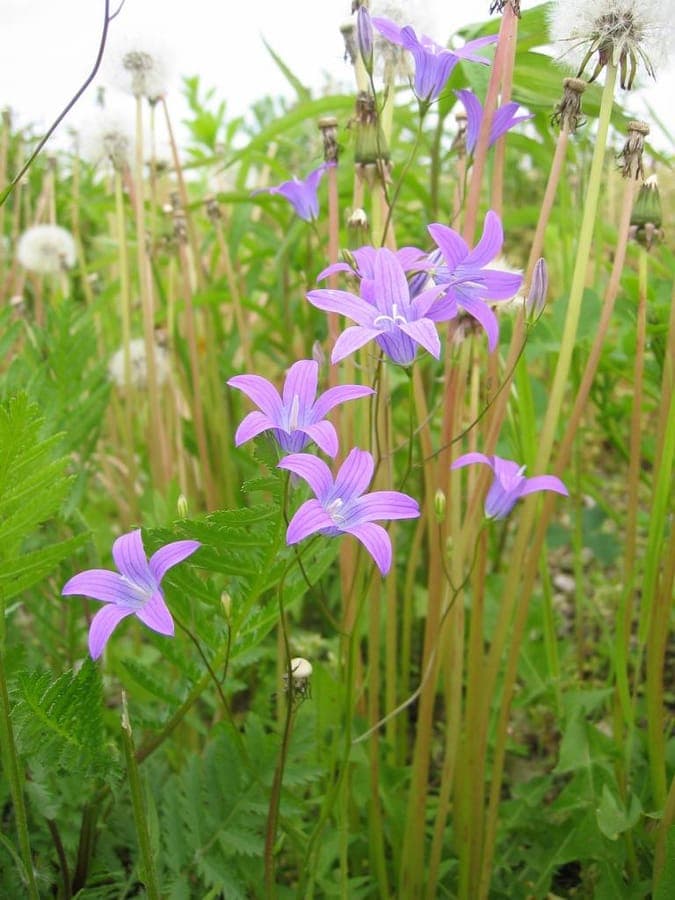
Wikimedia Commons / CC BY-SA 3.0, via Wikimedia Commons
Spreading bellflower: complete guide
Campanula patula
Want to see Spreading bellflower: complete guide in your garden?
1 minute, no credit card
Overview
Campanula patula, commonly known as spreading bellflower, is a graceful perennial that brings a delicate charm to gardens across Europe. Native to grasslands and open slopes, this herbaceous plant thrives in well-drained soils and full sun. Reaching heights of 30 to 50 cm, it spreads gently through underground runners, forming loose clumps without becoming invasive. Its airy, star-shaped blue flowers dance above slender stems from late spring into summer, making it a favourite for cottage-style and naturalistic planting schemes. If you're after a plant that looks effortless but delivers consistent beauty, Campanula patula fits the bill.
On gardenworld.app, you can create a custom garden layout that highlights the spreading bellflower's natural growth pattern, ensuring it has room to shine among complementary plants.
Appearance & bloom cycle
The spreading bellflower features open, branching stems tipped with upward-facing, bell-shaped blooms. Each flower is about 2–3 cm wide, with five pointed petals in a soft sky-blue to deep azure hue, often with subtle purple streaks. The blooms appear from May through August, peaking in June and July. Flowering occurs in waves, with brief pauses in between, offering an extended seasonal interest. The foliage is lance-shaped, slightly hairy, and medium green, forming a tidy basal rosette in spring before the flowering stems rise.
The plant maintains an upright yet relaxed posture, perfect for the middle or front of borders. Its open structure allows light to filter through, creating movement and depth. Bees, hoverflies, and small butterflies are frequent visitors, drawn to the nectar-rich flowers.
Ideal location
This Campanula thrives in full sun-aim for at least 8 hours of direct light daily. A south- or southeast-facing spot is ideal. While it tolerates light shade, too much results in leggy growth and fewer flowers. It performs well in rock gardens, on dry banks, or in gravel beds. Due to its spreading nature, it works beautifully in informal settings, such as cottage gardens or wildflower meadows. Avoid overcrowding; give each plant 30–40 cm of space to develop naturally.
Soil requirements
Well-drained soil is essential. Campanula patula dislikes wet feet and will rot in heavy clay or waterlogged conditions. Opt for sandy or loamy soil with a pH between 5.5 and 6.5. If your soil is too alkaline, consider adding pine bark or leaf mould to slightly acidify it. Avoid rich soils or excessive fertiliser-too much nitrogen promotes leafy growth at the expense of blooms. A light mulch of grit or gravel helps retain warmth and improves drainage.
Free design
Want to see Spreading bellflower: complete guide in your garden? Make a free design now.
Watering
Water newly planted specimens regularly for the first month to help establish roots. Once settled, the plant is drought-tolerant and rarely needs supplemental watering. Only irrigate during prolonged dry spells, especially in sandy soils. Overhead watering should be avoided-water at the base to prevent fungal issues on the foliage.
Pruning
Deadhead spent flowers to encourage a second flush in late summer. After the main bloom period in July, cut back the stems by one-third to promote bushier regrowth. This light trim can extend flowering into August. Avoid hard pruning in autumn; leave the old growth to protect the crown during winter. Cut back fully in early spring before new shoots emerge.
Maintenance calendar
- March: Remove any old foliage, check for crown health
- April: Apply a thin layer of compost if soil is poor
- May: Begin of bloom season, monitor for moisture stress
- June: Peak flowering, consider light pruning after first flush
- July: Second bloom possible, maintain even soil moisture
- August: Final flowering, stop pruning to allow seed set
- September: Cease feeding, let seeds disperse for self-seeding
- October–February: Leave standing for winter structure and wildlife
Winter hardiness
Campanula patula is hardy to USDA zone 5 (-20°C). The root system survives freezing temperatures well, especially when protected by a light layer of mulch or fallen leaves. In colder zones, a dry winter mulch of straw or pine needles can prevent frost heave. Avoid wet mulches like bark chips in winter, as they retain too much moisture.
Companion plants
Pair spreading bellflower with sun-loving, drought-tolerant perennials. Good companions include Nepeta racemosa, Salvia nemorosa, Echinacea purpurea, and ornamental grasses like Stipa tenuissima. It contrasts beautifully with silvery foliage plants such as Artemisia or Lavandula. Avoid moisture-loving plants like hostas or astilbes, which have conflicting needs.
Use the companion planner on gardenworld.app to visualise how Campanula patula fits into your garden alongside other summer-blooming perennials.
Closing
Spreading bellflower is a reliable, low-fuss perennial that adds airy elegance to any garden. With its long bloom season and pollinator appeal, it's a smart choice for both beginners and seasoned gardeners. You can find Campanula patula at garden centres across the UK and Europe. Look for healthy plugs or potted plants in spring at trusted retailers. Plant it in a sunny spot with well-drained soil, and step back-you'll be rewarded with years of carefree beauty.
Want to see Spreading bellflower: complete guide in your garden? Make a free design now.
Upload a photo, pick a style, and get a photorealistic design with plant list in under a minute.
No credit card required


Similar plants
Campanula alaskana: complete guide
Campanula alaskana
Discover Campanula alaskana, the delicate alpine bellflower from Alaska. Growing tips, hardy requirements, and design ideas for rock gardens and alpine troughs.
Campanula scouleri: complete guide
Campanula scouleri
Discover Campanula scouleri, the refined Pacific bellflower. Growing tips, care requirements, and design ideas for woodland and mountain gardens.
Doublehorn calicoflower: complete guide
Downingia bicornuta
All about Downingia bicornuta - the doublehorn calicoflower: sowing, location, bloom and care for this rare annual in your garden.