
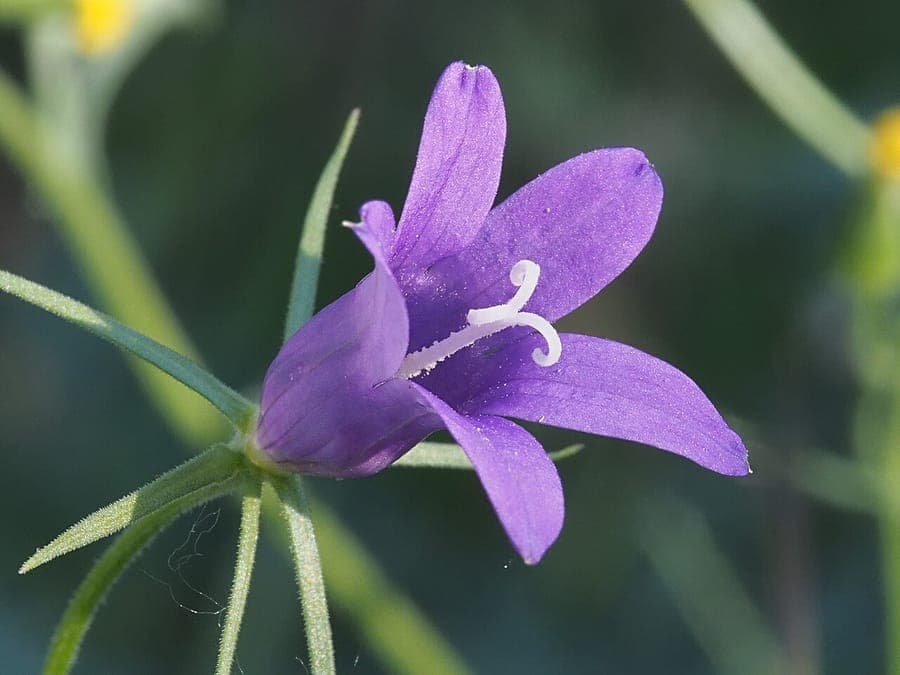
Luis Fernández García / CC BY-SA 4.0, via Wikimedia Commons
Portuguese Bellflower: complete guide
Campanula lusitanica
Want to see Portuguese Bellflower: complete guide in your garden?
1 minute, no credit card
Overview
The Portuguese bellflower, scientifically known as Campanula lusitanica, is a rare and delicate alpine flower native to the mountain regions of northwestern Spain and Portugal. This plant is a gem for enthusiasts of alpine and Mediterranean flora. With its silky, blue to purple flowers, it makes a beautiful addition to rock gardens, alpine troughs, and exposed mountain areas.
This Campanula species is endemic to the Iberian Peninsula, meaning it grows nowhere else in the wild. In the botanical world, this plant is valued for its horticultural interest and scientific significance. The delicate flowers appear from June to September, providing a sustained floral display throughout summer and early autumn.
Appearance and Bloom
Campanula lusitanica is a compact herbaceous plant typically growing 20 to 40 centimeters tall. The stems are slender and hairy, growing upright to somewhat spreading. The leaves are linear to lance-shaped, small and delicate, regularly arranged along the stems.
The flowers are the stars of this plant. They are small to medium-sized, about 1 to 1.5 centimeters in diameter, displaying the characteristic bell shape Campanula is famous for. Flower color ranges from bright blue to purple, sometimes with lighter edges. The flowers grow in loose clusters at the stem tips. While each individual flower lasts only a few days, the plant continuously produces new blooms throughout the summer months.
Ideal Location
The Portuguese bellflower thrives in full sun, so ensure your plant receives at least six to eight hours of direct sunlight daily. This promotes flowering and compact growth. In warm climates, light afternoon shade can be beneficial, especially in regions where temperatures regularly exceed 28 degrees Celsius.
This plant grows naturally on mountain slopes and rocky terrain, so it tolerates wind well. Do not plant it in sheltered corners where stagnant, humid air accumulates. Good air circulation is essential for plant health and fungal prevention.
In gardens, Campanula lusitanica works best in alpine troughs, rock gardens, terracotta containers on raised surfaces, or in free-draining scree beds. Place it on raised zones or slopes where water cannot stagnate.
Soil
The most critical factor for success with this plant is perfect drainage. The Portuguese bellflower grows naturally on rocky mountain soils with minimal organic matter. In the garden, you must create very well-draining, slightly acidic to neutral soil.
Mix: Combine mostly stony material - about 40 percent sand, 40 percent small gravel or grit, and only 20 percent nutrient-rich soil or leaf mold. This mimics its natural alpine habitat. Some gardeners add extra stone grit for particularly challenging specimens.
Avoid heavy clay or peat-rich mixes entirely. These lead to root rot. A pH around 6.0 to 7.0 is ideal, though the plant tolerates slightly more acidic soil. Ensure containers have at least 5 centimeters of drainage holes.
Watering
Once established, Campanula lusitanica has low water requirements. Water only when the top two centimeters of soil feel dry. During the growing season (spring and summer), this might be every two to three weeks, depending on rainfall and temperature.
During dry periods water more thoroughly but less frequently. Ensure water drains well. Avoid watering from above on the foliage; water at soil level to prevent fungal issues. In winter, when the plant is dormant, water can be drastically reduced.
In very warm periods, daily checking may be necessary for container-grown plants, but beware of overwatering. Slightly moist soil during the flowering period (June-August) supports more abundant and longer blooms.
Free design
Want to see Portuguese Bellflower: complete guide in your garden? Make a free design now.
Pruning
The Portuguese bellflower requires minimal pruning. After flowering, you can carefully remove faded flower stems with a sharp knife or pruning shears. This encourages the plant to produce more side shoots and flowers.
If the plant slows after the first flush, careful deadheading (removing spent flowers) can encourage a second flush of autumn blooms. However, remove no more than the top 5 to 10 centimeters of each stem.
In early spring, some old foliage can be gently removed from the base if it is obviously dead or damaged. Avoid heavy pruning, as this can weaken the plant.
Maintenance Calendar
February-March: Check for winter damage. Remove dead foliage. Apply minimal feeding if needed.
April-May: Begin light watering as the growing season starts. Check regularly for pest infestations. Move container-grown plants outdoors after the last frost.
June-September: Flowering season. Keep moisture levels consistent. Deadhead regularly. Monitor for fungal issues or scale insects.
October-November: Lower watering. Allow dead foliage to drop. Move container plants to sheltered locations in harsh climates.
December-January: Minimal care needed. Protect against excessive wet conditions. Ensure containers are well-drained.
Winter Hardiness
Campanula lusitanica is reasonably hardy, tolerating temperatures down to about minus 12 degrees Celsius, possibly slightly lower. This makes it suitable for most average to cold climates in Europe.
In extremely harsh winters (below minus 15 degrees) or in regions with long, wet winters, protection can be helpful. In container culture, move the plant to an unheated greenhouse, shed, or protected corner against walls. Add a layer of dry mulch around the base in snowy regions.
In very warm climates (above 30 degrees average), extra care for shade and moisture management may be needed. The plant thrives better in mountain habitats or areas with cooler summer nights.
Companion Plants
Plant associations work well when they share the same growing conditions. For Campanula lusitanica:
Other Alpine Campanulas: Campanula cochleariifolia, Campanula rotundifolia, and Campanula pulla all make good alpine garden partners. They share the same preference for good drainage and sun.
Alpine Sedums: Sedum album, Sedum spathulifolium, and other mountain sedums complement the flower tones and share exactly the same garden requirements.
Alpine Phlox: Phlox subulata and Phlox douglasii have the same compact growth and bloom timing, creating beautiful blue to pink carpets in spring-summer.
Alpine Thymes: Species like Thymus serpyllum add aromatic foliage and tiny flowers and can grow around Campanula plants without competing.
Lichens and Stonework: In alpine troughs, ornamental stone work, and rock gardens with other small alpines like Androsace, Sempervivum, and Saxifraga. Ensure drainage requirements sync.
Conclusion
The Portuguese bellflower is a rare and delicate plant that rewards successful growth for those who can provide what it needs - especially perfect drainage, abundant sun, and careful moisture management. It is not a plant for beginners with wet soil types, but for alpine and Mediterranean enthusiasts, it is absolutely worth the effort.
If you wish to grow it in a warm region, purchase from reputable seed merchants or specialized alpine nurseries. Online sources in the Netherlands and Belgium include GardenWorld and local alpine specialists, though this rare species may not always be in stock. For a safer choice, ask your local nursery about related Campanula species.
With patience and the right care conditions, you will enjoy many years of this beautiful alpine flower. Its delicate blooms and elegant habit make it worthy of a place in any alpine garden collection.
Want to see Portuguese Bellflower: complete guide in your garden? Make a free design now.
Upload a photo, pick a style, and get a photorealistic design with plant list in under a minute.
No credit card required


Similar plants
Campanula alaskana: complete guide
Campanula alaskana
Discover Campanula alaskana, the delicate alpine bellflower from Alaska. Growing tips, hardy requirements, and design ideas for rock gardens and alpine troughs.
Campanula scouleri: complete guide
Campanula scouleri
Discover Campanula scouleri, the refined Pacific bellflower. Growing tips, care requirements, and design ideas for woodland and mountain gardens.
Doublehorn calicoflower: complete guide
Downingia bicornuta
All about Downingia bicornuta - the doublehorn calicoflower: sowing, location, bloom and care for this rare annual in your garden.