
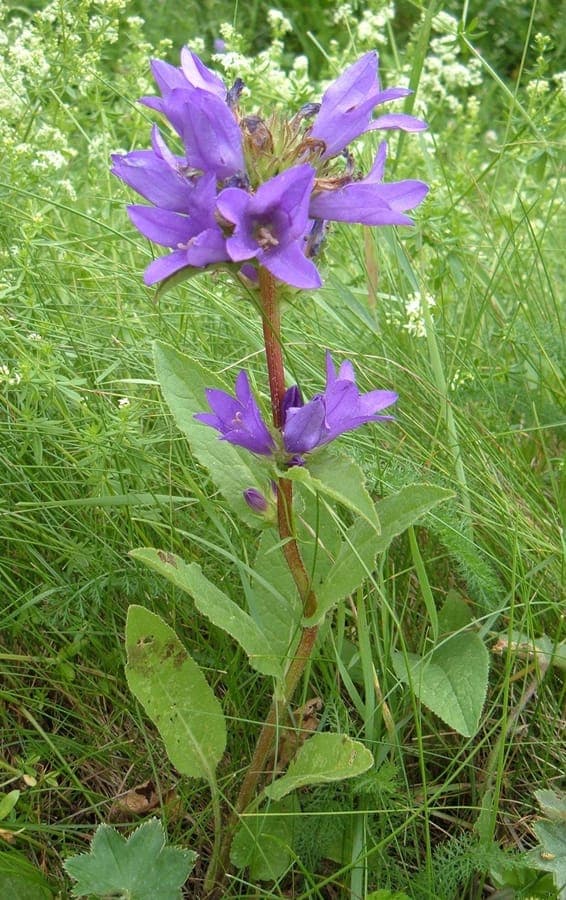
Dag Lindgren / CC BY-SA 3.0, via Wikimedia Commons
Dane's-blood: complete guide
Campanula glomerata
Want to see Dane's-blood: complete guide in your garden?
1 minute, no credit card
Overview
Campanula glomerata, commonly known as Dane's-blood, is a striking perennial that brings vertical interest and rich blue tones to the garden from June through September. Native to central and eastern Europe, including the Baltic States, Belarus, and Austria, this resilient plant thrives in temperate climates and fits seamlessly into cottage gardens, mixed borders, and wildlife-friendly plots. As a gardener, you'll appreciate its upright form, clustered blooms, and minimal care requirements once established.
On gardenworld.app, you can design a custom planting scheme that highlights Dane's-blood alongside complementary perennials for structured seasonal impact.
Appearance & bloom cycle
Dane's-blood grows 30 to 60 cm tall with a spread of about 30 cm. Its most distinctive feature is the dense, clustered inflorescence-tight groups of bell-shaped flowers that sit atop rigid, upright stems. The blooms are typically deep blue, though cultivars like 'Superba' offer richer violet shades, and 'Alba' provides a clean white alternative. Flowering begins in June, peaks in July, and can extend into September, especially if you deadhead or cut back after the first flush.
The foliage is lance-shaped, slightly toothed, and medium green. Basal rosettes form in spring, followed by flowering stems. Unlike some sprawling campanulas, this variety maintains a tidy, upright habit-ideal for clean-lined borders.
Ideal location
Dane's-blood performs best in full sun to partial shade, scoring a 7 out of 10 on the light scale. It loves morning sun with afternoon shade, especially in warmer zones (USDA 7-8). In full sun with well-drained soil, it blooms most profusely. Too much shade leads to leggy growth and fewer flowers. Avoid hot, reflected heat from walls or paved areas, which can stress the plant.
Plant it in the middle of a border where it can stand out among silvery foliage or warm-toned blooms. Pair it with Nepeta or Echinacea for contrast. Use the garden planner on gardenworld.app to preview spacing and visual balance before planting.
Soil requirements
This campanula prefers well-drained, moderately fertile soil. It tolerates clay if it doesn't stay waterlogged in winter-poor drainage leads to root rot. Sandy soils work well, especially if enriched with compost to improve moisture retention. The ideal pH range is between 6.0 and 7.5. Amend heavy soils with grit or composted bark to enhance structure.
Avoid overly rich soils, which can cause excessive leafy growth at the expense of flowers. In naturalistic gardens, it adapts well to leaner conditions.
Free design
Want to see Dane's-blood: complete guide in your garden? Make a free design now.
Watering
Water regularly during the first growing season to help establish deep roots. Once settled, Dane's-blood is fairly drought-tolerant. During dry spells, water deeply once a week, soaking the base rather than wetting the foliage to prevent fungal issues. Use drip irrigation or a watering can at soil level.
Overhead watering increases the risk of powdery mildew, especially in humid climates. Mulch lightly with gravel or compost to retain moisture without smothering the crown.
Pruning
Deadhead spent flowers to prolong blooming and reduce self-seeding. For a second flush, cut back the entire plant by half in late July or early August after the main bloom. This encourages fresh foliage and new flower buds in late summer. Use clean, sharp shears and cut just above a leaf node.
Leave some seed heads in autumn if you want naturalised drifts-this plant self-seeds moderately, especially in open, disturbed soil.
Maintenance calendar
- March–April: Clear away old foliage. Divide overcrowded clumps every 3–4 years in early spring.
- May: Plant new specimens. Apply a balanced organic fertiliser or compost top-dressing.
- June–July: Peak bloom. Monitor for slugs on young shoots. Water during dry periods.
- August: Cut back after first flowering. Watch for aphids on new growth.
- September: Enjoy second bloom. Collect seeds if desired.
- October–November: Cut back remaining stems or leave for winter texture. Mulch lightly in colder zones.
- December–February: Dormant period. No action needed.
Winter hardiness
Dane's-blood is hardy in USDA zones 3 to 8. It dies back to the ground in winter and re-emerges in spring. In zone 3, a light mulch of straw or leaf litter helps protect the crown during extreme cold. Avoid thick organic mulch that traps moisture-this increases rot risk. Established plants reliably return each year.
Companion plants
Pair Dane's-blood with plants that share its sun and soil needs. Great companions include:
- Lavandula angustifolia – for fragrance and purple contrast
- Salvia nemorosa – similar bloom time and upright form
- Echinacea purpurea – adds height and attracts pollinators
- Stachys byzantina – soft silver foliage for textural contrast
- Allium giganteum – early summer structure
Avoid aggressive spreaders like mint or ground ivy, which can overwhelm this modest grower.
Closing
Campanula glomerata is a must-have for gardeners who value structure, colour, and ease. Its clustered blue bells bring elegance to borders, and its long season of interest makes it a reliable performer. It's also a pollinator favourite-bees and hoverflies regularly visit the nectar-rich flowers.
You can find Dane's-blood at local garden centres across the UK and US, often labelled under its cultivar names. For design inspiration, visit gardenworld.app to visualise how this plant fits into your garden's light, space, and style-before you buy a single pot.
Want to see Dane's-blood: complete guide in your garden? Make a free design now.
Upload a photo, pick a style, and get a photorealistic design with plant list in under a minute.
No credit card required


Similar plants
Campanula alaskana: complete guide
Campanula alaskana
Discover Campanula alaskana, the delicate alpine bellflower from Alaska. Growing tips, hardy requirements, and design ideas for rock gardens and alpine troughs.
Campanula scouleri: complete guide
Campanula scouleri
Discover Campanula scouleri, the refined Pacific bellflower. Growing tips, care requirements, and design ideas for woodland and mountain gardens.
Doublehorn calicoflower: complete guide
Downingia bicornuta
All about Downingia bicornuta - the doublehorn calicoflower: sowing, location, bloom and care for this rare annual in your garden.