
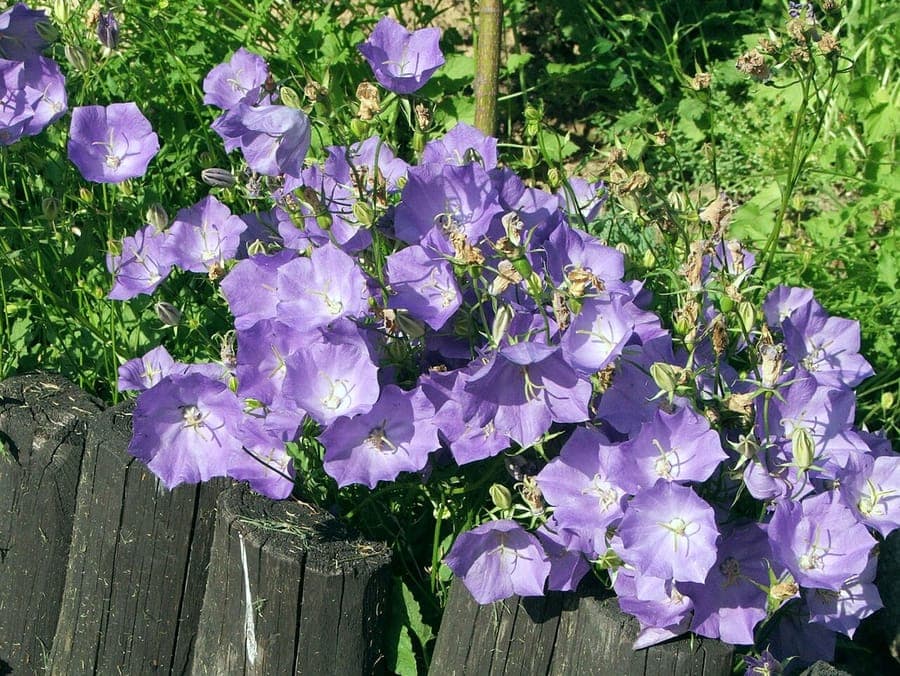
Jerzy Opioła / CC BY-SA 4.0, via Wikimedia Commons
Carpathian harebell: complete guide
Campanula carpatica
Want to see Carpathian harebell: complete guide in your garden?
1 minute, no credit card
Overview
Campanula carpatica, commonly known as Carpathian harebell, is a charming herbaceous perennial native to the Carpathian Mountains of Romania, Ukraine, and Slovakia. This compact, clump-forming plant has earned a loyal following among gardeners for its long bloom time, neat habit, and resilience in tough spots. Reaching just 15–20 cm in height, it's ideal for the front of borders, rock gardens, or tucked between paving stones where its nodding blue bells can peek through.
What sets this plant apart is its ability to bloom heavily from early summer through fall, especially when deadheaded. It doesn't spread aggressively, making it well-behaved in mixed plantings. Its modest presence adds texture without overwhelming - a quiet performer that enhances the rhythm of a well-designed border. On gardenworld.app you can create a garden plan that perfectly integrates Carpathian harebell into your landscape, especially if you're working with dry, sunny areas or stone features.
Appearance & bloom cycle
Carpathian harebell forms a dense mound of dark green, slightly toothed oval leaves. From June to September, it produces upward-facing to slightly nodding bell-shaped flowers in a rich sky-blue shade - around 3 cm wide. Some cultivars offer white or pale lavender blooms, but the blue is the most popular and long-lasting.
The primary bloom peaks in June and July. A short lull follows in late July to early August, but cutting back the spent flower stems by half encourages a strong rebloom in September. This second flush can be just as showy as the first. The foliage remains evergreen in mild winters, adding structure to the off-season garden.
Ideal location
Plant in full sun to light shade. Full sun maximizes flowering, but in hot, dry summers, a little afternoon shade helps prevent scorching and keeps the roots cooler. This plant thrives in rock gardens, wall crevices, and gravel beds - anywhere with good drainage and plenty of light.
It also works well as an edging plant along paths or in cottage-style borders. Avoid deep shade, which leads to leggy growth and sparse blooms. On gardenworld.app, you can explore layout ideas that pair Carpathian harebell with creeping thyme or dwarf sedum for a low-maintenance, flowering ground cover.
Soil requirements
Well-drained soil is non-negotiable. Campanula carpatica prefers neutral to slightly acidic loam (pH 6.0–7.0) and struggles in heavy clay or waterlogged conditions. If your soil is clay-heavy, amend it with coarse sand, grit, or perlite to improve drainage. A 2:1 mix of garden soil and grit works well in raised beds or containers.
Avoid overly rich soils. Excess nitrogen promotes leafy growth at the expense of flowers. A light top-dressing of compost in early spring is sufficient for nutrition.
Free design
Want to see Carpathian harebell: complete guide in your garden? Make a free design now.
Watering
Water regularly during dry spells, especially in the first growing season. Once established, it's moderately drought-tolerant but performs best with consistent moisture. Water at the base to prevent wet foliage, which can encourage fungal diseases like powdery mildew.
In containers, check every 2–3 days in summer. Use rainwater when possible to avoid lime buildup from tap water, which can affect soil pH over time.
Pruning
Deadhead spent flowers to prolong blooming. For a fuller rebloom, cut the entire plant back by two-thirds after the first flush fades in late July. This hard prune removes tired stems and stimulates fresh growth and new flower buds.
Avoid cutting back in fall - leave the foliage intact to protect the crown over winter. In early spring, remove any damaged or dead leaves by hand to make way for new growth.
Maintenance calendar
- Jan–Feb: Dormant. No action needed.
- Mar: Remove old foliage. Apply light compost.
- Apr: New growth appears. Watch for slugs.
- May: Water as needed. First buds form.
- Jun–Jul: Peak bloom. Deadhead regularly.
- Aug: Cut back by 50–70% after bloom lull.
- Sep–Oct: Second bloom wave. Water during dry periods.
- Nov–Dec: Leave standing. Protects crown from freeze-thaw cycles.
Winter hardiness
Hardy in USDA zones 3–8 (-40°C to -12°C). It survives cold winters well, especially under a light mulch of evergreen boughs or dry leaves. Avoid heavy mulches like compost or manure, which retain moisture and can cause crown rot in wet winters.
In areas with fluctuating winter temperatures, a light covering helps prevent heaving due to freeze-thaw cycles.
Companion plants
Pair with drought-tolerant perennials like Lavandula, Sedum, or Artemisia. Its blue flowers contrast beautifully with silvery foliage or pink blooms. It also blends well with early spring bulbs like crocus or grape hyacinth, filling in once they fade.
Avoid invasive spreaders like mint or ground elder. Stick to well-behaved neighbors that won't overwhelm its compact form.
Closing
Carpathian harebell is a quiet garden gem - not flashy, but dependable. It asks little and gives back with months of cheerful blooms and tidy foliage. Use it in cracks between stones, along walkways, or in containers on your patio. Available at most garden centres in late spring, it's an easy addition to any garden. And on gardenworld.app, you can preview how it fits into your space with design tools that suggest ideal plant pairings and layouts.
Want to see Carpathian harebell: complete guide in your garden? Make a free design now.
Upload a photo, pick a style, and get a photorealistic design with plant list in under a minute.
No credit card required


Similar plants
Campanula alaskana: complete guide
Campanula alaskana
Discover Campanula alaskana, the delicate alpine bellflower from Alaska. Growing tips, hardy requirements, and design ideas for rock gardens and alpine troughs.
Campanula scouleri: complete guide
Campanula scouleri
Discover Campanula scouleri, the refined Pacific bellflower. Growing tips, care requirements, and design ideas for woodland and mountain gardens.
Doublehorn calicoflower: complete guide
Downingia bicornuta
All about Downingia bicornuta - the doublehorn calicoflower: sowing, location, bloom and care for this rare annual in your garden.