
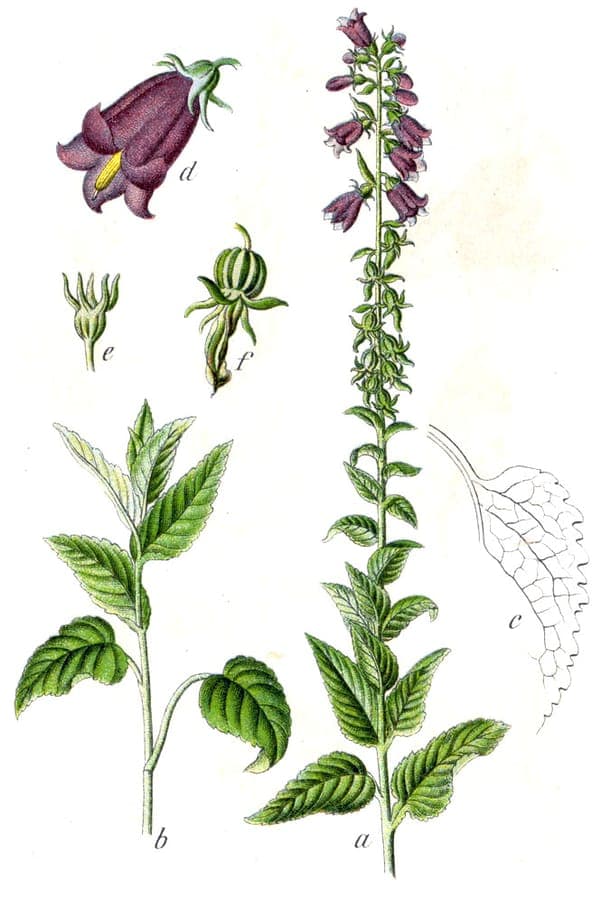
Johann Georg Sturm (Painter: Jacob Sturm) / Public domain, via Wikimedia Commons
Pale bellflower: complete guide
Campanula bononiensis
Want to see Pale bellflower: complete guide in your garden?
1 minute, no credit card
Overview
Campanula bononiensis, commonly known as the Pale bellflower, is a graceful perennial herb that brings quiet elegance to cottage gardens, borders, and rockeries. A member of the Campanulaceae family, it thrives across a wide swath of Europe, from Albania to the Baltic States and as far east as central Russia. Its natural habitat includes dry grasslands, rocky slopes, and open woodland edges – conditions that mirror what many modern gardeners aim to recreate.
In the UK and North America, this plant is gaining recognition for its long flowering season and low maintenance needs. It doesn't demand constant attention, yet rewards with delicate blooms that dance above the foliage. If you're planning a mixed border, consider using gardenworld.app to visualise how Campanula bononiensis fits into your seasonal colour scheme.
Appearance & bloom cycle
This herbaceous perennial grows in an upright, slender form, reaching 50 to 70 cm in height. The stems are covered in broad, dark green leaves with a slightly hairy texture, giving them a soft feel. From June through August, loose panicles of nodding, bell-shaped flowers appear at the tips of the stems. The blooms are a soft lavender-blue, around 3 to 4 cm long, and delicately reflexed at the tips.
Unlike some Campanula species that bloom briefly, C. bononiensis offers a prolonged display, often lasting ten weeks or more in ideal conditions. The flowers attract pollinators like bumblebees and hoverflies, adding ecological value to your plot. After flowering, small seed capsules form and split open in late autumn, allowing limited self-seeding in well-drained spots.
Ideal location
Aim for a spot with a light level of 7 – that means full sun to light shade. In cooler climates like the UK, full sun is ideal. In hotter zones (USDA 7–8), a bit of afternoon shade can prevent stress during heatwaves. Plant in the middle or front of a border where the flowers can be appreciated up close.
Avoid deep shade or areas crowded by taller, aggressive perennials. The Pale bellflower needs space and airflow to thrive. It also works well in containers on sunny patios. Use gardenworld.app to check sun exposure in your garden and plan placement accordingly.
Soil requirements
This plant thrives in well-drained, alkaline soil with a pH between 7.5 and 8.0. It's particularly happy in chalky or limestone-rich soils, common in southern England or the Midwest US. If your soil is acidic or heavy clay, amend it with grit, horticultural sand, and composted leaf mould.
Avoid waterlogged conditions – the roots are prone to rot if left in wet soil over winter. A light mulch of gravel or crushed oyster shell helps keep the crown dry and discourages slugs. Don't use peat-based mulches, as they acidify the soil over time.
Free design
Want to see Pale bellflower: complete guide in your garden? Make a free design now.
Watering
Once established, Campanula bononiensis is moderately drought-tolerant. However, during the first growing season, consistent watering is crucial. Water deeply once or twice a week, especially in dry spells from June to August.
Always water at the base to prevent powdery mildew on the foliage. In containers, check daily in summer – pots dry out fast in full sun. Use rainwater when possible, as tap water with high mineral content can build up in the soil.
Pruning
After the main flush of flowers fades in late summer, cut the stems back to about 15 cm above ground level. This often encourages a second, lighter bloom in September. Deadheading regularly during the season also helps prolong flowering.
In early spring, remove any old, tatty foliage before new growth emerges. This keeps the plant looking tidy and reduces disease risk.
Maintenance calendar
- Jan: Dormant; no action needed
- Feb: Check for frost heave; protect crowns if exposed
- Mar: Clear old leaves; add gritty compost around base
- Apr: Light feed with balanced organic fertiliser; watch for aphids
- May: Water during dry spells; stake tall stems if needed
- Jun: Main flowering begins; monitor for slugs
- Jul: Keep soil moist; remove spent blooms
- Aug: Cut back after flowering; collect seeds if desired
- Sep: Possible second bloom; stop feeding
- Oct: Let seed heads mature or clear for winter
- Nov: Apply gravel mulch for winter protection
- Dec: Dormancy; avoid wet soil
Winter hardiness
Campanula bononiensis is hardy in USDA zones 5 to 8. It reliably survives winter with no protection in most of the UK, northern US, and central Europe. Top growth dies back, but the crown remains alive underground.
In areas with heavy, wet winters, ensure excellent drainage. Raised beds or rock gardens work well. In pots, elevate containers on feet or move to a sheltered spot to prevent waterlogging.
Companion plants
Pair with other sun-loving, well-drained soil plants like Lavandula angustifolia, Sedum spectabile, or Eryngium. The soft blues contrast beautifully with yellow coreopsis or white Shasta daisies. Avoid invasive spreaders like mint or bamboo that can overwhelm it.
For a cottage garden feel, plant in drifts among low grasses or stone edging. Nepeta and Salvia are excellent partners, both in looks and growing needs.
Closing
Campanula bononiensis is a quiet achiever in the garden – unassuming, yet consistently beautiful. It asks for little: sun, sharp drainage, and a bit of spring cleanup. In return, you get months of gentle colour and movement. Whether you're planting a small urban patio or a sprawling country border, this bellflower earns its place. And with tools like gardenworld.app, you can design a planting scheme that maximises its potential year after year.
Want to see Pale bellflower: complete guide in your garden? Make a free design now.
Upload a photo, pick a style, and get a photorealistic design with plant list in under a minute.
No credit card required


Similar plants
Campanula alaskana: complete guide
Campanula alaskana
Discover Campanula alaskana, the delicate alpine bellflower from Alaska. Growing tips, hardy requirements, and design ideas for rock gardens and alpine troughs.
Campanula scouleri: complete guide
Campanula scouleri
Discover Campanula scouleri, the refined Pacific bellflower. Growing tips, care requirements, and design ideas for woodland and mountain gardens.
Doublehorn calicoflower: complete guide
Downingia bicornuta
All about Downingia bicornuta - the doublehorn calicoflower: sowing, location, bloom and care for this rare annual in your garden.