
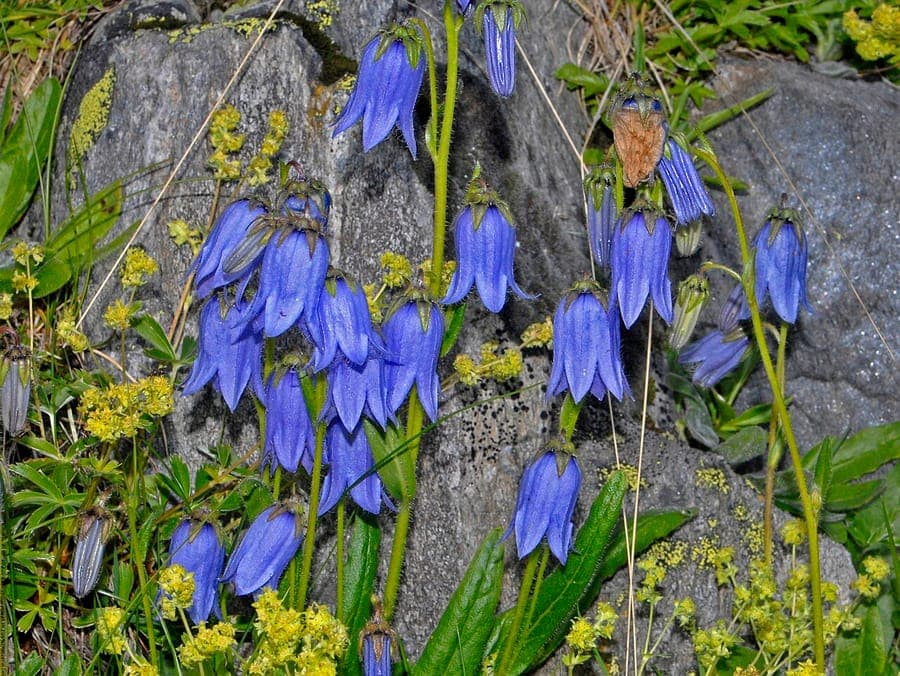
Hectonichus / CC BY-SA 3.0, via Wikimedia Commons
Bearded bellflower: complete guide
Campanula barbata
Want to see Bearded bellflower: complete guide in your garden?
1 minute, no credit card
Overview
Campanula barbata, commonly known as the Bearded bellflower, is a dainty, creeping perennial native to the mountainous regions of Central and Southern Europe, including the Alps, Pyrenees, and Carpathians. It belongs to the Campanulaceae family and stands out for its delicate, hairy calyx lobes - the 'beard' that gives it its name. Unlike some of the taller, more flamboyant Campanula species, this one hugs the ground, making it ideal for rock gardens, crevices, and low borders. In the UK and US, it's gaining popularity among gardeners who appreciate subtle beauty and low-effort plants.
On gardenworld.app, you can design a garden layout that highlights this plant's natural charm, especially when paired with other alpines and drought-loving perennials. It's not a plant that shouts for attention, but one that earns quiet admiration.
Appearance & bloom cycle
Bearded bellflower forms low, spreading mats, typically reaching 10–15 cm in height but spreading up to 30 cm wide. The foliage is small, ovate to lance-shaped, dark green, and slightly hairy. From June to July, slender stalks rise just above the leaves, bearing nodding, bell-shaped flowers in soft blue to pale lilac, about 2 cm long. The most distinctive feature is the fringe of fine hairs along the sepals - a unique trait among bellflowers.
The bloom period lasts around four weeks. In cooler summers, flowering may extend into early August. Each flower lasts several days, and the overall display creates a soft haze of colour. Bees and hoverflies are regular visitors, making it a quiet contributor to pollinator gardens.
Ideal location
This plant thrives in full sun to light shade, but performs best in a sunny, sheltered spot with excellent drainage. Think south- or east-facing rock walls, stone steps, or raised beds with gravel. It suits USDA hardiness zones 4–8, making it reliable across much of the US and UK. In cooler, wetter climates (like western Scotland or the Pacific Northwest), grow it in a raised alpine bed or trough to keep roots dry.
Avoid damp, shady corners - these are death zones for Campanula barbata. On gardenworld.app, you can assess your garden's light and drainage to see if it's a good fit.
Soil requirements
The key to growing this plant successfully is sharp drainage. It prefers sandy or gritty loam with added gravel or scoria. Heavy clay soils must be amended with coarse sand or perlite. A pH between 6.0 and 7.5 is ideal. Avoid rich, organic soils - too much fertility leads to leggy growth and fewer flowers.
In containers, use a mix of 3 parts potting soil to 1 part grit. Ensure pots have drainage holes and avoid saucers that retain water.
Free design
Want to see Bearded bellflower: complete guide in your garden? Make a free design now.
Watering
Once established, Bearded bellflower is highly drought-tolerant. Young plants in their first season need occasional watering during dry spells, especially in June and July. Water at the base to prevent fungal issues. After the first year, supplemental watering is rarely needed, except during prolonged droughts.
Overwatering is the biggest threat. Wilting in a wet summer is more likely due to root rot than thirst. If foliage turns yellow and collapses, check drainage immediately.
Pruning
Minimal pruning is required. After flowering, trim back spent stems to maintain a tidy appearance and possibly encourage a light second flush in late summer. In early spring, gently rake out old foliage to make way for fresh growth. Don't cut into old wood - this plant resprouts from the base.
Maintenance calendar
- Jan: Dormant; no action needed
- Feb: Check for snow damage; ensure good air circulation
- Mar: Remove old leaves; inspect for new shoots
- Apr: Light top-dress with gritty compost
- May: Monitor for slugs; prepare for bloom
- Jun: Peak bloom; water only if dry
- Jul: Deadhead lightly; watch for pests
- Aug: Possible re-bloom; stop feeding
- Sep: Growth slows; reduce watering
- Oct: Foliage dies back; leave for winter structure
- Nov: Dormancy begins; protect from wet
- Dec: Fully dormant; mulch lightly in cold zones
Winter hardiness
Campanula barbata is hardy to USDA zone 4 (-34°C). In zones 5–8, it survives winter with no protection, provided the soil drains well. In areas with heavy, wet winters, a light mulch of gravel or straw helps prevent rot. Avoid covering the crown - moisture trapped against it causes rot. Let old stems stand through winter; they offer insulation and visual interest.
Companion plants
Pair Bearded bellflower with other alpines like Sedum spurium, Thymus, or Aubrieta. It works well at the front of borders or spilling over walls. Avoid aggressive spreaders like mint or goldenrod that might overwhelm it.
Contrast it with silver-foliaged plants like Artemisia schmidtiana or Stachys byzantina for texture and colour balance.
Closing
Bearded bellflower isn't flashy, but it's a gem for the thoughtful gardener. It asks for little and delivers a quiet, persistent beauty. It's perfect for crevices, troughs, or any spot where you want soft colour without fuss. You'll find it seasonally at garden centres in late spring, especially those specialising in alpines. For design ideas, head to gardenworld.app - where you can visualise how this plant fits into your garden's rhythm and layout.
Want to see Bearded bellflower: complete guide in your garden? Make a free design now.
Upload a photo, pick a style, and get a photorealistic design with plant list in under a minute.
No credit card required


Similar plants
Campanula alaskana: complete guide
Campanula alaskana
Discover Campanula alaskana, the delicate alpine bellflower from Alaska. Growing tips, hardy requirements, and design ideas for rock gardens and alpine troughs.
Campanula scouleri: complete guide
Campanula scouleri
Discover Campanula scouleri, the refined Pacific bellflower. Growing tips, care requirements, and design ideas for woodland and mountain gardens.
Doublehorn calicoflower: complete guide
Downingia bicornuta
All about Downingia bicornuta - the doublehorn calicoflower: sowing, location, bloom and care for this rare annual in your garden.