
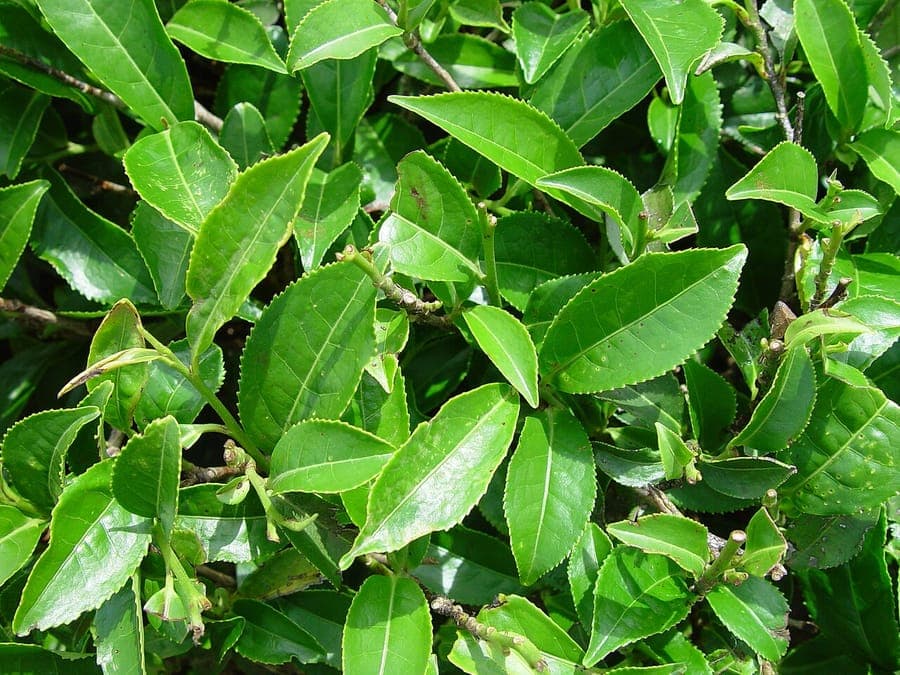
AxelBoldt at en.wikipedia / Public domain, via Wikimedia Commons
Black tea: complete guide
Camellia sinensis
Want to see Black tea: complete guide in your garden?
1 minute, no credit card
Overview
Camellia sinensis, commonly known as the tea plant, is a hardy evergreen shrub prized for its aromatic leaves used in black, green, and white teas. Native to southern China, Assam, and Southeast Asia, it thrives in humid, subtropical climates but can be grown in temperate zones with proper care. In the UK and northern Europe, it's often cultivated in containers or sheltered garden spots due to its sensitivity to prolonged frost. This plant suits informal hedges, woodland gardens, or patios, and it brings both visual appeal and utility.
On gardenworld.app, you can design a garden layout that integrates Camellia sinensis with other shade-loving evergreens for a layered, natural effect.
Appearance & bloom cycle
Camellia sinensis grows as a dense, upright shrub reaching 1.5 to 3 meters tall in ideal conditions, though container growth limits it to around 1 to 1.5 meters. The leaves are lance-shaped, glossy, and dark green, measuring 5–10 cm long with finely serrated margins. They remain evergreen year-round, providing structure even in winter.
From October to December, the plant produces fragrant white flowers, 2–3 cm wide, with prominent golden stamens. These blooms attract pollinators and add subtle charm to the late-season garden. Growth is moderate, averaging 15–25 cm per year, depending on climate and care.
Ideal location
Choose a spot with partial to full shade, especially avoiding harsh afternoon sun, which can scorch the leaves. An east- or north-facing wall or a sheltered corner under tall trees works well. In colder zones, position the plant near a house foundation to benefit from residual heat.
For container growing, use a large pot with drainage holes and move it indoors or to a cold greenhouse in winter. Garden centres often stock young tea plants in spring - look for healthy specimens with firm, unblemished foliage.
Soil requirements
The tea plant thrives in acidic to neutral soil (pH 5.0–6.5). The soil must be well-draining yet moisture-retentive. A mix of peat-free ericaceous compost, leaf mould, and perlite provides ideal structure. Avoid heavy clay soils unless amended with organic matter and grit.
In gardens with alkaline soil, grow Camellia sinensis in raised beds or containers using ericaceous compost. Mulch annually with pine needles or bark to maintain acidity and moisture.
Watering
Keep the soil consistently moist but never waterlogged. Water deeply 2–3 times a week during dry spells in summer. Use rainwater when possible, as tap water high in lime can raise soil pH and cause leaf yellowing (chlorosis).
In winter, reduce watering, especially for potted plants in dormancy. Check soil moisture by inserting a finger 3–5 cm deep - water only if dry. Overwatering in cold months is a common cause of root rot.
Free design
Want to see Black tea: complete guide in your garden? Make a free design now.
Pruning
Prune in early spring after flowering to encourage bushy growth and facilitate leaf harvest. Remove dead, damaged, or crossing branches. Light tip pruning promotes denser foliage, ideal for plucking young leaves.
If growing for tea, harvest the top two leaves and bud from new shoots between May and September. Use clean, sharp shears to prevent disease. Avoid heavy pruning in late summer or autumn to prevent tender new growth from being killed by frost.
Maintenance calendar
- January: Inspect for frost damage. No feeding.
- February: Check for pests. Prepare tools for spring pruning.
- March: Prune lightly. Begin feeding with acidic fertiliser.
- April: Take cuttings for propagation. Water if dry.
- May: Start harvesting young leaves for green tea. Apply organic mulch.
- June: Maintain consistent moisture. Watch for aphids.
- July: Continue harvesting. Avoid fertilising.
- August: Final harvest for green tea. Monitor for fungal spots.
- September: Stop harvesting. Inspect for scale insects.
- October: Plant or repot if needed. Flowers appear.
- November: Reduce watering. Protect container plants from freezing.
- December: Leave plant dormant. No pruning.
Winter hardiness
Camellia sinensis is hardy to USDA zone 8 (down to -12°C). In colder areas (zones 6–7), it requires winter protection. Use horticultural fleece or move pots to a sheltered spot. Mulch heavily around the base to insulate roots.
In regions with harsh winters, container growing is recommended. This allows flexibility and overwintering in unheated greenhouses. Young plants are most vulnerable - keep them protected for the first 2–3 years.
Companion plants
Pair Camellia sinensis with other acid-loving, shade-tolerant plants like rhododendrons, azaleas, ferns, and hostas. It also combines well with bamboo, skimmia, and daphne. These companions create a lush, woodland feel.
Avoid competitive ground covers or plants needing full sun. On gardenworld.app, explore garden designs that mix tea plants with ornamental grasses and evergreen shrubs for year-round interest.
Closing
Growing your own tea is a rewarding challenge. Camellia sinensis demands attention to soil pH, moisture, and winter care but rewards with beauty and harvest. Start with a healthy plant from a reputable garden centre, place it in partial shade, and maintain consistent care. With patience, you can brew tea from leaves picked straight from your garden - a true gardener's delight.
Want to see Black tea: complete guide in your garden? Make a free design now.
Upload a photo, pick a style, and get a photorealistic design with plant list in under a minute.
No credit card required


Similar plants
Franklin tree: complete guide
Franklinia alatamaha
Everything about growing Franklinia alatamaha: soil, location, winter hardiness, pruning and companions. A unique tree extinct in the wild, stunning in cultivation.
Camellia crapnelliana: complete guide
Camellia crapnelliana
Discover Crapnell's camellia, a rare and elegant Asian plant with glossy green foliage and white blooms. Perfect guide for cultivation success.
Camellia granthamiana: complete guide
Camellia granthamiana
Discover Grantham's camellia, known as the poached egg camellia with pure white blooms. Perfect guide for exotic plant enthusiasts.