
Jasper33 / Public domain, via Wikimedia Commons
Cowflock: complete guide
Caltha palustris
Want to see Cowflock: complete guide in your garden?
1 minute, no credit card
Overview
Caltha palustris, commonly known as cowflock, is a tough, early-spring perennial that thrives in consistently wet or even waterlogged soils. Native to damp meadows, stream banks, and marshy woodlands across Europe and parts of Asia and North America, this plant brings a cheerful burst of golden-yellow blooms when few others are flowering. It's a staple in wildlife gardens and rain gardens, loved for its resilience and natural aesthetic. At gardenworld.app, you can design a moisture-rich garden layout that highlights species like cowflock, ensuring they're placed where water naturally collects.
A member of the Ranunculaceae family, cowflock is toxic if ingested, so keep it away from pets and small children who might nibble on the shiny leaves. That said, it's a valuable early nectar source for bees, hoverflies, and other pollinators emerging in March and April.
Appearance & bloom cycle
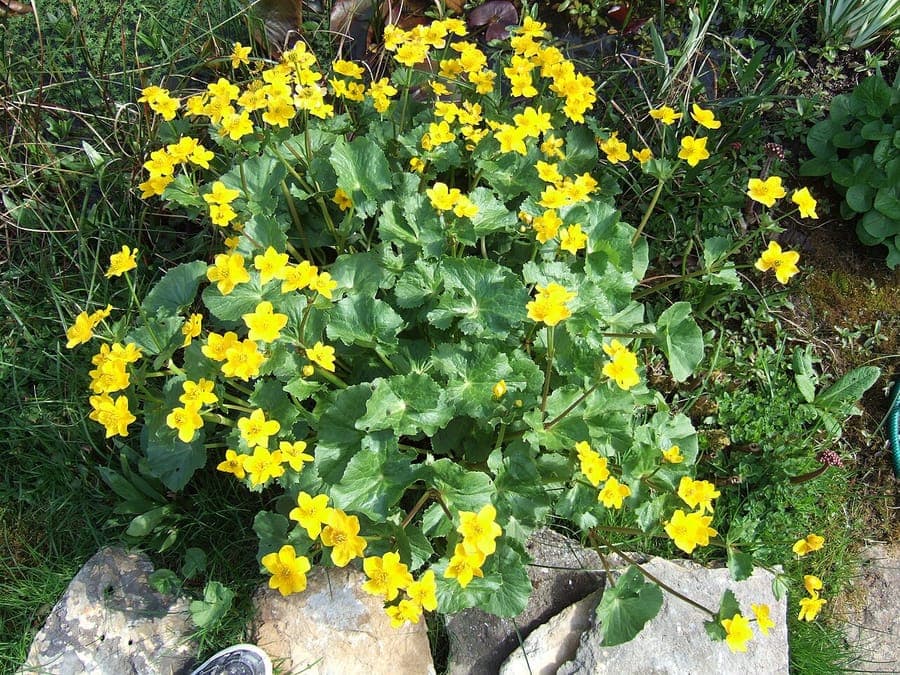
Cowflock grows 20 to 40 cm tall with a spread of about 30 cm. The foliage is kidney- to heart-shaped, glossy, and deep green, often with a slightly wavy margin. Leaves emerge in early spring, followed closely by flowers that bloom from March to May, depending on local climate. Each flower is 2–5 cm across, with five to nine petal-like sepals (no true petals), giving them a buttercup-like appearance.
The blooms sit atop hollow, sturdy stems and shine in low light, making them ideal for woodland edges. After flowering, seed pods form and split open to release fine seeds. The plant remains semi-evergreen in milder winters but dies back completely in colder zones.
Ideal location
Cowflock prefers partial to full shade (light level 4 out of 10). It performs best in damp, cool spots such as under deciduous trees, along pond margins, or in rain gardens. While it tolerates some morning sun, intense afternoon light dries out the roots too quickly. Plant in groups of five or more for a naturalized effect. Avoid hot, exposed corners.
Use gardenworld.app to map out a garden plan that accounts for microclimates and water runoff, helping you place cowflock exactly where it will thrive without constant manual watering.
Soil requirements
This plant demands consistently moist, humus-rich soil with a pH between 4.9 and 6.8. Sandy or fast-draining soils won't work unless amended with plenty of organic matter like compost or leaf mold. Ideal conditions mimic marshy woodland floors-rich, cool, and never dry. If your garden is on a slope or has free-draining soil, consider planting cowflock in a bog garden or pond shelf.
Avoid high-nitrogen fertilizers, which promote leafy growth at the expense of flowers.
Free design
Want to see Cowflock: complete guide in your garden? Make a free design now.
Watering
Water is non-negotiable. Cowflock's roots must stay wet year-round. During dry spells, especially in April and May, water daily if needed. Rainwater is best, as tap water can raise pH over time. If planted near a pond or in a rain garden, natural water retention often suffices.
Never let the soil dry out completely-even brief drought stress can kill the plant.
Pruning
Pruning is minimal. After flowering, you can snip off spent blooms to tidy the look, but it's not required. Leave the foliage intact as long as possible, since it feeds the rhizome for next year's growth. Cut back any browning leaves in late autumn if desired, but many gardeners leave them as winter mulch.
Maintenance calendar
- January: Check soil moisture under frost. Lightly water if prolonged dry.
- February: Watch for emerging shoots. No feeding needed.
- March: Blooms begin. Maintain high moisture. Top-dress with compost.
- April: Peak bloom. Watch for slugs on young growth.
- May: Flowering ends. Remove old stems if preferred.
- June: No action. Monitor moisture.
- July–August: Keep soil wet. Shade if water heats up.
- September: Trim back if needed.
- October–December: Dormant. No care required.
Winter hardiness
Cowflock is hardy in USDA zones 3 to 7. It handles temperatures down to -30°C. The plant dies back to its rhizomes in winter, so don't worry if it disappears. In dry winters, apply a light mulch of leaf litter or compost to prevent root desiccation.
Companion plants
Pair cowflock with other moisture lovers: marsh marigold companions include Carex vulpinoidea, Primula auricula, Iris versicolor, and Filipendula ulmaria. In a pond setting, combine with watercress or dwarf water lilies. Ferns like Matteuccia struthiopteris add texture and shade.
Avoid drought-tolerant plants like lavender or sedum.
Closing
Cowflock is a reliable, low-fuss perennial that brings vibrant color to wet garden spots in early spring. With minimal care and high ecological value, it's perfect for naturalistic planting schemes. You'll find it at garden centres in spring, especially at independent nurseries and larger chains. When buying, check root health and plant immediately in a wet area.
For a tailored planting plan, visit gardenworld.app and design a garden that works with your site's natural water flow, placing cowflock where it'll shine without constant intervention.
Want to see Cowflock: complete guide in your garden? Make a free design now.
Upload a photo, pick a style, and get a photorealistic design with plant list in under a minute.
No credit card required


Similar plants
Drummond's anemone: complete guide
Anemone drummondii
Discover Drummond's anemone (Anemone drummondii): a silvery-grey mountain plant for cool rock gardens and alpine troughs.
Korean clematis: complete guide
Clematis serratifolia
Clematis serratifolia is a hardy climber with fragrant yellow bell flowers in August-September. Pruning group 3, location and care tips.
Aquilegia brevistyla: complete guide
Aquilegia brevistyla
Discover Aquilegia brevistyla, the elegant North American columbine. Growing tips, shade tolerance, and design ideas for woodland and shadowed gardens.