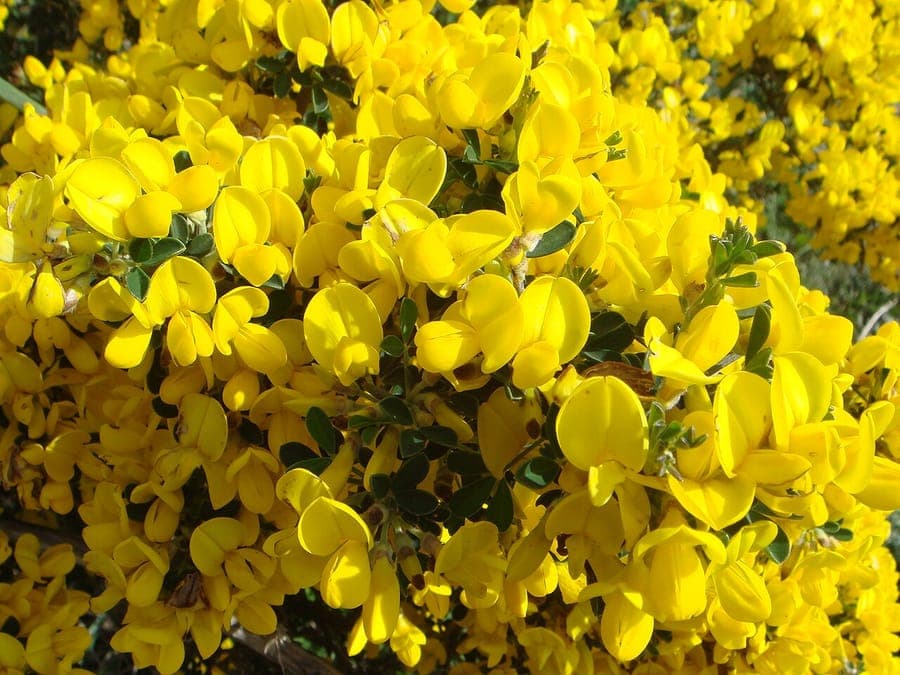
User:Xemenendura / CC BY-SA 2.1 es, via Wikimedia Commons
Calicotome villosa: complete guide
Calicotome villosa
Want to see Calicotome villosa: complete guide in your garden?
Full design in HD: €7.99
Look after your Calicotome villosa with the GardenWorld app
Identify plants with your camera and get a care calendar with reminders for this plant.


Overview
Calicotome villosa, commonly known as Spiny Broom, is a robust Mediterranean shrub native to the Mediterranean basin, particularly from Spain, Italy, Greece, and North Africa. This distinctly defensive shrub is renowned for its sharp thorns, dense growth pattern, and brilliant yellow flowers. It is an excellent choice for dry, difficult locations where other plants fail.
Appearance and bloom
Calicotome villosa is a medium, compact shrub with densely branched, thorny branches. The leaves are small, usually trifoliate and hairy, giving it a rough surface. The characteristic yellow flowers appear in spring through early summer (March to June), in neatly arranged flower clusters. Each bloom is small but extremely abundant, causing the entire plant to glow yellow.
Ideal location
This shrub thrives excellently on very sunny, fully exposed locations. Minimum 8 hours of direct sunlight daily is essential for optimal blooming. Calicotome villosa is ideal for dry mountain slopes, rocky areas, and as natural screens where its sharp thorns deter intruders. It is perfect for Mediterranean gardens, xeriscape designs, and for stabilizing steep slopes.
Soil
This shrub prefers very well-draining soils and is extremely tolerant of poor, dry grounds. Calcareous soils are most suitable. Sandy, rocky soils where other plants fail to thrive form the ideal environment. Waterlogging must be absolutely avoided. Soil pH between 6.5 and 7.0 is ideal.
Watering
Once established, Calicotome villosa is extremely drought-tolerant and requires minimal supplemental water. Regular watering during the first growing season aids establishment. After establishment, water only during extreme drought. Excessive water can cause root rot. This is an exceptionally water-saving plant.
Free preview
Want to see Calicotome villosa: complete guide in your garden? Make a free preview of your design.
Pruning
Pruning is not always necessary and should be kept minimal due to the sharp thorns. Remove dead or damaged branches as needed. The plant can be lightly pruned after flowering to maintain shape. Caution is essential because the thorns are extremely sharp. Use gloves and strong pruning shears.
Maintenance calendar
- Spring: Careful pruning after bloom, weed control
- Summer: No water needed, observe for damage
- Autumn: Minimal activity, no fertilizer
- Winter: Protection possible in very cold areas, no maintenance
Winter hardiness
Calicotome villosa is reasonably winter-hardy and tolerates temperatures to about minus 8 to minus 10 degrees Celsius. However, it is better suited to warmer Mediterranean climates. In northern locations, winter protection or microclimate benefit. Very young plants may be frost-sensitive.
Companion plants
Calicotome villosa combines well with other Mediterranean, drought-tolerant plants like Rosemary, Thymus, Santolina, and other Fabaceae species. Small alpine plants can carefully grow around the plant, given the sharp thorns. Natural integration with other thorn-tolerant landscape vegetation works well.
Closing
Calicotome villosa is an exceptional plant for gardeners seeking a robust, low-maintenance shrub for difficult, dry locations. With its spectacular spring yellow blooming, strong thorns, and water efficiency, it is a perfect choice for Mediterranean gardens, rocks, and mountain slopes. The plant requires minimal attention after establishment.
Find seedlings at specialized Mediterranean garden centers and nurseries.
Frequently asked questions about Calicotome villosa
Is Calicotome villosa winter hardy?
Calicotome villosa is reasonably winter-hardy and tolerates temperatures to about minus 8 to minus 10 degrees Celsius. However, it is better suited to warmer Mediterranean climates.
When and how do you prune Calicotome villosa?
Pruning is not always necessary and should be kept minimal due to the sharp thorns. Remove dead or damaged branches as needed.
How much water does Calicotome villosa need?
Once established, Calicotome villosa is extremely drought-tolerant and requires minimal supplemental water. Regular watering during the first growing season aids establishment.
Where does Calicotome villosa grow best?
This shrub thrives excellently on very sunny, fully exposed locations. Minimum 8 hours of direct sunlight daily is essential for optimal blooming.
What soil does Calicotome villosa need?
This shrub prefers very well-draining soils and is extremely tolerant of poor, dry grounds. Calcareous soils are most suitable.

See it in your garden
See Calicotome villosa in your garden
One photo of your garden and a few questions. You see the result in about a minute.
Try it with a photoIdentify this plant in your own garden. Identify a plant
Similar plants
Pineapple broom (Argyrocytisus battandieri): complete guide
Argyrocytisus battandieri
Everything about pineapple broom (Argyrocytisus battandieri), the Moroccan wall shrub with silver leaves and pineapple-scented flowers: site, pruning and hardiness.
Blue false indigo: complete guide
Baptisia australis
Everything about blue false indigo (Baptisia australis): position, soil, watering, cutting back, hardiness and toxicity. A long-lived prairie perennial with indigo flowers.
Warminster broom (Cytisus × praecox): complete guide
Cytisus × praecox
Everything about Warminster broom (Cytisus × praecox): position, poor soil, pruning after flowering, hardiness and what you need to know about its toxicity.
