
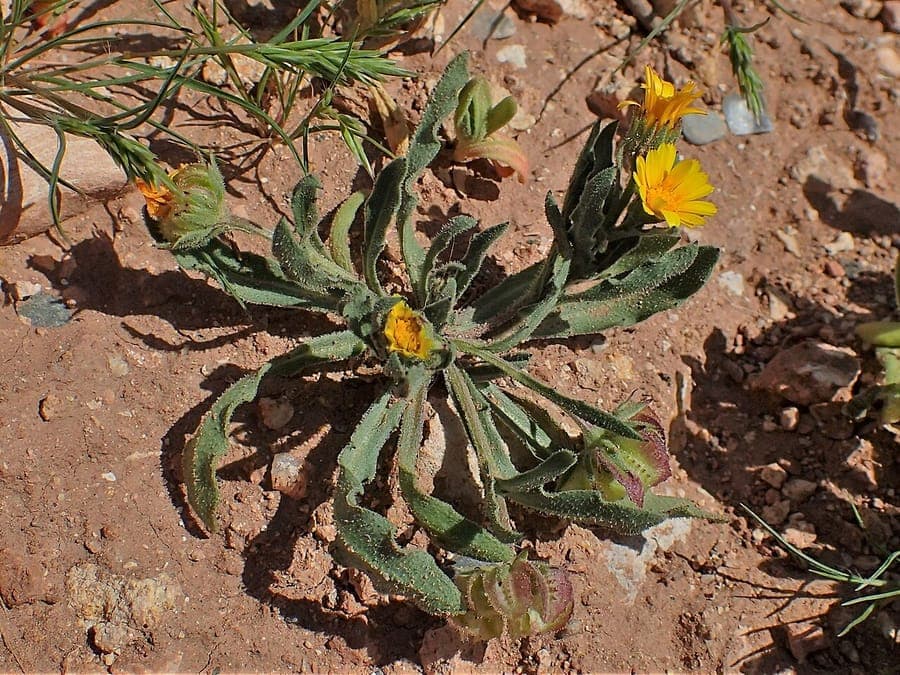
Krzysztof Ziarnek, Kenraiz / CC BY-SA 4.0, via Wikimedia Commons
Calendula tripterocarpa: complete guide
Calendula tripterocarpa
Want to see Calendula tripterocarpa: complete guide in your garden?
1 minute, no credit card
Overview
Calendula tripterocarpa, also known as Three-winged Calendula, is an attractive flowering plant from the Asteraceae family. This plant originates from the Mediterranean region, particularly North Africa and the Middle East. The plant is known for its yellow flowers and interesting seed structures with characteristic three wings.
Calendula tripterocarpa is an annual or short-lived perennial plant that grows best in sunny, dry conditions. In temperate climates it is usually grown as an annual. The plant reaches 30 to 50 centimeters in height and grows as a bushy, open shrublet.
Appearance and Bloom
The flowers of Calendula tripterocarpa are the main attraction. The flowers are bright yellow to orange-yellow and have a daisy-like appearance with many small florets in the center. The flowers are about 3 to 5 centimeters in diameter and appear continuously from spring through fall if grown well.
What makes this plant special are the seed structures. These are extremely characteristic - the seeds have three wing-like extensions that make them very distinctive. These seed structures appear after flowering and are themselves decoratively interesting.
The foliage is small to medium-sized, light green to yellowish-green, and grows in opposite arrangement. The leaves have a lance-like appearance and are fairly smooth.
Ideal Location
Calendula tripterocarpa thrives best in a location with plenty of direct sunlight. The plant needs at least six to eight hours of direct sun daily. In very hot climates some afternoon shade may be beneficial, but generally the plant loves full sun.
The plant is well adapted to warm, dry conditions and therefore grows excellently in Mediterranean climate gardens. The plant is fairly frost-tender and grows best in regions where frost rarely occurs.
The plant also thrives in windswept locations, especially since its compact growth habit tolerates strong wind well.
Soil
Calendula tripterocarpa thrives in dry, well-draining soil. The plant dislikes waterlogging and grows much better in clay or sandy soils than in sticky soils. A pH between 6.5 and 7.5 is ideal.
If your soil is very heavy, add sand, gravel or perlite to improve drainage. Feeding is not critical; the plant thrives even in relatively nutrient-poor soils.
Free design
Want to see Calendula tripterocarpa: complete guide in your garden? Make a free design now.
Watering
Calendula tripterocarpa is a drought-tolerant plant. Water only when soil is completely dry, which typically occurs once every two weeks in rainy seasons. Once established, the plant needs even less water.
In very dry periods supplemental water can be given, but this is usually unnecessary. The plant tolerates drought much better than waterlogging.
Excessive water is the main cause of death in this plant. Avoid waterlogged conditions.
Pruning
Calendula tripterocarpa does not need much pruning. However, you can remove spent flowers to encourage more blooms. This deadheading process significantly extends the blooming period.
If the plant becomes too large or untidy, you can cut it back completely after blooming, after which it will sprout again.
Maintenance Calendar
Spring: Sow seed directly on site or plant seedlings. No feeding needed. Water sparingly.
Summer: Water when dry, usually not needed due to rainfall. Deadhead flowers regularly. No feeding.
Fall: Seed heads can be harvested for next season. Reduce water as growth slows.
Winter: Plant usually dies in severe winters. In mild winters it can overwinter and regrow.
Cold Hardiness
Calendula tripterocarpa is fairly frost-tender. In USDA zones 8-10 it can grow as a perennial, but in temperate zones (zones 5-7) it usually dies at frost. In very cold zones it must be grown as an annual.
In mild areas it can overwinter and regrow the next year, especially if grown in protected locations.
Companion Plants
Calendula tripterocarpa combines beautifully with other Mediterranean plants. Lavender, Santolina, Salvia and other drought-resistant plants create lovely combinations. In xeriscape garden themes it is also a good choice.
The yellow flowers pair well with purple Salvia or blue Rosemary.
Closing
Calendula tripterocarpa is a fascinating plant for anyone who loves Mediterranean flowers. With its yellow blooms and interesting seed structures it adds texture and color to dry gardens. The plant is low-maintenance and frost-tender, making it ideal for beginners.
Whether creating a Mediterranean theme in your garden or simply seeking something special for dry areas, Calendula tripterocarpa certainly deserves your attention. Visit gardenworld.app for more ideas on drought-tolerant garden plants and Mediterranean garden designs!
Enjoy your Calendula tripterocarpa!
Want to see Calendula tripterocarpa: complete guide in your garden? Make a free design now.
Upload a photo, pick a style, and get a photorealistic design with plant list in under a minute.
No credit card required


Similar plants
Calendula stellata: complete guide
Calendula stellata
Complete guide to Calendula stellata, the star-flowered marigold from Sicily: location, soil, watering and companion planting tips.
Korean chrysanthemum: complete guide
Chrysanthemum x rubellum
Chrysanthemum x rubellum is a hardy autumn perennial with single pink to copper flowers from August to November. Care and combinations.
Helianthus divaricatus: complete guide
Helianthus divaricatus
Helianthus divaricatus is a North American woodland sunflower with yellow summer blooms, ideal for naturalistic borders and shady edges.