
Matt Lavin / CC BY-SA 2.0, via Wikimedia Commons
Narrow small-reed: complete guide
Calamagrostis stricta
Want to see Narrow small-reed: complete guide in your garden?
1 minute, no credit card
Overview
Calamagrostis stricta, commonly known as Narrow small-reed, is a dependable and understated ornamental grass that brings quiet structure to the garden. Native to wetlands across North America, northern Europe, and parts of Asia, it thrives in consistently moist soils and full sun. It's not flashy, but its upright, clump-forming habit and delicate flowering panicles make it a valuable player in naturalistic plantings.
Reaching 60 to 120 cm in height with a spread of about 40 cm, it works well in mid-border or as a background accent. At gardenworld.app, you can design a planting scheme that integrates Narrow small-reed seamlessly into wet garden zones, especially where movement and texture are needed.
Appearance & bloom cycle
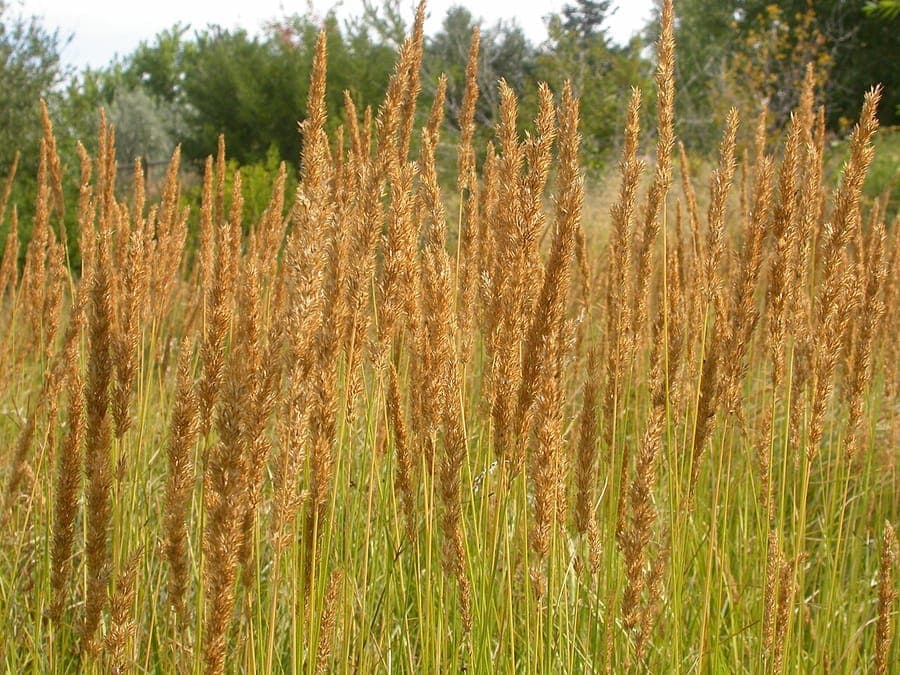
The plant forms tight, upright clumps of narrow, dark green leaves, each about 2–4 mm wide. New growth emerges in early spring, quickly forming dense tufts. From July onward, slender flowering stems rise above the foliage, carrying airy, narrow panicles that start pale pink and mature to silvery-gray by late summer. These plumes persist into winter, adding subtle interest to the dormant garden.
Peak bloom occurs in August and September. The grass grows at a moderate pace-roughly 20–30 cm per year under ideal conditions. Unlike more aggressive grasses, it stays put and doesn't spread invasively.
Ideal location
Narrow small-reed demands at least 8 hours of direct sunlight daily. It tolerates light shade, but in lower light, stems flop and lose their upright form. The best spot is a sunny, open area with steady soil moisture-think stream banks, pond margins, or damp meadows.
It handles mild exposure but performs best when sheltered from strong winds. In exposed coastal or windy inland sites, staking may be needed. Check your garden's light patterns on gardenworld.app to see if your site matches the plant's needs.
Soil requirements
This grass prefers moist, loamy or sandy-loam soils rich in organic matter. The ideal pH range is 6.5 to 7.0-slightly acidic to neutral. Avoid highly alkaline soils (above pH 7.5), as iron deficiency may occur, showing as yellowing leaves.
When planting, mix garden soil with compost in a 2:1 ratio. Do not plant in dry, sandy soils without irrigation. It cannot survive prolonged drought and will brown off quickly if stressed.
Free design
Want to see Narrow small-reed: complete guide in your garden? Make a free design now.
Watering
Keep soil consistently moist, especially during the first two growing seasons. Apply a 5 cm layer of organic mulch to help retain moisture and suppress weeds. During dry spells in July and August, water deeply twice a week.
Once established, it's more resilient but still benefits from supplemental watering in extended dry periods. Signs of underwatering include browning leaf tips and drooping stems.
Pruning
Cut back old growth in late winter or early spring before new shoots emerge. Leave the plumes through winter for visual interest and wildlife cover. Trim stems to 10–15 cm above ground level using sharp shears or a hedge trimmer.
Do not cut during the growing season unless removing damaged foliage. The plant recovers well, but premature pruning may delay flowering.
Maintenance calendar
- Jan: Minimal care; leave plumes standing
- Feb: Cut back old growth if not done in fall
- Mar: Finish pruning; prepare soil
- Apr: New growth starts; apply compost
- May: Monitor for drought stress
- Jun: No major tasks
- Jul: Flowering begins; check moisture
- Aug: Full bloom; plumes most visible
- Sep: Peak display; enjoy structure
- Oct: Plumes fade; consider leaving
- Nov: Decide on pruning; mulch base
- Dec: Winter protection; avoid heavy compaction
Winter hardiness
Narrow small-reed is hardy to USDA zone 4 (-34°C). It survives harsh winters with no protection in most of the UK, northern US, and Canada. Young plants benefit from a light mulch layer around the crown in their first winter.
Old foliage provides insulation, so delaying pruning until spring is beneficial. Frost damage to foliage tips can occur but rarely affects long-term health.
Companion plants
Pair with moisture-loving perennials like Joe-Pye weed (Eutrochium maculatum), blue vervain (Verbena hastata), or tufted sedge (Carex elata). For contrast, use bold-leaved plants like Ligularia or Rodgersia.
In prairie-style or rain gardens, combine with Panicum virgatum or Eutrochium fistulosum. Avoid invasive species like Phalaris arundinacea, which can overwhelm slower growers.
Available at garden centres across the UK and US. Look for healthy, dense clumps with no signs of drying or root rot.
Closing
Narrow small-reed isn't a headline act, but it's a steady performer in moist, sunny gardens. With minimal care and solid winter survival, it's a smart choice for gardeners seeking resilience and natural beauty. Its fine texture and upright form add rhythm to borders and meadow plantings.
Use gardenworld.app to test soil moisture levels and light exposure before planting. Install in spring or early fall, and let it settle in with consistent watering for the first season.
Want to see Narrow small-reed: complete guide in your garden? Make a free design now.
Upload a photo, pick a style, and get a photorealistic design with plant list in under a minute.
No credit card required


Similar plants
Sporobolus pungens: complete guide
Sporobolus pungens
Sporobolus pungens is a stoloniferous Mediterranean coastal grass with outstanding salt and drought tolerance, perfect for seaside and dry gardens.
Mediterranean aegilops: complete guide
Aegilops biuncialis
Everything about Aegilops biuncialis, a Mediterranean annual grass with ornamental spikes and outstanding drought tolerance for dry gardens.
Silver bluestem: complete guide
Bothriochloa saccharoides
Full guide to Bothriochloa saccharoides (silver bluestem): site, soil, watering, winter hardiness, pruning, and garden companions.