
Christian Fischer / CC BY-SA 3.0, via Wikimedia Commons
Bush grass: complete guide
Calamagrostis epigejos
Want to see Bush grass: complete guide in your garden?
1 minute, no credit card
Overview
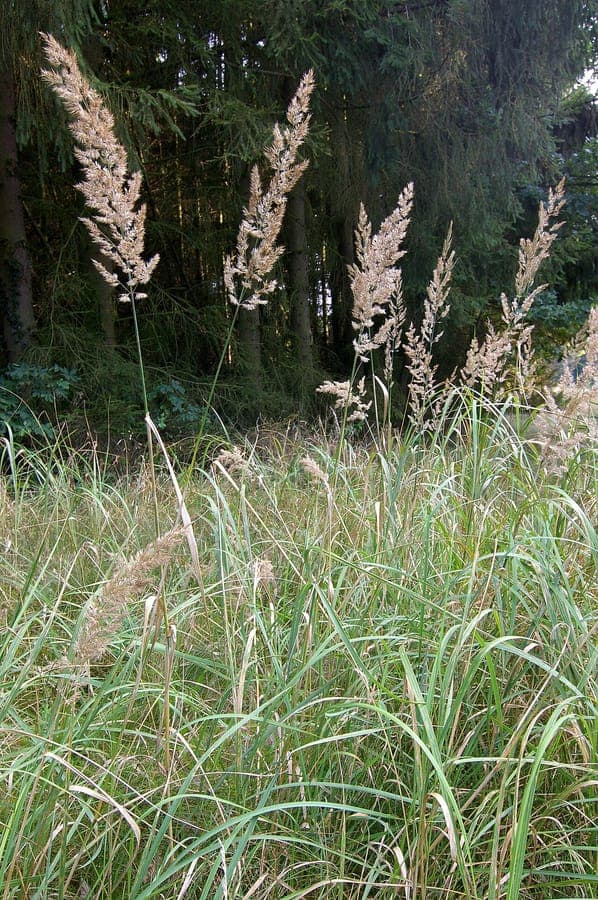
Calamagrostis epigejos, commonly known as Bush grass, is a resilient, clump-forming grass native to woodlands and slopes across central and eastern Europe. It's not the flashiest plant in the border, but it brings year-round structure and subtle beauty. Growing to around 120 cm tall and 60 cm wide, it forms neat, upright tufts of blue-green blades that stay tidy without flopping. This makes it ideal for modern linear plantings, naturalistic drifts, or as a backdrop in mixed borders. On gardenworld.app, you can design a garden layout that uses Bush grass to create rhythm and flow, especially when paired with late-summer perennials.
It's semi-evergreen, meaning it holds its form well into winter, adding architectural interest when most plants have died back. The plant spreads slowly via rhizomes but isn't invasive in typical garden settings. It's perfect for gardeners who want movement and texture without chaos.
Appearance & bloom cycle
Bush grass has fine, arching leaves with a soft blue-green hue. In early summer, slender flower stems rise above the foliage, reaching full height by late June. The inflorescences are airy, silvery-purple plumes that catch the light beautifully. They bloom from June through August, peaking in July, and gradually fade to warm beige and straw tones by autumn.
These plumes persist through winter, providing food and shelter for small birds like chaffinches and linnets. Even in snow, the plant retains its upright form, making it a reliable four-season performer. The seed heads don't self-seed aggressively, so you won't find it popping up where it's not wanted.
Ideal location
Plant Bush grass in full sun to light shade-aim for a light level of 7 out of 10. It needs at least 5 hours of direct sun daily. In full shade, it becomes leggy and loses its shape. In hotter southern regions, light afternoon shade can help prevent scorching.
It works well in borders, gravel gardens, or as a screen between garden zones. Try planting in rows along a path or as a backdrop behind shorter perennials. For accurate spacing and sun exposure simulations, use gardenworld.app to model how this grass will grow in your garden over time.
Soil requirements
Bush grass thrives in well-drained soil with a pH between 5.5 and 6.5. It adapts well to sandy, loamy, or light clay soils as long as water doesn't pool. Avoid heavy, waterlogged clay. If your soil is dense, mix in 20% grit or sharp sand to improve drainage.
It doesn't need rich soil-moderate to low fertility is best. Too much nitrogen leads to floppy growth and weak stems. A light mulch of bark chips or pine needles in spring helps suppress weeds and retain moisture without smothering the crown.
Free design
Want to see Bush grass: complete guide in your garden? Make a free design now.
Watering
During the first growing season, water weekly with about 10 litres per plant. Once established, Bush grass is highly drought-tolerant and rarely needs supplemental watering, except during prolonged dry spells (over 3 weeks without rain). When watering, do so deeply in the morning to encourage deep root development and reduce evaporation.
Avoid frequent light sprinkling, as this encourages shallow roots. Use a soaker hose or water at the base to keep foliage dry and prevent fungal issues.
Pruning
Cut back in early spring, between late February and early March, just before new growth emerges. Trim old foliage to 10–15 cm above ground level. This clears space for fresh shoots and prevents old leaves from weighing down the new growth.
Use sharp shears or hedge trimmers. Wear gloves-the blades can be sharp. Remove the old growth completely; compost it unless it shows signs of disease, in which case burn or discard it.
Maintenance calendar
- January: Check for winter damage; remove broken stems.
- February: Prepare tools for pruning.
- March: Cut back foliage; apply light mulch.
- April: Monitor new growth; hand-weed if needed.
- May: Keep soil moist during dry spells.
- June–August: Flowering period; avoid fertilising.
- September: Leave plumes intact for autumn and winter interest.
- October–December: Minimal care; plant provides structure.
Winter hardiness
Bush grass is hardy in USDA zones 4–8, surviving temperatures down to -34°C. It retains its form and colour well into winter, making it a valuable addition to winter gardens. Even under snow, the upright plumes remain visible. No winter protection is needed.
Companion plants
Pair with perennials that share similar growing conditions: Echinacea purpurea, Salvia nemorosa, Stachys byzantina, or Geranium phaeum. For contrast, try purple Nepeta or golden Rudbeckia. In wilder plantings, combine with Molinia caerulea or Eriophorum vaginatum.
Avoid overly aggressive grasses like Phalaris arundinacea, which can overwhelm it. Use hardscaping elements-gravel paths, wooden edging-to define its space.
Closing
Bush grass is a quiet achiever-low maintenance, tough, and beautiful in every season. It brings movement, texture, and structure without demanding attention. Buy plants from garden centres in March or September. Space them at least 60 cm apart to allow for full development. Water well in the first season, then let it fend for itself. If you're unsure about spacing or growth patterns, try the 3D garden planner on gardenworld.app to visualise your design before planting.
Want to see Bush grass: complete guide in your garden? Make a free design now.
Upload a photo, pick a style, and get a photorealistic design with plant list in under a minute.
No credit card required


Similar plants
Sporobolus pungens: complete guide
Sporobolus pungens
Sporobolus pungens is a stoloniferous Mediterranean coastal grass with outstanding salt and drought tolerance, perfect for seaside and dry gardens.
Mediterranean aegilops: complete guide
Aegilops biuncialis
Everything about Aegilops biuncialis, a Mediterranean annual grass with ornamental spikes and outstanding drought tolerance for dry gardens.
Silver bluestem: complete guide
Bothriochloa saccharoides
Full guide to Bothriochloa saccharoides (silver bluestem): site, soil, watering, winter hardiness, pruning, and garden companions.