
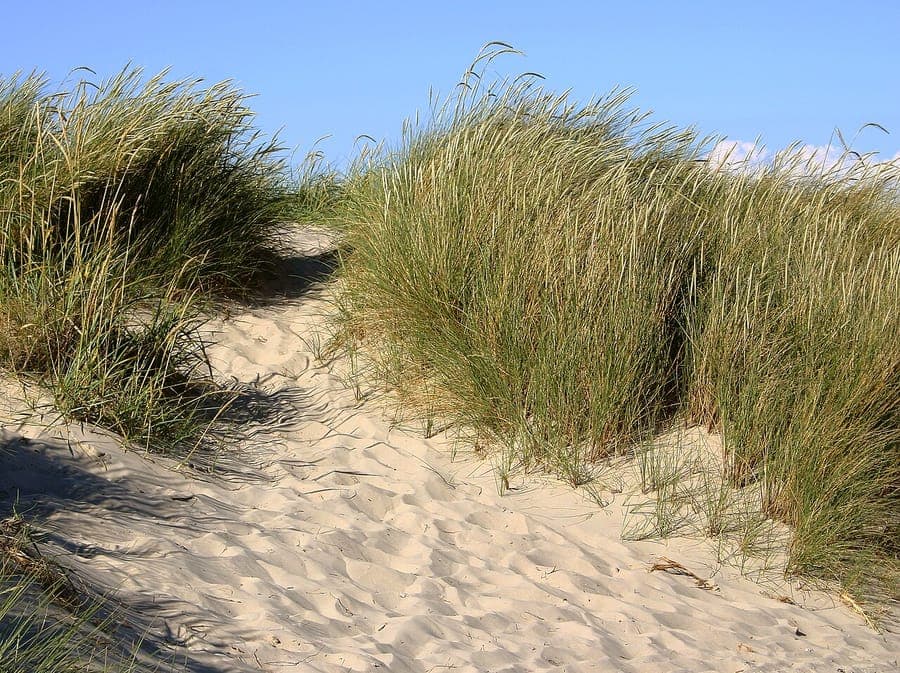
Malene Thyssen (User Malene) / CC BY-SA 3.0, via Wikimedia Commons
Sand couch grass: complete guide
Calamagrostis arenaria
Want to see Sand couch grass: complete guide in your garden?
1 minute, no credit card
Sand couch grass is a native European sand grass naturally found on sandy beaches, dunes, and coastal zones throughout the Atlantic coast and Mediterranean regions. The plant is known for its exceptional ability to hold sand and prevent erosion, making it invaluable for coastal protection and dune restoration projects. The ecological importance of this grass in stabilizing coastal habitats cannot be overstated, as healthy dune systems provide essential protection against storm surge and sea-level rise. This plant has become a centerpiece of coastal management efforts throughout Europe.
Overview and background Calamagrostis arenaria belongs to the Poaceae family, a vast plant family including numerous important agricultural and ornamental grasses. This is a hardy, native grass species distributed naturally from the Canary Islands northward through Portugal, Spain, France, and across northern Europe to Scandinavia. The plant forms dense-growing, rhizomatous tufts that are exceptionally effective at stabilizing sand and creating the foundation for dune development. Throughout Europe, especially in The Netherlands, Germany, and France, this plant is widely used for dune restoration and coastal management programs. Its ability to bind sandy soils has made it central to coastal protection infrastructure in many countries.
Appearance and bloom characteristics The plant forms dense, fine grass tufts 30-60 centimeters tall, occasionally reaching 80 centimeters in optimal conditions, with slender, blue-green leaves arranged in a fountain-like form. The foliage displays attractive blue-green coloration in summer, maintaining ornamental value even when not in active growth. Panicles (flowering structures) appear in June through July, initially greenish or purplish, later turning golden-brown as seeds mature. The panicles have a fine, delicate structure that is highly decorative and remarkably persistent, remaining on the plant well into winter and even through early spring. Individual panicles extend 8-12 centimeters above the foliage, creating an airy, ornamental effect. The seed heads can persist until late winter, providing structure and visual interest in coastal gardens during dormant seasons.
Ideal location and site selection Sand couch grass grows optimally in full sun on sandy soils, where it develops the most robust root systems and most abundant flowering. The plant can also grow in partial shade but prefers full sun for best growth and maximum sand-stabilization effectiveness. The plant is exceptionally salt-resistant and grows well in coastal zones exposed to salt spray and saline soils that would kill most garden plants. Its salt tolerance makes it invaluable for seaside gardens where other plants struggle. The plant thrives on exposed, windswept coastal sites where protection would be impossible to provide.
Soil requirements and preparation The plant is specialized for sandy soils, reflecting its natural habitat on coastal dunes. It grows in sandy, acidic to neutral pH soils across a wide range of soil conditions. pH between 6.0 and 8.5 is acceptable, demonstrating remarkable soil tolerance. The plant also tolerates lean soils very well, actually preferring infertile conditions where competitive species cannot establish. Heavy clay soils should be amended with coarse sand to improve drainage and create favorable conditions. In degraded or disturbed sandy sites, the plant can colonize bare sand without soil preparation, one of its most valuable characteristics for restoration work. Adding organic matter is unnecessary and may promote competitive weed growth.
Watering and moisture management Once established, usually within the first growing season, sand couch grass is very drought-tolerant due to its extensive rhizomatous root system. Water regularly and thoroughly during the establishment period, typically for the first 6-8 weeks after planting, until new growth appears and roots penetrate deep into the sand. After that initial establishment period, supplemental irrigation is usually unnecessary except in extreme drought years. The plant's natural habitat experiences irregular precipitation and periods of water stress; it has evolved mechanisms to survive extended dry periods. In extremely arid climates, occasional deep watering during the growing season helps establish dense coverage more quickly. Container-grown plants require more frequent watering until transplanting.
Pruning and maintenance Sand couch grass requires minimal pruning. Old panicles can be cut back in early spring, typically in March, for a neater appearance if desired, though many gardeners appreciate the winter structure and leave them intact. Remove dead foliage by gently combing through established plants with a large-toothed rake to improve appearance and remove thatch. Never remove green foliage, which the plant needs for photosynthesis and recovery. The plant requires no active management once established.
Maintenance calendar and seasonal care March-April: Cut back old panicles if desired for neatness; rake through to remove thatch; optional light feeding May-June: Growth period; monitor for new shoot development; ensure established plants have access to water during extreme heat July-September: Blooming and seed development; panicles present; avoid trampling in sensitive dune areas October-February: Winter dormancy; decorative panicles remain standing, providing structure and erosion protection; minimal care needed
Winter hardiness and cold tolerance Sand couch grass is very hardy and tolerates temperatures well below -20 degrees Celsius without any issues or winter damage. This plant grows without problems in all parts of central Europe, from the North Sea coasts through inland regions to alpine foothills. The plant's ability to withstand harsh winter conditions, combined with its summer drought tolerance, makes it uniquely adapted to variable coastal climates. No winter protection is required in any European climate.
Companion plants and coastal garden combinations Good combinations for coastal gardens include Ammophila arenaria (marram) for joint dune stabilization, Eryngium maritimum (sea holly) for architectural spiky form, Crambe maritima (sea kale) for silver foliage, Euphorbia paralias (sea spurge) for warm color, and Leymus arenarius (blue marram) for textural variety. In managed gardens, combine with other salt-tolerant perennials like Rosa rugosa, Hippophae rhamnoides, and Lycium barbarum. Create monoculture stands for maximum erosion control in sensitive dune areas.
Propagation and multiplication Sand couch grass propagates readily from rhizome divisions in spring or early autumn. Dig established plants and separate distinct rhizomes with attached shoots, replanting at the same depth as the original plant. Transplants establish quickly and will expand to fill available space within one growing season. Seed propagation is possible but slow and unreliable; division is the preferred method. Rhizome fragments scattered naturally during disturbance will root and establish new plants, contributing to the plant's effectiveness in dune stabilization.
Closing remarks Sand couch grass is a valuable native grass species essential for coastal zones, dunes, and sandy garden areas. With its decorative panicles providing winter interest and exceptional ability to stabilize sand and prevent erosion, it is a must-have plant for coastal gardens and restoration projects. This grass contributes significantly to nature conservation efforts and provides essential ecosystem services in coastal protection. Its low maintenance requirements and ecological value make it an ideal choice for environmentally conscious gardeners. For more information on sustainable coastal garden design and dune restoration practices, visit gardenworld.app.
Want to see Sand couch grass: complete guide in your garden? Make a free design now.
Upload a photo, pick a style, and get a photorealistic design with plant list in under a minute.
No credit card required


Similar plants
Sporobolus pungens: complete guide
Sporobolus pungens
Sporobolus pungens is a stoloniferous Mediterranean coastal grass with outstanding salt and drought tolerance, perfect for seaside and dry gardens.
Mediterranean aegilops: complete guide
Aegilops biuncialis
Everything about Aegilops biuncialis, a Mediterranean annual grass with ornamental spikes and outstanding drought tolerance for dry gardens.
Silver bluestem: complete guide
Bothriochloa saccharoides
Full guide to Bothriochloa saccharoides (silver bluestem): site, soil, watering, winter hardiness, pruning, and garden companions.