
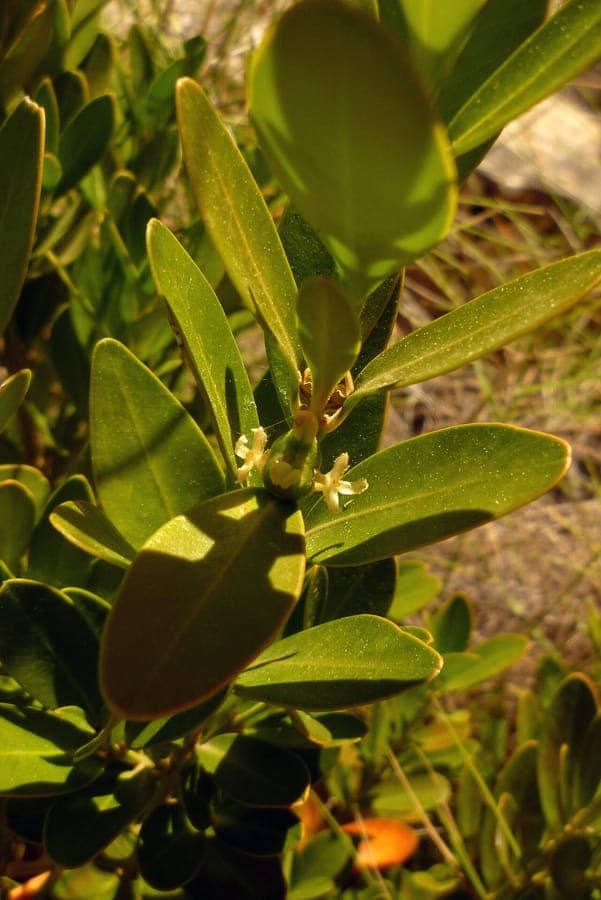
Nanosanchez / CC BY-SA 4.0, via Wikimedia Commons
Spanish boxwood: complete guide
Buxus balearica
Want to see Spanish boxwood: complete guide in your garden?
1 minute, no credit card
Overview
Buxus balearica, commonly known as Spanish boxwood, stands out from its more familiar cousin, common boxwood, by growing into a true small tree-up to 6 meters tall in ideal conditions. Native to Mediterranean regions like the Balearic Islands, Morocco, and southern Spain, it thrives in warm, dry climates and brings architectural form to gardens without demanding constant attention. In the UK and northern Europe, it's gaining popularity as a more resilient alternative to Buxus sempervirens, especially in areas plagued by box blight.
One of the most valuable traits of Buxus balearica is its relative resistance to Cylindrocladium buxicola, the fungus behind box blight. While not immune, gardeners using gardenworld.app to track plant health have reported fewer infections and less dieback compared to traditional boxwoods. That makes it a smart long-term investment for formal hedges or specimen planting.
Unlike shrubby boxwoods, this species develops a clear trunk and open canopy, giving it a more natural, tree-like appearance. It's ideal for modern garden designs where clean lines meet soft texture.
Appearance & bloom cycle
Spanish boxwood features oval, glossy leaves 3–5 cm long, with a deep green upper surface and a slightly paler underside. The foliage is dense but less compact than Buxus sempervirens, giving it a softer, more airy look. In mid-spring-typically April to early May-it produces small, yellow-green flowers. Though only 4–6 mm wide, they're rich in nectar and attract early bees and hoverflies when little else is in bloom.
After flowering, tiny woody capsules form and ripen by autumn, splitting open to release seeds. While propagation from seed is possible, it's slow and unreliable. Most gardeners and nurseries use semi-ripe cuttings taken in late summer to maintain consistent growth habit and vigor.
Ideal location
Plant Buxus balearica in full sun to partial shade. It performs best in a south- or southwest-facing spot with good air circulation. Avoid deep shade or areas under large trees where soil stays constantly moist and light is low. In urban gardens or courtyards with heat-retaining walls, it can thrive even in cooler regions.
This species dislikes stagnant, humid conditions, which increase the risk of fungal issues. A sheltered location that blocks cold, drying winds-especially in winter-is ideal. If you're planning a boxwood hedge or structural focal point, use gardenworld.app to visualize spacing and sunlight patterns before planting.
Soil requirements
Spanish boxwood prefers well-drained, moderately fertile soil. It tolerates a wide pH range (6.0–7.8) and actually thrives in slightly alkaline, chalky soils-common in southern England. If your soil is heavy clay, amend it with grit and compost to improve drainage. For sandy soils, mix in organic matter to retain moisture without waterlogging.
When planting, dig a hole twice as wide as the root ball and mix in sharp sand and leaf mould. Avoid rich composts or manures: excess nitrogen promotes soft growth that's vulnerable to frost and disease.
Free design
Want to see Spanish boxwood: complete guide in your garden? Make a free design now.
Watering
During the first growing season, water deeply once or twice a week, giving 10 litres per plant during dry spells. After that, established plants are highly drought tolerant and only need supplemental watering during prolonged summer droughts (3+ weeks without rain). When you do water, apply it slowly at the base to encourage deep rooting.
Never overhead water-wet foliage increases the risk of blight. A drip irrigation system works well for hedges or multiple specimens.
Pruning
This boxwood doesn't require pruning to stay healthy, but if you're shaping it for a formal hedge or topiary, prune once or twice a year. The best times are late June (after flowering) and, if needed, early September. Avoid pruning after mid-September to allow new growth to harden before winter.
Use sharp, clean secateurs or a powered hedge trimmer for larger hedges. Always disinfect tools between cuts if you've been working on infected plants. Prune in dry weather to reduce infection risk.
Maintenance calendar
- Jan: Check for winter damage, remove dead wood
- Feb: Clean and oil tools, plan pruning schedule
- Mar: Light shaping if needed, avoid heavy cuts
- Apr: Observe flowering, no pruning
- May: Monitor for pests and blight signs
- Jun: First annual prune after bloom
- Jul: Minimal care; water only in drought
- Aug: Optional second prune
- Sep: Final prune by early month
- Oct: Clear fallen leaves, no feeding
- Nov: Protect young plants with horticultural fleece in cold areas
- Dec: Final check, no action needed
Winter hardiness
Buxus balearica is hardy in USDA zones 7b–9 (down to -15°C). In the UK (zones 8a–8b), it usually survives winters without issue, but young plants may suffer leaf scorch in harsh, dry winds. Protect them with fleece or a windbreak. Mature plants are tough, but prolonged freezing with desiccating winds can cause damage. If the ground isn't frozen, give a deep soak on a mild winter day to prevent dehydration.
Companion plants
Pair Spanish boxwood with other Mediterranean plants like lavender, rosemary, or santolina. For contrast, use architectural plants like yucca or phormium. In formal gardens, it complements clipped hedges or stands well as a standalone specimen. Underplant with shade-tolerant perennials like hellebores, epimedium, or geraniums.
Avoid invasive groundcovers that smother the root zone. Keep the base clear for airflow.
Closing
Buxus balearica offers gardeners a more resilient, tree-like alternative to traditional boxwood. Its elegant form, drought tolerance, and lower disease risk make it ideal for modern, low-maintenance, or wildlife-friendly gardens. While it grows slower than some shrubs, its longevity and structural impact are worth the wait.
You'll find it at garden centres across the UK, especially those specialising in architectural or Mediterranean plants. When buying, confirm it's Buxus balearica-not sempervirens-as care and growth differ significantly. Plan your layout using gardenworld.app to ensure proper spacing and light exposure for healthy long-term growth.
Want to see Spanish boxwood: complete guide in your garden? Make a free design now.
Upload a photo, pick a style, and get a photorealistic design with plant list in under a minute.
No credit card required


Similar plants
Chinese boxwood: complete guide
Buxus sinica
Everything about Chinese boxwood: cultivation, maintenance, pruning and use for formal gardens, hedges and topiary designs
Buxus harlandii: complete guide
Buxus harlandii
Discover Harland's boxwood, an elegant Asian shrub with fine foliage and graceful growth patterns. Perfect for topiary, hedges, and container planting.
Pachysandra procumbens: complete guide
Pachysandra procumbens
Discover Pachysandra procumbens, American mountain-spurge perfect for shady woodland gardens. Growing tips, shade tolerance, soil, watering and care guide.