
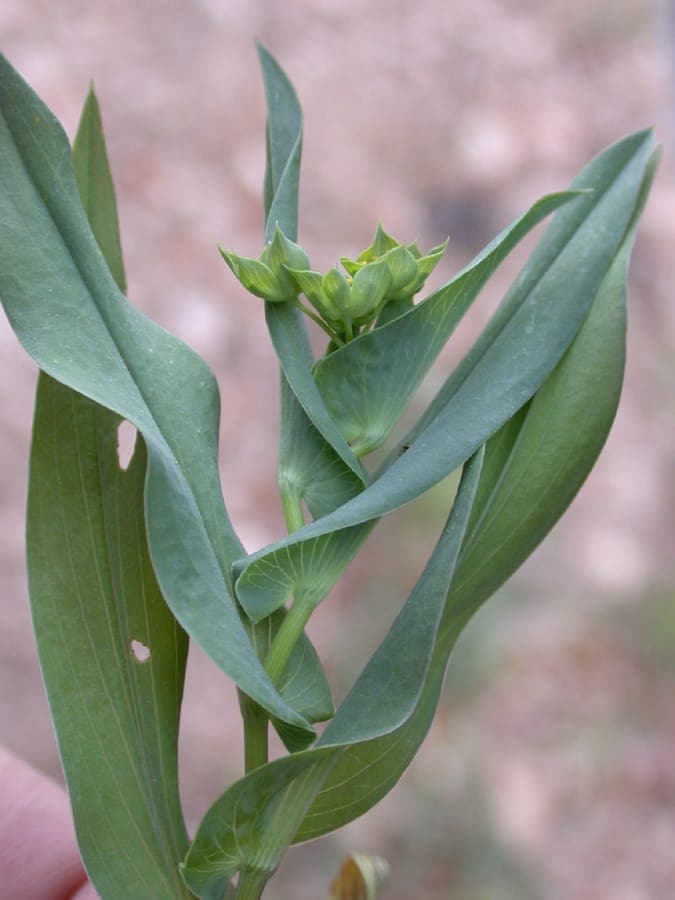
Gideon Pisanty (Gidip) / CC BY 3.0, via Wikimedia Commons
Bupleurum lancifolium: complete guide
Bupleurum lancifolium
Want to see Bupleurum lancifolium: complete guide in your garden?
1 minute, no credit card
Overview
Bupleurum lancifolium, commonly called lanceleaf thorow-wax or yellow buplever, is an elegant herbaceous plant from the Apiaceae family with origins spanning southern Europe, North Africa, and Iran. This delicate Mediterranean native thrives in drought conditions and rocky terrain where most other plants struggle. In the garden, it brings refined elegance and minimal maintenance requirements, making it perfect for gardeners seeking tough yet beautiful Mediterranean plants.
Native to arid rocky slopes and hillsides, Bupleurum lancifolium demonstrates remarkable resilience while maintaining an unmistakably ornamental appearance. Its fine-textured foliage and golden summer flowers provide long-lasting visual interest without demanding constant care.
Appearance & bloom
Bupleurum lancifolium is instantly recognizable by its distinctive narrow, lance-shaped leaves arranged densely along upright stems. The foliage displays a blue-grey to silvery-green coloration, creating an exceptionally airy, almost graphic garden presence. Stems grow upright, reaching 40 to 60 centimeters in height, though established plants in ground can reach one meter.
Flowers appear from June through September, arranged in characteristic bright yellow umbels (umbrella-shaped clusters typical of the Apiaceae family). These blooms attract bees and pollinating insects, serving as vital nectar sources during mid to late summer. The flowers emit a subtle, pleasant fragrance attractive to beneficial insects.
Following bloom, the plant develops small, decorative seeds dispersed by wind, providing a secondary ornamental phase and food source for birds in autumn.
Ideal location
Bupleurum lancifolium demands full sun positioning - a minimum of 6 to 8 hours of direct sunlight daily. Coming from sun-exposed rocky slopes, partial shade results in leggy, weak growth and reduced flowering. Select the sunniest spot available, such as south-facing walls, sunny borders, or gravel gardens.
The plant's light foliage color creates striking contrast with darker-leaved companions. Position toward the front of borders so its elegant silhouette remains visible and unobstructed. Ensure good air circulation to prevent fungal issues and promote sturdy growth.
Avoid waterlogged areas and low-lying spots where moisture accumulates. Though frost-tolerant, wet winter conditions can prove problematic, particularly in cold climates.
Soil
Originally from rocky terrain, Bupleurum lancifolium is not soil-specific but performs best in well-draining, moderately fertile soil. Heavy clay soils require amendment with coarse sand, shell fragments, or small stones to ensure adequate drainage.
The ideal pH ranges between 7.5 and 8.0 (neutral to slightly alkaline). In strongly acidic soils below pH 6.5, the plant may struggle despite nutrient availability. Test your soil and add lime if needed. The plant tolerates poor, lean soil excellently - this is actually advantageous since over-fertilization encourages excess leaf growth at the expense of flowering.
Drainage is paramount. The plant evolved in environments where water drains away quickly, so establish adequate slope or use raised beds in heavy-clay regions.
Free design
Want to see Bupleurum lancifolium: complete guide in your garden? Make a free design now.
Watering
Once established (after the first growing season), Bupleurum lancifolium is exceptionally drought-tolerant with deep roots accessing subsurface moisture. Water only during prolonged, extreme summer droughts - wilting foliage indicates thirst.
For container-grown plants, regular watering is necessary, especially during active growth and flowering periods. Check soil moisture with your finger - water only when the top 2 centimeters feel dry. Water in early morning rather than evening to reduce disease pressure and avoid wetting foliage.
Ensure excellent drainage - sitting water causes root rot, particularly in winter. In rainy climates, adequate drainage essentially constitutes the only required maintenance.
Pruning
Bupleurum lancifolium requires minimal pruning. Remove dead or frost-damaged stems after winter passes. After blooming, you can remove seed heads if you wish to prevent self-seeding, or leave them for bird food and natural propagation.
If plants become excessively lanky (usually from insufficient light), light pruning helps encourage bushier growth, but under good conditions, pruning is unnecessary. Avoid heavy cutting since the plant recovers slowly.
Use sharp, disinfected tools for any cutting. For severely damaged plants, cutting back to near-ground level in spring can stimulate vigorous renewal.
Maintenance calendar
Spring: check for winter damage; remove dead stems; plant new specimens in April-May. Summer: water during drought; deadhead spent flowers for neater appearance. Autumn: appreciate seed heads and fall color; clean away fallen leaves. Winter: minimal intervention in temperate zones; delay heavy pruning until spring.
Winter hardiness
Bupleurum lancifolium is winter-hardy in zones 5-9 (down to approximately -15 degrees Celsius). In milder climates, it overwinters without protection. In colder regions experiencing temperatures below -20 degrees, protective measures help:
- Mulch around the plant with 5-10 centimeters of leaves or straw
- Plant in elevated positions ensuring good water drainage
- Provide burlap protection during extreme cold and wind events
The plant is more sensitive to wet feet in cold, wet winters than to cold alone. In Mediterranean climates, it overwinters effortlessly.
Companion plants
Bupleurum lancifolium pairs beautifully with:
- Lavender (Lavandula angustifolia cultivars) - both love dry, sunny conditions
- Culinary sage (Salvia officinalis) - identical growing requirements
- Sunflowers and other drought-tolerant flowering perennials
- Blue fescue grasses (Festuca glauca) - striking foliage contrast
- Gaura and desert rose - aesthetic partners for airy, summer-long bloom
Avoid dense, heavily fertilized companion plantings. Allow this plant space to breathe and display its delicate architecture.
Closing thoughts
Bupleurum lancifolium is an elegant gift to gardeners seeking distinctive, low-maintenance plants with genuine character. Its fine-textured silhouette and golden summer flowers provide years of pleasure with minimal intervention. Plant in full sun, well-draining soil, and you've secured a lifetime companion.
Available at major garden retailers. For specialized advice or rare cultivars, visit www.gardenworld.app.
Want to see Bupleurum lancifolium: complete guide in your garden? Make a free design now.
Upload a photo, pick a style, and get a photorealistic design with plant list in under a minute.
No credit card required


Similar plants
Whorled carrot: complete guide
Daucus involucratus
Daucus involucratus is a Mediterranean umbellifer with white flower heads framed by lacy bracts. Growing this gravel garden gem.
Daucus muricatus: complete guide
Daucus muricatus
Daucus muricatus, the spiny wild carrot, grows wild on Mediterranean coasts. Discover sowing, June-July bloom, and wildflower meadow use.
Daucus pumilus: complete guide
Daucus pumilus
Daucus pumilus is a dwarf wild carrot relative with white lacy umbels, thriving on dunes and coastal rock in poor, fast-draining soil.