
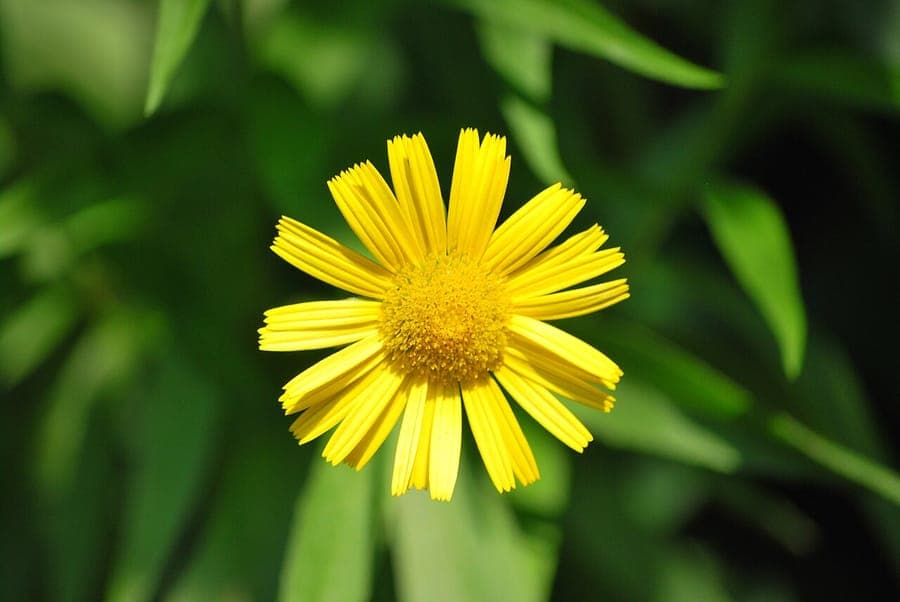
Etienne / CC BY-SA 3.0, via Wikimedia Commons
Ox-eye: complete guide
Buphthalmum salicifolium
Want to see Ox-eye: complete guide in your garden?
1 minute, no credit card
Overview
Buphthalmum salicifolium, commonly known as Ox-eye, is a reliable and graceful herbaceous perennial that brings bright color to gardens from midsummer into early autumn. Native to central and southern Europe - including France, Germany, and Italy - it thrives in open, sunny habitats with well-drained soil. In the UK and other temperate regions, it's becoming a go-to choice for gardeners wanting long-lasting blooms without constant care. Growing to 60–80 cm in height, Ox-eye forms upright clumps with slender, willow-like foliage and cheerful yellow daisy-like flowers. It's not to be confused with Leucanthemum vulgare, the common ox-eye daisy, as this one blooms later and has a more refined look.
Appearance & bloom cycle
The narrow, lance-shaped leaves of Ox-eye are 8–12 cm long, softly textured, and arranged alternately along stiff, green stems. They resemble willow leaves - hence the species name salicifolium - and provide an elegant backdrop to the vibrant blooms. From July to August, golden-yellow flower heads, 4–5 cm across, rise above the foliage. Each flower has a domed central disc and bright ray florets, creating a sunburst effect. The blooming period lasts 4–6 weeks, and deadheading can help extend it slightly. The plant has a bushy yet airy habit, making it ideal for adding texture without overwhelming neighboring plants.
Ideal location
Full sun is essential for strong stems and abundant flowering. While Ox-eye can tolerate light shade, it will stretch and flop in low light. Choose a spot with at least 6 hours of direct sun and good air circulation to prevent fungal issues. Space plants 40 cm apart to allow for airflow and natural growth. It works well in mixed herbaceous borders, gravel gardens, or as part of a prairie-style planting scheme. Pair it with upright grasses or spiky perennials for contrast.
Soil requirements
Well-drained soil is non-negotiable. Ox-eye dislikes wet feet and will rot in heavy clay or waterlogged conditions. Sandy or loamy soils are ideal. If your garden has clay, amend the planting hole with grit or coarse sand to improve drainage. A neutral to slightly acidic pH (6.0–7.0) suits it best. Avoid overly rich soils - too much fertility leads to leggy growth and fewer flowers. This plant actually performs better in moderately poor soils, which keeps growth compact and flowering steady.
Free design
Want to see Ox-eye: complete guide in your garden? Make a free design now.
Watering
Water regularly during the first growing season to establish a deep root system. Once established, Ox-eye is drought-tolerant and rarely needs supplemental watering, even during dry spells. When you do water, give it a deep soak less frequently rather than shallow sprinklings. Overwatering, especially in winter, increases the risk of root rot. Mulching with gravel or fine bark can help retain moisture in summer while keeping the crown dry.
Pruning
Cut back the old stems in late winter or early spring, before new growth emerges. Trim them to 10–15 cm above ground level to keep the plant tidy and prevent disease. You can leave the stems over winter for structure and to provide seed for birds, but cut them before new shoots appear. This plant rarely needs dividing and doesn't self-seed aggressively, making it easy to manage.
Maintenance calendar
- Jan–Feb: Inspect old stems, remove any damaged material
- Mar: Cut back last year's growth if not done earlier
- Apr: Watch for emerging shoots; check for slugs
- May–Jun: Active growth phase; monitor for drought stress
- Jul–Aug: Peak bloom; deadhead spent flowers to encourage more blooms
- Sep: Allow late flowers to set seed or cut back for neatness
- Oct–Dec: Dormant phase; no major care needed
Winter hardiness
Ox-eye is hardy to USDA zone 5 (-20°C), making it suitable for most of the UK, northern Europe, and much of North America. It survives cold winters well as long as the soil is well-drained. Avoid heavy mulches that trap moisture around the crown. A light layer of leaf litter or twiggy branches can protect the base without smothering it. In wet winters, consider planting on a slope or raised bed to improve drainage.
Companion plants
Ox-eye pairs beautifully with other sun-loving, drought-tolerant perennials. Try it with Echinacea, Achillea, Salvia, or Sedum. The golden-yellow blooms contrast well with purple or deep pink flowers. It also works with ornamental grasses like Deschampsia or Panicum, which add movement and texture. On gardenworld.app, you can create a custom garden design that highlights Ox-eye in a summer color scheme. Use it in a 'golden hour' border with Helenium, Rudbeckia, and Coreopsis for a warm, glowing effect.
Closing
Buphthalmum salicifolium is a low-maintenance winner for any sunny garden. It delivers weeks of cheerful color, supports pollinators, and asks for little in return. Its elegant form and reliable performance make it a smart addition to both formal and naturalistic plantings. You'll find Ox-eye at most garden centres in the UK, or order online after checking soil and light conditions on gardenworld.app for the best placement in your garden.
Want to see Ox-eye: complete guide in your garden? Make a free design now.
Upload a photo, pick a style, and get a photorealistic design with plant list in under a minute.
No credit card required


Similar plants
Calendula stellata: complete guide
Calendula stellata
Complete guide to Calendula stellata, the star-flowered marigold from Sicily: location, soil, watering and companion planting tips.
Korean chrysanthemum: complete guide
Chrysanthemum x rubellum
Chrysanthemum x rubellum is a hardy autumn perennial with single pink to copper flowers from August to November. Care and combinations.
Helianthus divaricatus: complete guide
Helianthus divaricatus
Helianthus divaricatus is a North American woodland sunflower with yellow summer blooms, ideal for naturalistic borders and shady edges.