
Petr Filippov / CC BY-SA 3.0, via Wikimedia Commons
Turkish rocket: complete guide
Bunias orientalis
Want to see Turkish rocket: complete guide in your garden?
1 minute, no credit card
Overview
Turkish rocket, or Bunias orientalis, is a striking herbaceous perennial from the Brassicaceae family. Native to regions across Eastern Europe and Central Asia - including Altay, Kazakhstan, Russia, and parts of the Middle East - this plant has naturalized in many temperate zones, often appearing along roadsides, railway embankments, and neglected urban spaces. In the garden, it brings height, structure, and pollinator appeal, making it a favorite for wild-style or ecological designs.
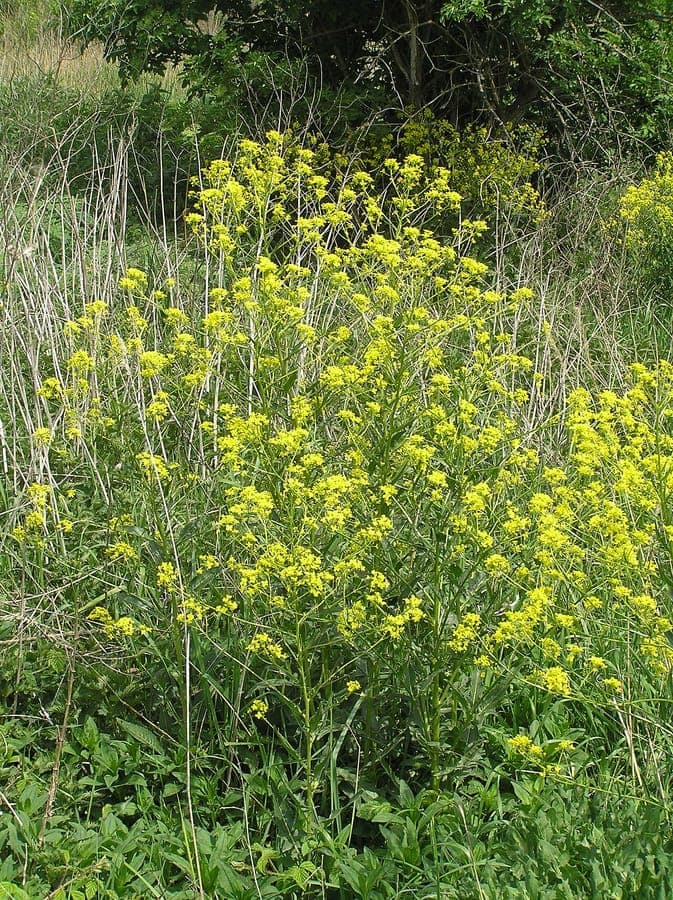
Reaching 60–120 cm in height, Turkish rocket forms upright, branched stems with coarse, lance-shaped leaves. Its yellow flowers bloom in dense clusters from June to August, attracting bees, hoverflies, and butterflies. Once established, it's remarkably drought-tolerant and thrives in poor, well-drained soils. On gardenworld.app, you can design a planting scheme that balances Turkish rocket with taller grasses and late-blooming perennials for seasonal continuity.
Appearance & bloom cycle
This plant has a sturdy, clump-forming habit with multiple erect stems emerging from the base. The leaves are dark green to greyish, coarsely toothed, and slightly hairy, giving them a rugged texture. Young leaves are edible with a peppery kick - think wild arugula - which makes it a dual-purpose plant for ornamental and edible gardens.
Flowering occurs from June through August. The bright yellow, four-petaled flowers appear in rounded, terminal clusters, each bloom about 1–1.5 cm wide. After flowering, hard, ribbed seed pods develop - a defining trait of the species. These persist into winter, offering visual interest when most other plants have died back.
Ideal location
Turkish rocket thrives in full sun to light shade, scoring a 7 on the light scale (1–10). Aim for at least 5–6 hours of direct sunlight daily. It performs best in dry, open sites such as gravel beds, sunny borders, or rocky slopes. Avoid heavily shaded areas where it will stretch and flop.
It's especially effective in cottage gardens, naturalized meadows, or urban planting schemes with minimal irrigation. Pair it with tall ornamental grasses like Stipa gigantea or Calamagrostis x acutiflora 'Karl Foerster' for dynamic texture. On gardenworld.app, you can visualize how Turkish rocket fits into layered planting designs, ensuring height and color harmony across seasons.
Soil requirements
This plant prefers alkaline soils with a pH between 7.5 and 8.0. It tolerates poor, shallow, and stony soils as long as drainage is excellent. Avoid heavy clay or waterlogged spots - these lead to root rot. Loamy or sandy loam soils work well, especially if they dry out quickly after rain.
Turkish rocket doesn't need rich soil; in fact, overly fertile conditions may lead to leggy growth and reduced flowering. Its adaptability makes it ideal for challenging spots where other perennials struggle.
Free design
Want to see Turkish rocket: complete guide in your garden? Make a free design now.
Watering
Once established, Turkish rocket is highly drought-tolerant. Water lightly after planting during the first growing season, especially in dry springs. After that, no supplemental watering is needed - even during prolonged summer droughts. When you do water, apply it at the base to prevent fungal issues on the foliage.
Overhead watering should be avoided. This plant is built for dry conditions, so resist the urge to irrigate unless the soil is completely parched.
Pruning
No formal pruning is required. However, cutting back the flower stems after blooming helps control self-seeding, which can be vigorous. If you want to limit spread, deadhead before seeds ripen (usually by late August).
For winter interest, leave the stems standing. The dried seed pods add structure to the dormant garden and provide shelter for beneficial insects.
Maintenance calendar
- January: No action. Assess previous year's growth.
- February: Remove any persistent dead stems if desired.
- March: Watch for early seedlings; thin or relocate as needed.
- April: Plant new specimens in well-drained soil.
- May: Monitor for early flowering; water only if extremely dry.
- June–August: Peak bloom. Deadhead to prevent unwanted spread.
- September: Clear volunteer seedlings or transplant them.
- October–December: Leave standing for winter structure or cut back for a tidy look.
Winter hardiness
Turkish rocket is hardy in USDA zones 5–8. It dies back in winter but reliably returns in spring from its deep taproot. No winter protection is needed, even in harsh conditions. In milder winters, some basal leaves may remain green.
Companion plants
Pair Turkish rocket with drought-tolerant perennials like Echinacea, Salvia, Nepeta, or Allium. The yellow blooms contrast beautifully with purple, blue, and silver foliage. Ornamental grasses such as Molinia caerulea or Festuca ovina enhance its vertical form.
Avoid pairing with aggressive ground covers that might smother it. Also, steer clear of constantly moist plantings - this plant dislikes wet feet.
Closing
Turkish rocket is a resilient, low-fuss perennial that adds architectural flair and ecological value to the garden. While it can self-seed freely, this is easy to manage with seasonal deadheading. Its long bloom time, pollinator appeal, and winter persistence make it a standout in sustainable designs.
If you're unsure where to place it, use gardenworld.app to sketch a layout that integrates Turkish rocket with compatible companions. Its height and color work well in structured borders or wilder plantings. Available at garden centres across the UK, including regional independents and larger chains, it's worth seeking out for any sun-drenched, dry corner.
Want to see Turkish rocket: complete guide in your garden? Make a free design now.
Upload a photo, pick a style, and get a photorealistic design with plant list in under a minute.
No credit card required


Similar plants
Brassica cretica: complete guide
Brassica cretica
Brassica cretica, the Cretan cabbage, grows wild on Aegean cliffs. Discover how to grow this drought-tolerant, yellow-flowered Mediterranean perennial.
Corsican cabbage: complete guide
Brassica insularis
Corsican cabbage is a rare Mediterranean rock cabbage with white flowers and blue-green leaves. Location, soil and winter protection.
Prostrate cabbage: complete guide
Brassica procumbens
Prostrate cabbage is a creeping North African cliff plant with yellow flowers. Discover location, soil type and winter protection.