
Aung / Public domain, via Wikimedia Commons
White bryony: complete guide
Bryonia alba
Want to see White bryony: complete guide in your garden?
1 minute, no credit card
Overview
Bryonia alba, commonly known as White bryony, is a fast-growing, herbaceous vine in the Cucurbitaceae family. Native to central and southern Europe, this perennial plant thrives in hedgerows, woodland edges, and along stone walls. It's not typically found in formal gardens but can be a striking choice for naturalistic or wildlife-friendly landscapes. However, every part of the plant - roots, leaves, stems, and especially the berries - is highly toxic. This makes it unsuitable for homes with small children or pets unless carefully managed.
The vine climbs aggressively using curling tendrils and can reach 4–6 meters in a single growing season. It dies back to the ground each winter, regrowing from a large, tuberous root in spring. While its growth habit is impressive, it demands space and structural support. On gardenworld.app, you can design a custom garden layout that accounts for White bryony's spread and climbing needs, ensuring it doesn't overwhelm nearby plants.
Appearance & bloom cycle
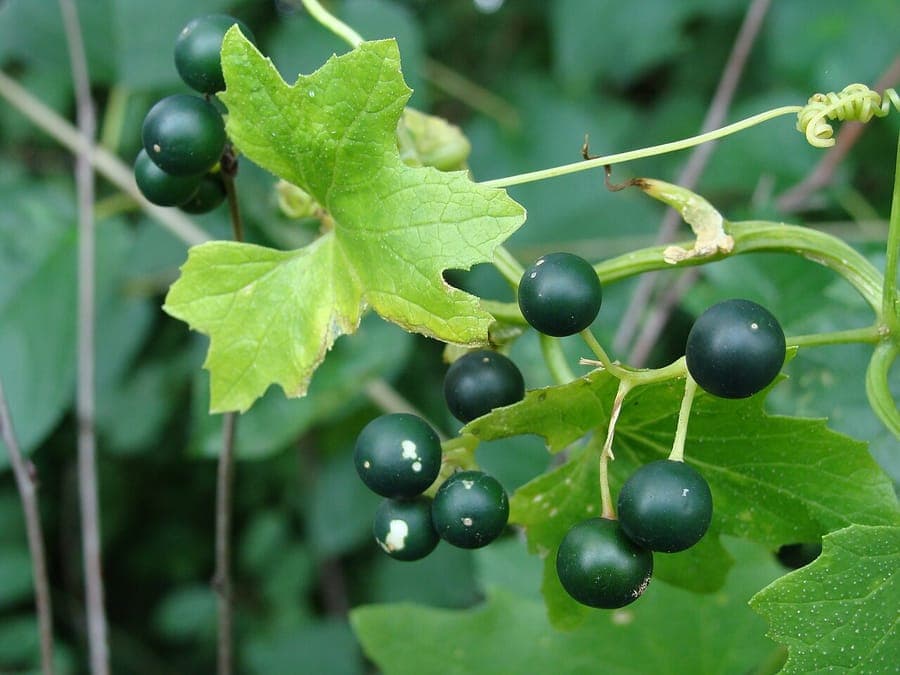
White bryony features deeply lobed, palmate leaves up to 12 cm wide, with a rough, slightly hairy texture. The foliage emerges bright green in April and matures to a deeper shade. The plant produces small, greenish-white flowers from late May through July. These are inconspicuous and grow in axillary clusters. Since the species is dioecious, male and female flowers appear on separate plants. Only female plants produce fruit - round, pea-sized berries that start green, turn red, and finally ripen to glossy black by late summer.
These berries are extremely poisonous and should never be ingested. Even handling the plant without gloves can cause skin irritation in sensitive individuals. The vine's autumn display of dark berries against fading foliage can be dramatic, but caution is always needed.
Ideal location
White bryony grows best in partial to full shade (light level 6/10). It tolerates morning sun but struggles in hot afternoon exposure, which can scorch leaves. An ideal spot is along a north- or east-facing fence, under deciduous trees, or in a sheltered corner of a wild garden.
Use it to cover unsightly structures or as a seasonal screen. Avoid planting near play areas or high-traffic paths. Because of its vigorous nature, give it a sturdy support like a wooden trellis or metal arbor. Plan ahead - on gardenworld.app, you can simulate how the vine will develop over time and adjust your garden design accordingly.
Soil requirements
This plant prefers neutral to slightly alkaline soils with a pH between 7.0 and 7.5. It adapts well to loamy or sandy soils as long as they're well-drained. Avoid heavy clay if it stays waterlogged in winter. While it tolerates poor soils, it grows faster and taller in moderately fertile conditions.
Do not over-fertilize - excess nitrogen promotes leafy growth at the expense of flowering. A light mulch of leaf compost in early spring helps retain moisture and suppress weeds without over-enriching the soil.
Free design
Want to see White bryony: complete guide in your garden? Make a free design now.
Watering
During its first year, water regularly to establish deep roots. Keep the soil consistently moist but not soggy. After that, White bryony is quite drought-tolerant, especially in cooler climates.
In extended dry periods (three weeks or more without rain), give a deep soak once a week. Use a soaker hose to deliver water slowly to the root zone. Avoid frequent shallow watering, which encourages weak root systems.
Pruning
Pruning is essential to keep White bryony under control. Cut it back hard in early spring before new growth emerges. Trim stems to about 30 cm above ground level to encourage fresh, healthy shoots.
During the growing season, pinch back overly long tendrils to prevent them from invading adjacent plants. Always wear gloves - the milky sap can cause dermatitis. Remove female plants if you want to avoid toxic berries, though this reduces wildlife value.
Maintenance calendar
- January: inspect old stems for damage
- February: prepare tools for pruning
- March: cut back previous year's growth
- April: watch for new shoots emerging
- May: apply light organic mulch
- June: check for flowering and support climbing stems
- July: monitor berry development on female plants
- August: trim any over-enthusiastic growth
- September: ensure berries are out of reach
- October: leave stems for winter interest or cut back
- November: check for fungal issues
- December: observe dormancy and structure
Winter hardiness
White bryony is hardy in USDA zones 6–9. The aerial parts die back completely in winter, but the thick, fleshy root survives underground. In zone 6, a light mulch over the crown can protect against freeze-thaw cycles.
In areas with wet winters, ensure good drainage to prevent root rot. Raised beds or sloped ground help. The plant re-emerges in April when soil temperatures rise.
Companion plants
Pair White bryony with shade-tolerant, non-invasive perennials such as:
- Polystichum setiferum (Soft Shield Fern)
- Heuchera spp.
- Geranium macrorrhizum
- Alchemilla mollis (Lady's Mantle)
- Digitalis purpurea (Foxglove)
Avoid planting near delicate alpines or slow-growing shrubs that could be smothered. Also, steer clear of other aggressive climbers like Hedera helix unless you're prepared for constant management.
Closing
White bryony isn't for every garden, but it has a place in ecological or heritage landscapes where its wild character can shine. Its rapid growth and seasonal drama are impressive, but respect its toxicity and vigour. When planning your space, consider using garden centres across the UK to source plants or seeds, though availability may be limited. Always label the plant clearly and educate household members about its dangers. With the right conditions and a bit of foresight, White bryony can be a fascinating addition. Use gardenworld.app to map out its growth pattern and integrate it safely into your garden design.
Want to see White bryony: complete guide in your garden? Make a free design now.
Upload a photo, pick a style, and get a photorealistic design with plant list in under a minute.
No credit card required


Similar plants
Kiwano: complete guide
Cucumis metuliferus
Everything about growing kiwano: location, soil, watering, and harvesting this striking African horned cucumber with spiny orange fruits.
Sponge gourd: complete guide
Luffa aegyptiaca
Full guide to growing sponge gourd (Luffa aegyptiaca): sowing, care, harvesting edible fruits and drying natural loofah sponges in your garden.
Cucumis prophetarum: complete guide
Cucumis prophetarum
Wild cucumber is a fascinating climbing plant with remarkable spiky fruits. Learn how to grow this exotic annual from seed to harvest for decorative interest.