
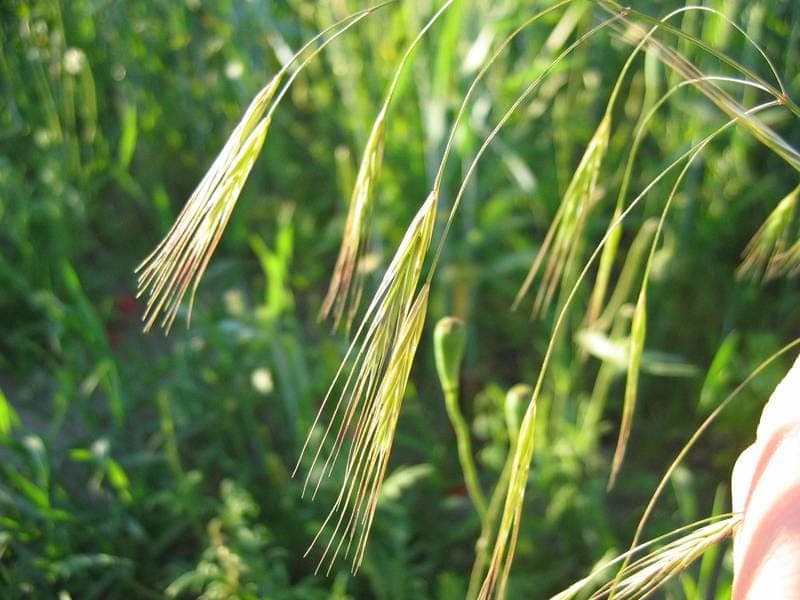
Kristian Peters -- Fabelfroh 19:12, 20 August 2005 (UTC) / CC BY-SA 3.0, via Wikimedia Commons
Barren brome: complete guide
Bromus sterilis
Want to see Barren brome: complete guide in your garden?
1 minute, no credit card
Overview
Barren brome (Bromus sterilis) is an annual grass species often dismissed as a weed, but in the right garden context, it can play a useful ecological role. Native to parts of Europe, North Africa, and Western Asia, it's now widespread across the UK and Ireland, commonly found along hedgerows, woodland edges, and disturbed soils. Unlike many ornamental grasses, it's not long-lived, but its quick growth and self-seeding habit make it ideal for filling bare patches in naturalistic planting schemes.
On gardenworld.app you can design a planting plan that uses Barren brome as a temporary green cover under deciduous trees, blending seamlessly with seasonal cycles.
Appearance & bloom cycle
Barren brome grows between 30 and 80 cm tall, forming loose, open clumps with soft, drooping stems. The leaves are narrow, light green, and slightly hairy, giving them a velvety texture. From May to June, it produces delicate flower spikes - pale green to purplish-brown panicles that arch gracefully. These panicles are loosely branched and sway easily in the breeze, adding subtle movement to the garden.
After flowering, the plant sets seed and dies back completely by late summer. It's a classic annual lifecycle, relying on self-seeding for next year's growth. Seeds germinate in early spring when soil temperatures rise above 8°C, typically in March or April.
Ideal location
Choose a spot with light to partial shade. Barren brome thrives under open-canopy trees like birch, hazel, or oak, where dappled sunlight reaches the ground. Full sun is acceptable if the soil doesn't dry out too quickly, but deep shade will limit germination and growth. It's best suited to informal, wildlife-friendly gardens - avoid formal borders where neatness is key.
It works well along woodland paths, under shrubs, or in meadow transitions. Use it to stabilise bare soil temporarily while slower perennials establish. On gardenworld.app, you can visualise how Barren brome fits into your garden's seasonal rhythm using custom planting timelines.
Soil requirements
Barren brome isn't fussy about soil type but prefers well-drained, moderately dry to moist conditions. It grows well on sandy, loamy, or light clay soils, as long as waterlogging doesn't occur. A pH range of 5.5 to 7.5 is optimal. Avoid rich, heavily amended soils - this grass actually performs better in poorer conditions where competitive plants struggle.
Don't add compost or fertiliser; excessive nutrients lead to weak stems and reduced flowering. Bare soil patches encourage natural reseeding, so avoid thick mulch layers that block seed-to-soil contact.
Free design
Want to see Barren brome: complete guide in your garden? Make a free design now.
Watering
No additional watering is required once established. Barren brome is drought-tolerant during its growing season, especially in cool spring weather. Only during prolonged dry spells in May or June might light watering help maintain flower development. Use rainwater if possible, and water in the early morning to reduce evaporation.
Overhead watering should be avoided - it can encourage fungal issues like rust, especially in humid conditions. By July, the plant will naturally begin to yellow and collapse, so irrigation is pointless beyond mid-summer.
Pruning
No pruning is needed. As an annual, it completes its lifecycle and dies back on its own. If you want to limit spread, cut off the flower heads before seeds ripen - around late June. Use sharp secateurs or shears to remove the top 20–25 cm of the plant.
Alternatively, leave some plants to set seed if you want natural regeneration. Let the dead foliage lie through summer and autumn to provide habitat for beneficial insects. Clear it in late winter if it becomes too dense.
Maintenance calendar
- March: Seedlings emerge. Clear any old debris.
- April: Monitor growth. No feeding required.
- May: Flowers begin to form. Watch for dry soils.
- June: Peak flowering. Deadhead if limiting spread.
- July: Plant begins to die back. Leave or remove as desired.
- August–February: Dormant period. No action needed.
Winter hardiness
Barren brome is not winter-hardy as a mature plant - it's an annual and dies after seeding. However, its seeds survive winter in the soil and germinate the following spring. No protection is needed. In colder USDA zones (6–7), a light leaf litter cover can help insulate seeds during harsh frosts, though germination rates remain high in most conditions.
Companion plants
Pair Barren brome with shade-tolerant perennials like wood anemone (Anemone nemorosa), barren strawberry (Potentilla sterilis), or sweet woodruff (Galium odoratum). It works well as a temporary understory beneath trees that leaf out late, such as birch or walnut.
Avoid planting near aggressive spreaders like ground elder or bindweed. Use it to fill gaps in spring while slower plants get established, then let it fade as summer perennials take over.
Closing
Barren brome isn't a showstopper, but it has its place in low-effort, ecologically minded gardens. It's not sold widely at garden centres, but you might find it in wildflower seed mixes or as a volunteer. Look for it at local suppliers or check online nurseries specialising in native grasses.
For gardeners who embrace self-seeding and seasonal change, Barren brome offers quiet resilience. Use it wisely, and it becomes part of the garden's natural rhythm rather than a nuisance.
Want to see Barren brome: complete guide in your garden? Make a free design now.
Upload a photo, pick a style, and get a photorealistic design with plant list in under a minute.
No credit card required


Similar plants
Sporobolus pungens: complete guide
Sporobolus pungens
Sporobolus pungens is a stoloniferous Mediterranean coastal grass with outstanding salt and drought tolerance, perfect for seaside and dry gardens.
Mediterranean aegilops: complete guide
Aegilops biuncialis
Everything about Aegilops biuncialis, a Mediterranean annual grass with ornamental spikes and outstanding drought tolerance for dry gardens.
Silver bluestem: complete guide
Bothriochloa saccharoides
Full guide to Bothriochloa saccharoides (silver bluestem): site, soil, watering, winter hardiness, pruning, and garden companions.