
Kurt Stüber [1] / CC BY-SA 3.0, via Wikimedia Commons
Cheat: complete guide
Bromus secalinus
Want to see Cheat: complete guide in your garden?
1 minute, no credit card
Overview
Cheat, scientifically known as Bromus secalinus, is an annual grass species native to parts of Eastern Europe, Western Asia, and the Mediterranean. While often dismissed as a weed, it has a graceful, wheat-like appearance that can add soft texture and movement to informal gardens. It's commonly found on disturbed soils, roadsides, and abandoned fields, especially in areas that haven't been intensively cultivated.
Though not a typical garden centre staple, Cheat has its place in naturalistic planting schemes. It thrives in poor soils and full sun, making it a candidate for tough spots where other grasses struggle. If you're designing a meadow-style garden or rewilding a corner of your yard, Cheat might be worth considering. On gardenworld.app, you can create a custom garden layout that incorporates self-seeding grasses like this, balancing spontaneity with structure.
Appearance & bloom cycle
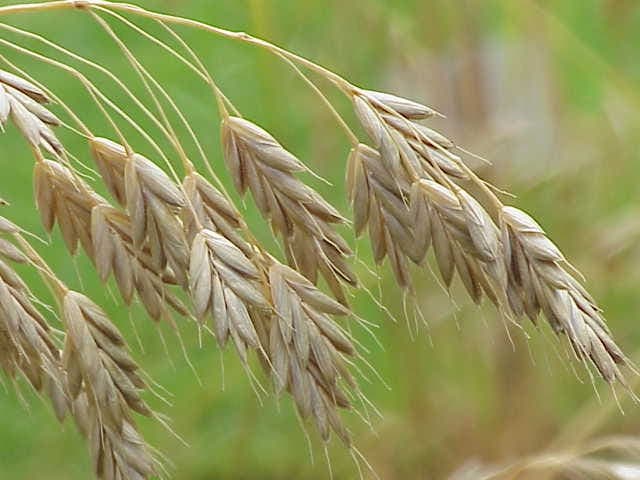
Cheat grows 30 to 80 cm tall, with slender, upright stems and narrow leaves up to 20 cm long. The foliage is light green, slightly rough to the touch. From May to June, open panicles emerge – delicate, drooping flower clusters that start green and turn golden-brown as they mature. The seed heads catch the light beautifully, especially in the early morning or late afternoon.
As an annual, its lifecycle is short: seeds germinate in spring, plants grow rapidly in late spring, flower in early summer, set seed in midsummer, and die back by late summer. The seeds disperse easily by wind or foot traffic, often reappearing in the same spot the following year if conditions are right.
Ideal location
Cheat loves full sun and performs best in open, unshaded areas. Aim for a site that gets at least 8 hours of direct sunlight daily. It's ideal for dry borders, slopes, or neglected corners of the garden. Avoid shaded areas under trees or near tall shrubs-growth will be weak or nonexistent.
It's well-suited to USDA hardiness zones 6 to 9, where winters are mild enough for spring germination. In cooler zones, it can still be grown as a summer annual. Choose well-drained sites; it tolerates heat and drought once established.
Soil requirements
This grass is not fussy about soil fertility. It prefers neutral to slightly alkaline soils with a pH between 7.0 and 7.5. Sandy loam, poor loam, or gravelly soils work best. Heavy clay or waterlogged soils should be avoided, as they promote rot.
Do not fertilize. Cheat thrives in low-nutrient conditions-adding compost or synthetic fertilizer leads to floppy growth and reduced seed set. If your soil is dense, mix in coarse sand to improve drainage.
Free design
Want to see Cheat: complete guide in your garden? Make a free design now.
Watering
Once germinated, Cheat is highly drought-tolerant. Water only during prolonged dry spells in the first few weeks after emergence. After that, rainfall is usually sufficient. Overwatering encourages weak stems and disease.
The key is to mimic natural conditions: sow into moist soil in spring, then let nature take over. No irrigation needed in most temperate climates.
Pruning
No pruning required. As an annual, the plant dies naturally after seeding. You can leave the dry stems standing through winter for visual interest and wildlife value, or mow them down in autumn for a tidier look.
If you want to limit self-seeding, cut the plants before seeds mature-around late June or early July. Otherwise, expect volunteer seedlings the next spring.
Maintenance calendar
- Jan: No action
- Feb: No action
- Mar: Prepare soil; sow from late March
- Apr: Sow seeds; keep soil lightly moist
- May: Growth begins; watch for pests
- Jun: Flowering; monitor seed development
- Jul: Plants begin to die; collect or cut back
- Aug: Clear dead material or allow reseeding
- Sep: Plan next season
- Oct: No action
- Nov: No action
- Dec: No action
Winter hardiness
Cheat is not winter-hardy as a mature plant. It completes its lifecycle in one season and relies on seed for persistence. In USDA zones 6–9, seeds survive winter dormancy and germinate when soil warms in spring. It does not form evergreen rosettes or overwinter as a perennial.
For continuity, allow some seeds to drop naturally. Avoid deep mulching in infested areas if you want it to return.
Companion plants
Cheat pairs well with other drought-tolerant, sun-loving species like Yarrow (Achillea millefolium), Oxeye Daisy (Leucanthemum vulgare), and California Poppy (Eschscholzia californica). These share similar cultural needs and create a loose, meadow-like effect.
Avoid planting near aggressive spreaders like Quackgrass or tall perennials that cast shade. Space plants openly to let Cheat's airy texture shine.
Closing
Cheat isn't a showstopper, but it has quiet charm and resilience. It asks for little and gives back movement, texture, and seasonal rhythm. While rarely sold as a standalone product, you might find it in wildflower seed mixes at garden centres. Check labels carefully, or collect seed from wild stands if permitted.
Use it as a filler in transitional spaces, or as a temporary groundcover while establishing slower perennials. And to see how it fits into your overall garden vision, try mapping your layout on gardenworld.app-where you can experiment with annual grasses without committing to big changes.
Want to see Cheat: complete guide in your garden? Make a free design now.
Upload a photo, pick a style, and get a photorealistic design with plant list in under a minute.
No credit card required


Similar plants
Sporobolus pungens: complete guide
Sporobolus pungens
Sporobolus pungens is a stoloniferous Mediterranean coastal grass with outstanding salt and drought tolerance, perfect for seaside and dry gardens.
Mediterranean aegilops: complete guide
Aegilops biuncialis
Everything about Aegilops biuncialis, a Mediterranean annual grass with ornamental spikes and outstanding drought tolerance for dry gardens.
Silver bluestem: complete guide
Bothriochloa saccharoides
Full guide to Bothriochloa saccharoides (silver bluestem): site, soil, watering, winter hardiness, pruning, and garden companions.