
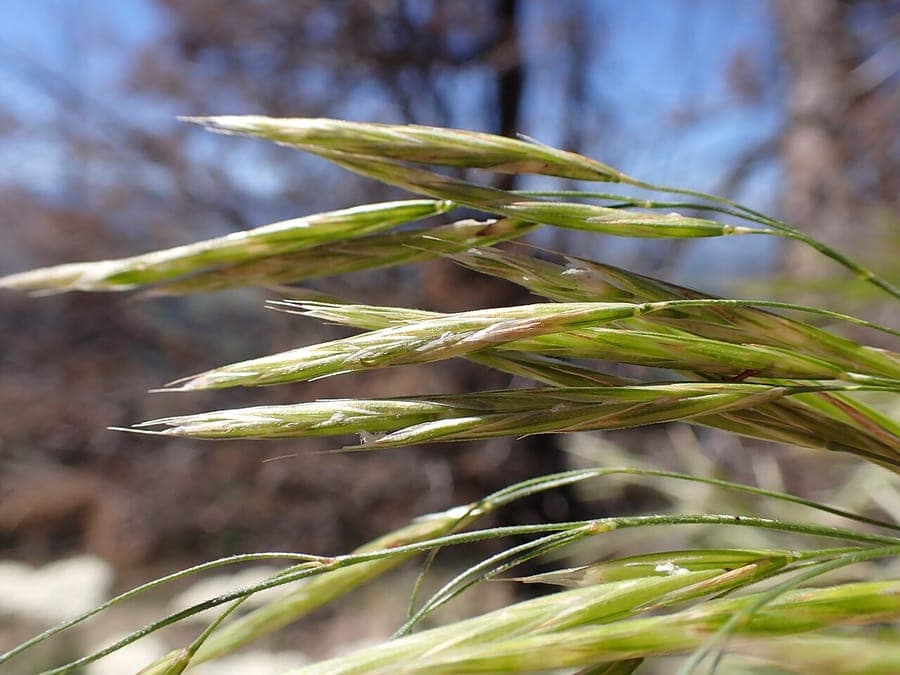
Matt Lavin / CC BY-SA 2.0, via Wikimedia Commons
Bromus riparius: complete guide
Bromus riparius
Want to see Bromus riparius: complete guide in your garden?
1 minute, no credit card
Overview
Bromus riparius, commonly called meadow brome or Asian meadow bromegrass, is a grass species from the Poaceae family. This plant sees widespread use in agricultural and landscape applications due to its robustness and suitability across diverse soil types. Native to a vast region stretching from northern Italy to the Caucasus and China, it demonstrates remarkable climatic adaptability.
This grass offers multiple benefits: erosion control, sustainable forage production, and landscape value. This makes it attractive for both professional and private garden projects.
Appearance and bloom
Bromus riparius develops into densely packed tussocks with upright, slender culms. Leaves are elongated, light to gray-green with fine texture. Culms can reach 70-100 cm height depending on growing conditions.
Flowering occurs in June and July in compact panicles containing numerous spikelets. These panicles display characteristic drooping branches. Color ranges from bright green to golden-brown, adding substantial visual interest to landscapes.
Following flowering, small seeds develop and disperse via wind and wildlife.
Ideal location
Select locations with sun exposure, though this species tolerates partial shade well. Complete shade is unsuitable. Place the plant where water can flow naturally, in grassland settings.
This grass excels on slopes and undulating terrain where it provides erosion protection. It performs equally well along waterways and in wet areas.
Soil
Bromus riparius demonstrates flexibility regarding soil types. It thrives in sandy, clay and loamy soils alike. Calcification and acidity levels are less critical. A pH of 5.5 to 8.0 proves entirely acceptable.
This grass tolerates compacted soils and helps stabilize loose earth. Prior amendment usually proves unnecessary.
Free design
Want to see Bromus riparius: complete guide in your garden? Make a free design now.
Watering
Once established, this species proves drought-tolerant. Water regularly during the first growing season for proper root development. Subsequently, much less watering becomes necessary.
During wet periods it tolerates waterlogging well. During droughts it remains green and functional without supplementary watering.
Pruning
Minimal pruning is needed. In early spring, old culms can be removed to make room for new growth. This is best done in March or April preceding the new growing season.
Summer pruning is undesirable as it may disrupt flowering.
Maintenance calendar
Spring: Remove old culms. Check for winter-related issues.
Summer: Enjoy the flowering display. No special maintenance required.
Autumn: Allow seed set for natural dispersal. Prepare for winter dormancy.
Winter: Minimal attention. Old culms provide bird forage.
Winter hardiness
Bromus riparius proves exceptionally hardy, tolerating temperatures down to -20 degrees Celsius without protection. This makes it ideal for temperate and cold climates throughout Europe.
Even in mild winters, the plant remains green and active.
Companion plants
Excellent partners include other grasses like Festuca and Deschampsia. Wildflowers and herbs appreciating the same well-drained, dry soils work beautifully. Amendment is unnecessary.
Avoid heavy, moisture-loving plant partners in the same zone.
Closing thoughts
Bromus riparius represents a valuable grass species for numerous applications. From erosion management to decorative plantings, its versatility and hardiness make it a sustainable choice.
Design your own grass composition on gardenworld.app and demonstrate how this grass fits into your landscape plan. Consult local garden centers for seed and plant material.
Want to see Bromus riparius: complete guide in your garden? Make a free design now.
Upload a photo, pick a style, and get a photorealistic design with plant list in under a minute.
No credit card required


Similar plants
Sporobolus pungens: complete guide
Sporobolus pungens
Sporobolus pungens is a stoloniferous Mediterranean coastal grass with outstanding salt and drought tolerance, perfect for seaside and dry gardens.
Mediterranean aegilops: complete guide
Aegilops biuncialis
Everything about Aegilops biuncialis, a Mediterranean annual grass with ornamental spikes and outstanding drought tolerance for dry gardens.
Silver bluestem: complete guide
Bothriochloa saccharoides
Full guide to Bothriochloa saccharoides (silver bluestem): site, soil, watering, winter hardiness, pruning, and garden companions.