
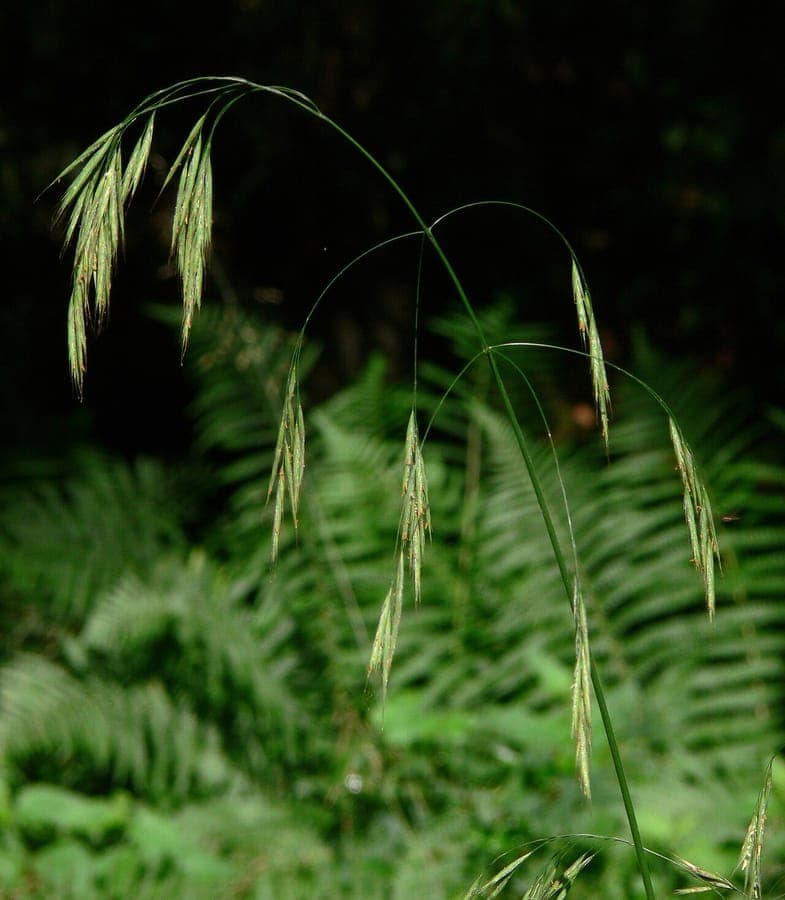
Leo Michels / CC0, via Wikimedia Commons
Hairy brome: complete guide
Bromus ramosus
Want to see Hairy brome: complete guide in your garden?
1 minute, no credit card
Overview
Hairy brome, or Bromus ramosus, is a long-lived perennial grass that thrives in cool, shaded environments. Native to woodlands across parts of Europe and the Himalayas, it's adapted to dappled light and moist, humus-rich soils. This isn't the kind of plant that grabs attention with bright flowers - instead, it earns its place through elegance, movement, and texture. If you're designing a garden that feels relaxed and in tune with nature, hairy brome fits right in.
It's especially useful in areas where other plants struggle - under trees, on north-facing slopes, or in transitional zones between lawn and forest. On gardenworld.app, you can build a planting scheme that layers hairy brome with spring ephemerals like wood anemones or bluebells, creating depth and seasonal rhythm.
Appearance & bloom cycle
Hairy brome grows 60–120 cm tall, with soft, hairy leaves that range from pale green to grey-green. The foliage forms loose, open clumps that sway gently in the breeze. In late spring - typically from May to late June - airy panicles rise above the leaves, starting with a purplish tinge and fading to golden-brown as seeds mature.
Each panicle can reach 15–25 cm in length, branching out in a delicate, open fashion that gives the plant its species name 'ramosus' - meaning 'branched'. The seed heads persist into early autumn, providing interest and food for small birds. While not showy, the overall effect is graceful and natural, especially when planted in drifts.
Ideal location
This grass prefers partial to full shade. It does poorly in hot, dry sun, particularly on sandy or compacted soils. The best spots mimic its natural habitat: under deciduous trees, along woodland edges, or in sheltered, north-facing beds. In a garden design, use it as a mid-layer plant, behind lower groundcovers and in front of shrubs or taller perennials.
Avoid planting in exposed, windy sites - the tall stems can flop. If you're working with an open area, consider pairing it with sturdier companions like foxgloves or meadowsweet to provide structural support.
Soil requirements
Hairy brome thrives in moist, well-drained, humus-rich soils. The ideal pH is between 5.5 and 7.0 - slightly acidic to neutral. It tolerates clay if drainage is adequate, but struggles in dry, nutrient-poor sands without organic amendment.
Before planting, work in 5–8 cm of compost or well-rotted manure. This improves water retention and provides slow-release nutrients. Avoid heavily compacted soils, as the roots need oxygen and space to spread.
Free design
Want to see Hairy brome: complete guide in your garden? Make a free design now.
Watering
During the growing season (March to August), keep the soil consistently moist - not soggy. Young plants need weekly watering in dry spells. Mature clumps are somewhat drought-tolerant but perform best with reliable moisture.
Water at the base to prevent fungal issues, and use rainwater when possible. Tap water with high lime content can raise soil pH over time, which may reduce vigor on acidic soils.
Pruning
Hairy brome doesn't need regular pruning, but benefits from a hard cutback in late winter. In February or early March, trim the old foliage down to 10–15 cm above ground level. This removes tattered leaves and encourages fresh, upright growth.
Leave the plant standing through autumn and early winter - the dried stems add structure and shelter for overwintering insects. Cutting too early can leave the crown exposed to winter rot.
Maintenance calendar
- January: Inspect for damaged foliage, remove any slimy or blackened stems
- February: Begin cleanup, cut back old growth to 10–15 cm
- March: Complete pruning, apply thin compost layer
- April: New shoots emerge, monitor for slugs
- May: Flowering begins, check soil moisture
- June: Peak bloom, panicles fully developed
- July: Seed heads mature, fading to brown
- August: Allow birds to feed or deadhead to limit self-seeding
- September: Reduce watering unless dry
- October: Leave standing, no pruning
- November: Maintain leaf litter around base for insulation
- December: Dormant period, protect from waterlogged soil
Winter hardiness
Hairy brome is hardy in USDA zones 5 to 8. It remains semi-evergreen in milder winters, especially in sheltered spots. In colder areas, foliage may die back but regrows reliably in spring.
The biggest threat isn't cold - it's wet soil in winter. Poor drainage leads to crown rot. If you're gardening on heavy clay, raise the bed slightly or mix in grit to improve drainage.
Companion plants
Pair hairy brome with shade-tolerant perennials such as:
- Athyrium filix-femina (lady fern)
- Geranium sylvaticum (wood cranesbill)
- Digitalis purpurea (foxglove)
- Lamium maculatum (spotted deadnettle)
- Pulmonaria officinalis (lungwort)
The fine texture of the grass contrasts well with bold-leaved plants like lungwort or hostas. Space plants 40–50 cm apart to allow airflow and reduce disease risk.
Closing
Hairy brome won't win any awards for colour, but it's a quiet achiever in the shade garden. It asks for little - just moisture, shade, and a bit of space - and gives back with movement, texture, and ecological value.
Plant in groups of three or more for a natural look. You can find Bromus ramosus at garden centres across the UK and Ireland. For a custom planting plan that considers aspect, soil, and seasonal flow, try the design tools on gardenworld.app.
Want to see Hairy brome: complete guide in your garden? Make a free design now.
Upload a photo, pick a style, and get a photorealistic design with plant list in under a minute.
No credit card required


Similar plants
Sporobolus pungens: complete guide
Sporobolus pungens
Sporobolus pungens is a stoloniferous Mediterranean coastal grass with outstanding salt and drought tolerance, perfect for seaside and dry gardens.
Mediterranean aegilops: complete guide
Aegilops biuncialis
Everything about Aegilops biuncialis, a Mediterranean annual grass with ornamental spikes and outstanding drought tolerance for dry gardens.
Silver bluestem: complete guide
Bothriochloa saccharoides
Full guide to Bothriochloa saccharoides (silver bluestem): site, soil, watering, winter hardiness, pruning, and garden companions.