
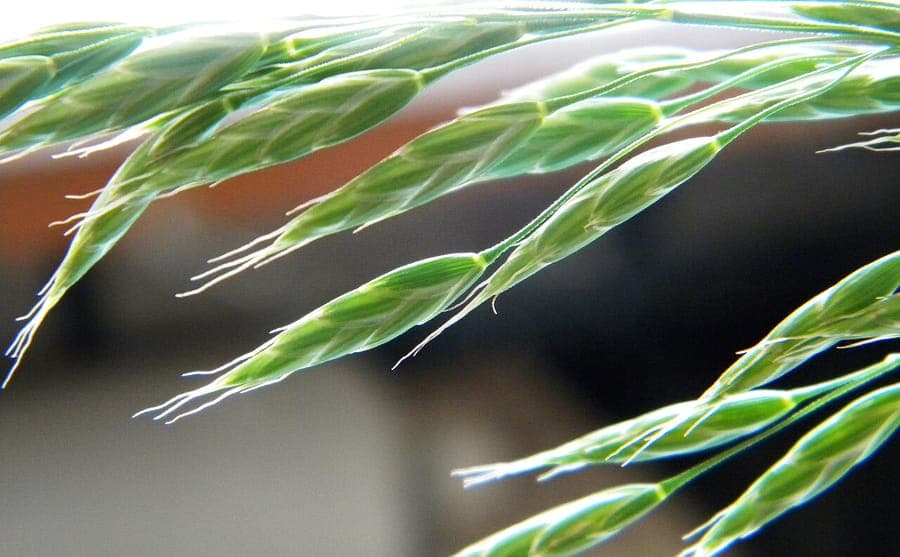
Bildoj / CC BY-SA 3.0, via Wikimedia Commons
Smooth brome: complete guide
Bromus racemosus
Want to see Smooth brome: complete guide in your garden?
1 minute, no credit card
Overview
Smooth brome (Bromus racemosus) isn't the flashiest grass in the border, but it's one of the most reliable for naturalistic designs. Part of the Poaceae family, it grows in neat, upright clumps and reaches heights of 40 to 80 cm, spreading about 30 cm wide. Native to regions like Austria, Bulgaria, and the Czech Republic, it's well-suited to temperate climates and adapts easily to garden conditions. While not often found wild in the UK or North America, it thrives when given the right spot.
On gardenworld.app, you can create a garden layout that features Smooth brome as a mid-layer grass, blending it with perennials for year-round texture. It's not invasive, doesn't flop easily, and adds subtle movement to planting schemes.
Appearance & bloom cycle
The foliage is narrow, soft green, and slightly hairy-giving it a gentle, tactile quality. From May through July, slender green flower spikes rise above the leaves, catching the breeze and adding rhythm to the border. The blooms are green, not showy, but they bring a quiet elegance, especially when backlit by afternoon sun.
After flowering, seeds form and may self-sow lightly in well-drained, open soils. In heavy clay or overly shaded spots, it's less likely to spread. The seed heads persist into autumn, attracting finches and other small birds looking for late-season food.
Ideal location
Smooth brome thrives in full sun to light shade, scoring an 8/10 for light preference. Aim for at least 6 hours of direct sunlight daily. In deep shade, it becomes leggy and flops over, ruining its upright habit. It's perfect for meadow plantings, dry slopes, or as a textural element in mixed borders.
In urban gardens, it works well along pathways or as a soft screen between planting zones. Pair it with late-emerging perennials like Echinacea purpurea or Verbena bonariensis so the structure remains interesting after the grass flowers fade.
Soil requirements
It prefers slightly acidic to neutral soils, with a pH between 5.5 and 6.5. Well-drained loam or sandy loam is ideal. Avoid waterlogged clay unless you amend it with grit or sharp sand. On pure sand, mix in compost at planting to improve moisture retention.
Add a layer of compost when establishing plants to boost soil structure. In dry summer regions, a 3 cm mulch layer in spring helps conserve moisture without smothering the crown.
Free design
Want to see Smooth brome: complete guide in your garden? Make a free design now.
Watering
Once established, Smooth brome is drought-tolerant. During the first growing season (April–June), water regularly to help roots settle. After that, it handles dry spells well. In extreme droughts, give a deep soak in the morning or evening-never daily.
Overwatering leads to crown rot, especially in poorly drained soils. In containers, check moisture at 5 cm depth with your finger. If it's dry, water; if damp, wait.
Pruning
Prune in late winter or early spring (February–March). Cut back old growth to 10–15 cm above ground level. This encourages fresh, upright growth and prevents dead material from weighing down new shoots. Use sharp shears for clean cuts.
Leave it standing over winter for structure and shelter. The dried stems provide cover for overwintering insects and birds.
Maintenance calendar
- January: Check for debris; remove any matted foliage.
- February: Begin cutting back old growth.
- March: Full pruning; apply compost as a top-up.
- April: Water lightly in dry spells; watch for new shoots.
- May: Blooms begin; avoid high-nitrogen fertilisers.
- June: Peak bloom; monitor for pests (rare).
- July: Flowering ends; seed development starts.
- August: Let seeds mature for wildlife; no pruning.
- September: No active care needed.
- October: Leave standing for winter interest.
- November: Inspect for fungal issues; rarely problematic.
- December: Final check; avoid walking on frosted foliage.
Winter hardiness
Hardy in USDA zones 5 to 8, surviving temperatures down to -20°C. In the UK (zone 8), it overwinters reliably. Foliage turns pale brown but remains standing, adding winter structure. Heavy snow may flatten it, but it usually rebounds in spring.
Companion plants
Pair Smooth brome with drought-tolerant perennials like Stachys byzantina, Nepeta racemosa, or Salvia nemorosa. Its airy form contrasts well with the spiky shapes of Eryngium or the upright habit of Carex species. Avoid overly aggressive spreaders like Artemisia ludoviciana that could crowd it out.
On gardenworld.app, you can generate planting schemes that layer Smooth brome with complementary plants for height, texture, and bloom timing.
Closing
Smooth brome won't grab attention like a red hot poker, but it's a quiet achiever. It asks for little-just sun, decent drainage, and a spring trim-and gives back movement, texture, and habitat. Plant in groups of 3 or 5 for a natural look. Available at garden centres across the UK and North America, often sold in 1-litre pots or as part of meadow mixes. No fuss, no drama-just solid garden performance.
Want to see Smooth brome: complete guide in your garden? Make a free design now.
Upload a photo, pick a style, and get a photorealistic design with plant list in under a minute.
No credit card required


Similar plants
Sporobolus pungens: complete guide
Sporobolus pungens
Sporobolus pungens is a stoloniferous Mediterranean coastal grass with outstanding salt and drought tolerance, perfect for seaside and dry gardens.
Mediterranean aegilops: complete guide
Aegilops biuncialis
Everything about Aegilops biuncialis, a Mediterranean annual grass with ornamental spikes and outstanding drought tolerance for dry gardens.
Silver bluestem: complete guide
Bothriochloa saccharoides
Full guide to Bothriochloa saccharoides (silver bluestem): site, soil, watering, winter hardiness, pruning, and garden companions.