
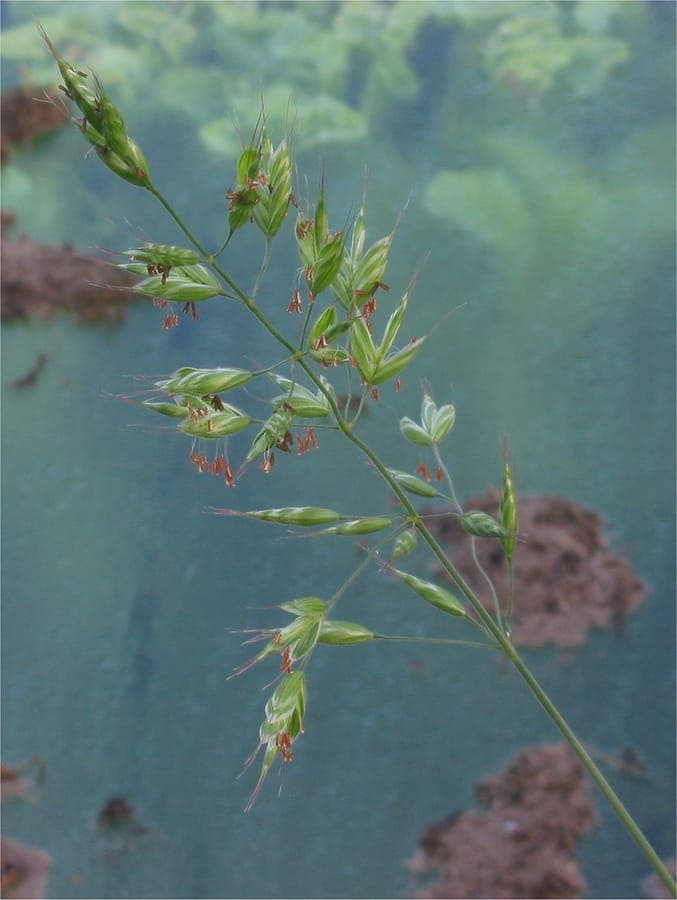
Rasbak / CC BY-SA 3.0, via Wikimedia Commons
Barley brome: complete guide
Bromus hordeaceus
Want to see Barley brome: complete guide in your garden?
1 minute, no credit card
Overview
Barley brome (Bromus hordeaceus) is an annual grass species often dismissed as a weed, but when embraced in the right garden setting, it brings a soft, natural texture to open spaces. Native to southern and central Europe - including Albania, Austria, and the Baltic states - it thrives in disturbed soils and open fields. In the UK, it occasionally appears along roadsides or in neglected corners of gardens. While not commonly sold as an ornamental, its delicate movement and low upkeep make it a hidden gem for informal, ecologically minded designs.
For gardeners aiming to create a relaxed, meadow-style look, Barley brome fits perfectly. On gardenworld.app, you can visualise how this grass integrates into a self-sustaining planting scheme, especially in areas where you want gentle motion and seasonal interest without heavy maintenance.
Appearance & bloom cycle
Barley brome grows 30 to 80 cm tall, with slender, soft-textured leaves and open, drooping panicles that appear from April to June. The flowers are pale green to purplish, feathery, and sway gracefully in the breeze. Though not showy in the traditional sense, the airy inflorescences add a subtle elegance to the garden, especially when backlit by morning or evening sun.
As an annual, it completes its life cycle within one growing season. After flowering, it sets seed and dies back by late summer. However, it often self-seeds readily in suitable conditions, returning year after year with minimal effort. The dried seed heads persist into autumn, offering visual interest and habitat for small insects.
Ideal location
This grass prefers full sun but tolerates light shade. It does best in open, uncompetitive spaces - think wildflower meadows, borders with sparse planting, or along pathways where foot traffic is low. Avoid planting it in dense lawns or formal beds; it shines in relaxed, naturalistic settings. It's ideal for dry banks, gravel gardens, or areas with poor soil where other perennials struggle.
In the UK, it works well in USDA zones 6–9, which covers most of England, Wales, and parts of Scotland. If you're unsure whether your garden meets the right sunlight and spacing needs, gardenworld.app offers design tools to help you place Barley brome where it will thrive.
Soil requirements
Barley brome isn't fussy about soil type. It grows in sandy, loamy, or chalky soils with a pH range of 5.5 to 7.5. What it won't tolerate is waterlogged ground. Good drainage is essential - heavy clay soils should be avoided unless improved with grit or organic matter. Interestingly, it performs better in low-fertility soils, where aggressive plants can't outcompete it.
Sow seeds in early spring or autumn when the soil is moist but not soggy. Lightly rake the surface to ensure good seed-to-soil contact, then leave undisturbed. No fertiliser needed - in fact, rich soil may reduce flowering and encourage weak growth.
Free design
Want to see Barley brome: complete guide in your garden? Make a free design now.
Watering
Once established, Barley brome is drought-tolerant and rarely needs supplemental watering. Young seedlings may benefit from a light soak during prolonged dry spells in spring, but mature plants rely entirely on rainfall. Overwatering leads to floppy growth and increases disease risk, so let nature take its course.
Pruning
No pruning is required. Since it's an annual, the plant dies after seeding. In late winter or early spring, you can rake out old debris to make space for new seedlings. If you prefer a tidier look, mow down the dead stems in late summer, but be aware this may reduce self-seeding.
Maintenance calendar
- Jan: No action; site is dormant
- Feb: Clear debris if desired
- Mar: Prepare ground for spring sowing
- Apr: Active growth begins; watch for seedlings
- May: Flowering starts; ensure light moisture in dry spells
- Jun: Peak bloom; seeds begin to form
- Jul: Plants start to yellow; seed dispersal
- Aug: Dieback complete; self-seeding occurs
- Sep: Re-sow or allow natural germination
- Oct: Monitor seedling emergence
- Nov: No care needed
- Dec: Dormant period
Winter hardiness
Barley brome is not a perennial, so individual plants don't survive winter. However, its seeds overwinter successfully in the soil and germinate when conditions warm in spring. It's hardy in USDA zones 6–9, making it reliable across much of the UK. In colder microclimates, germination may be patchy, but mild winters support consistent returns.
Companion plants
Pair Barley brome with other low-fertility tolerant species like cornflowers (Centaurea cyanus), yarrow (Achillea millefolium), or ox-eye daisy (Leucanthemum vulgare). It blends well with short-lived perennials and annuals that allow it space to grow. Avoid pairing with vigorous grasses like couch grass (Elymus repens), which will choke it out.
Closing
Barley brome may not be flashy, but its quiet charm and resilience make it a smart choice for low-effort, high-reward gardening. It asks for little - sun, decent drainage, and space - and gives back with movement, texture, and seasonal rhythm. You won't find it in every garden centre, but specialty seed suppliers and online retailers often carry it. For inspiration on how to use it, explore planting combinations on gardenworld.app. And when planning your next meadow patch, remember that sometimes the simplest grasses make the most lasting impact.
Want to see Barley brome: complete guide in your garden? Make a free design now.
Upload a photo, pick a style, and get a photorealistic design with plant list in under a minute.
No credit card required


Similar plants
Sporobolus pungens: complete guide
Sporobolus pungens
Sporobolus pungens is a stoloniferous Mediterranean coastal grass with outstanding salt and drought tolerance, perfect for seaside and dry gardens.
Mediterranean aegilops: complete guide
Aegilops biuncialis
Everything about Aegilops biuncialis, a Mediterranean annual grass with ornamental spikes and outstanding drought tolerance for dry gardens.
Silver bluestem: complete guide
Bothriochloa saccharoides
Full guide to Bothriochloa saccharoides (silver bluestem): site, soil, watering, winter hardiness, pruning, and garden companions.