
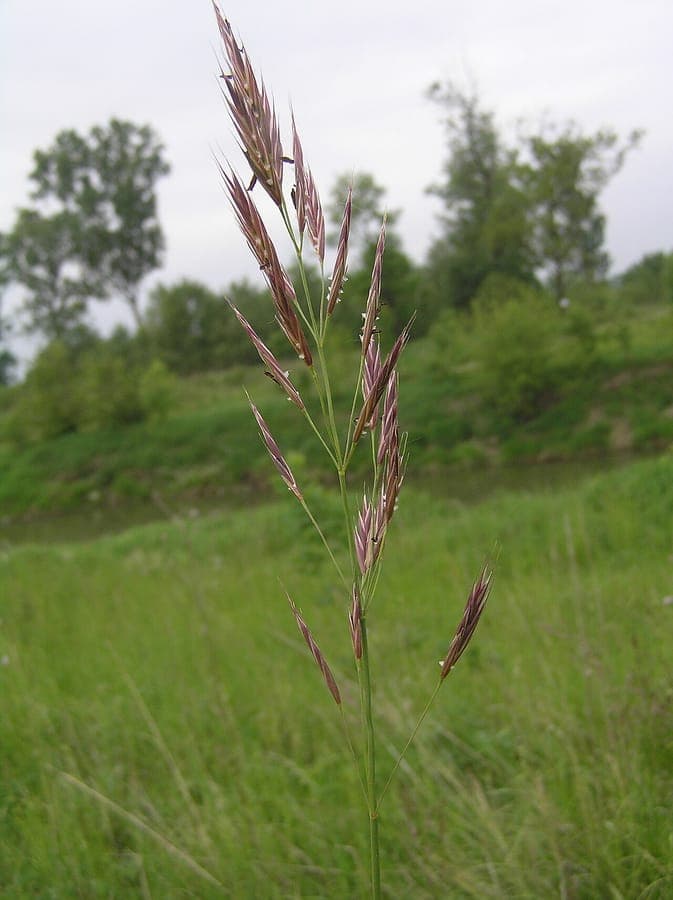
Petr Filippov / CC BY-SA 3.0, via Wikimedia Commons
Meadow brome: complete guide
Bromus erectus
Want to see Meadow brome: complete guide in your garden?
1 minute, no credit card
Overview
Meadow brome (Bromus erectus) isn't the kind of plant that shouts for attention - it whispers. A native grass across much of central and southern Europe, it's found its way into gardens from Austria to Great Britain, and for good reason. It's tough, undemanding, and brings movement and texture to a border without hogging the spotlight. If your garden has dry, sunny spots where other plants struggle, this grass might be your best ally.
It's not flashy, but it's reliable. Over the years, I've seen it thrive where lavenders flop and sedums rot. And unlike many ornamental grasses, it's not prone to collapsing in winter. On gardenworld.app, you can design a low-maintenance border that features Meadow brome as a structural backbone, paired with other drought-tolerant perennials.
Appearance & bloom cycle
Meadow brome is a perennial bunchgrass, growing 50–80 cm tall. The leaves are narrow, slightly rough to the touch, and range from pale green to blue-green. From late May to July, airy panicles emerge - soft, silvery-green at first, then turning golden as they mature. By late summer, the seed heads deepen to a warm brown, lasting well into autumn. The dried stems stand upright through winter, adding subtle structure and shelter for overwintering insects.
One of its quiet strengths is movement. On even the lightest breeze, the flower heads ripple like water. It's not a plant for formal parterres, but perfect for naturalistic planting schemes where rhythm matters more than rigidity.
Ideal location
Full sun is non-negotiable. This grass needs at least 6 hours of direct sunlight daily. It thrives on slopes, banks, and open borders where air circulates freely. Avoid shady corners, north-facing walls, or spots under dense tree canopies. It's ideal for chalky banks, gravel gardens, or meadow-style plantings. If your soil drains well and the sun hits hard, it'll likely do well. On gardenworld.app, you can preview how Meadow brome performs in different garden layouts - especially useful if you're blending it with wildflowers or low shrubs.
Soil requirements
It prefers lean, well-drained soils. Heavy clay or waterlogged ground will spell trouble unless you amend it with sharp sand or gravel. It tolerates a pH from 5.5 to 7.5, so it works on both chalk and slightly acidic loams. Rich, fertile soils encourage floppy growth - so resist the urge to add compost or manure. This grass wants to struggle a little; too much comfort makes it weak.
Free design
Want to see Meadow brome: complete guide in your garden? Make a free design now.
Watering
Once established, it's drought-proof. During the first growing season (April–June), give young plants a weekly soak - about 5–10 litres per plant. After that, forget it. No irrigation needed, even in scorching summers. If you're designing a water-wise garden, this is a top contender. Occasional deep watering in prolonged drought won't hurt, but it's rarely necessary.
Pruning
Don't cut it back in autumn. Let the old growth stand through winter - it provides habitat and visual interest. In late winter (February), cut the entire plant down to 10–15 cm above ground level. Use hand shears or a pruning saw for clean cuts; avoid electric trimmers, which can crush the stems. New growth emerges in early March, so don't delay too long.
Maintenance calendar
- Jan: check for wind damage, leave standing
- Feb: cut back to 10–15 cm
- Mar: remove debris, watch for new shoots
- Apr: light watering if dry, no fertiliser
- May: flowering begins, monitor for slugs
- Jun: peak bloom, minimal care
- Jul: seeds ripen, stems turn golden
- Aug: no maintenance, allow natural seeding
- Sep: seedlings may appear in suitable spots
- Oct: leave intact, excellent autumn texture
- Nov: structural value in garden
- Dec: stands through frost, shelter for insects
Winter hardiness
Hardy to USDA zone 6 (-15°C). In the UK and most of western Europe, it survives winter without protection. The dried stems resist collapse and snow load better than many grasses. No mulch needed, and avoid covering - trapped moisture can rot the crown.
Companion plants
Pair it with other sun-lovers that tolerate dry soil: Knautia macedonica, Salvia nemorosa, Echinops ritro, or Stachys byzantina. It makes a soft backdrop for upright plants like Verbascum or Eryngium. Avoid moisture-loving species like Astilbe or Hosta. For gravel gardens, combine with Sedum, Allium, or Thymus. Its airy habit contrasts well with spiky or mounding forms.
Closing
Meadow brome is a quiet achiever. It won't win prizes for flamboyance, but it delivers year-round value with almost no input. You'll find it at garden centres across the UK, often sold as Meadow brome or upright brome. Check the label for Bromus erectus to avoid confusion with more aggressive brome species. Plant it where other grasses fail, and let it do its thing. If you're building a resilient, nature-inspired garden, it's a plant worth knowing.
Want to see Meadow brome: complete guide in your garden? Make a free design now.
Upload a photo, pick a style, and get a photorealistic design with plant list in under a minute.
No credit card required


Similar plants
Sporobolus pungens: complete guide
Sporobolus pungens
Sporobolus pungens is a stoloniferous Mediterranean coastal grass with outstanding salt and drought tolerance, perfect for seaside and dry gardens.
Mediterranean aegilops: complete guide
Aegilops biuncialis
Everything about Aegilops biuncialis, a Mediterranean annual grass with ornamental spikes and outstanding drought tolerance for dry gardens.
Silver bluestem: complete guide
Bothriochloa saccharoides
Full guide to Bothriochloa saccharoides (silver bluestem): site, soil, watering, winter hardiness, pruning, and garden companions.