
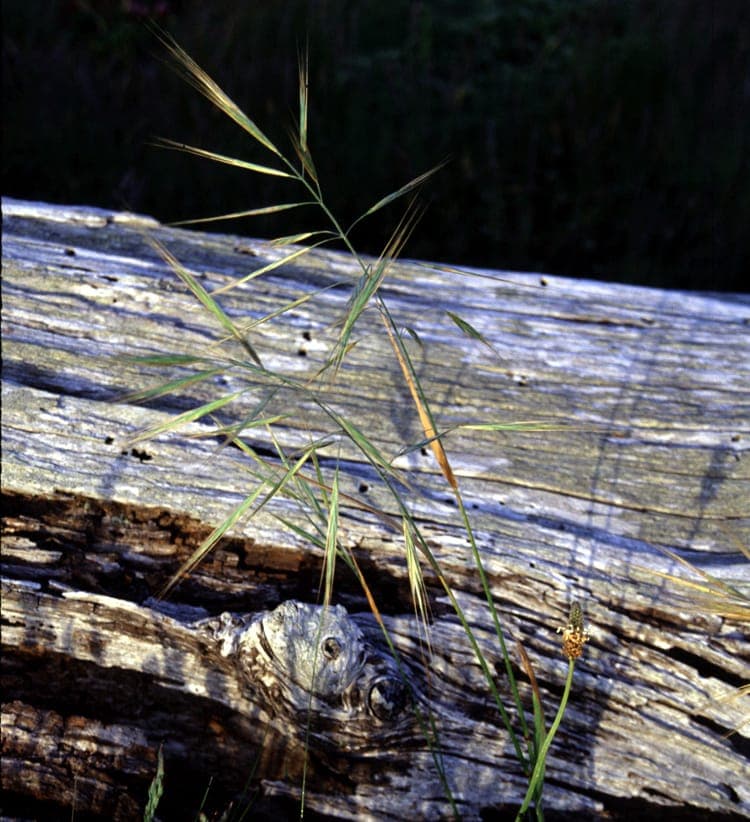
Gordon Leppig & Andrea J. Pickart / Public domain, via Wikimedia Commons
Broncho grass: complete guide
Bromus diandrus
Want to see Broncho grass: complete guide in your garden?
1 minute, no credit card
Overview
Broncho grass, or Bromus diandrus, is an annual grass that brings movement and texture to the garden in spring. Native to the Mediterranean basin-spanning regions like Greece, France, Iran, and Egypt-it thrives in dry, open habitats. While often dismissed as a weed, it holds real value in naturalistic planting schemes, especially in xeriscapes or wildflower meadows. It belongs to the Poaceae family and typically reaches heights between 50 and 100 cm, making it a strong vertical presence in the garden.
As an annual, Broncho grass completes its life cycle in one growing season. It germinates in late winter or early spring, blooms in late spring, sets seed, and dies by midsummer. The seeds drop and can overwinter in the soil, germinating the following year under the right conditions. This self-seeding habit makes it a dynamic but manageable plant in informal gardens.
On gardenworld.app, you can design a garden layout that embraces the seasonal rhythm of Broncho grass, pairing it with perennials that fill the gap after it fades.
Appearance & bloom cycle
Broncho grass features narrow, upright leaves with a bluish-green tint and rough edges. The foliage grows in loose clumps, typically 30–50 cm wide. From April to June, it produces stiff, erect flower spikes 10–20 cm long. These are densely packed with small florets that turn silvery-gray as they mature, creating a soft, hazy effect in the breeze.
The flowering period peaks in May, depending on local climate. By late June or early July, the plant begins to dry out, the seed heads shatter, and the structure collapses. At this point, it can look messy, but leaving it standing provides food for birds and adds winter interest in a natural garden.
Ideal location
Full sun is essential. Broncho grass needs at least 6–8 hours of direct sunlight daily. It performs best on dry, south-facing slopes, gravel beds, or unirrigated borders. Avoid shady or damp areas-these conditions inhibit germination and encourage rot.
It's ideal for cottage gardens, Mediterranean-style plantings, or low-water landscapes. Because it's annual, plan for succession planting. Pair it with late-emerging perennials like Echinacea or Rudbeckia that will cover the ground once Broncho grass dies back.
Soil requirements
This grass prefers well-drained, lean soils. Sandy loam, rocky soil, or gravel mixes work well. It tolerates poor fertility and doesn't need fertiliser-rich soils promote floppy growth and reduce flowering. The ideal pH range is 6.0 to 7.5, but it adapts to slightly acidic or alkaline conditions.
Avoid heavy clay or water-retentive soils. If your garden has clay, amend it with coarse sand or grit to improve drainage. Raised beds or slopes are ideal for preventing waterlogging.
Free design
Want to see Broncho grass: complete guide in your garden? Make a free design now.
Watering
Once established, Broncho grass is highly drought tolerant. It evolved in Mediterranean climates with dry summers, so supplemental watering is rarely needed. Only water during prolonged dry spells in early spring, especially if seedlings are emerging.
Overwatering leads to weak stems, fungal issues, and reduced seed set. Use drip irrigation or hand-water lightly-never soak the soil. In most UK and US zones (USDA 7–10), natural rainfall in spring is sufficient.
Pruning
No pruning is required for plant health. However, you can cut back seed heads in late summer or autumn if you prefer a tidy appearance. Alternatively, leave them intact to feed birds and add winter texture.
To prevent excessive self-seeding, remove flower spikes before seeds fully mature-typically in late June. Use secateurs and cut stems to 15–20 cm above ground. Save some seed for next year by collecting dry heads in paper bags.
Maintenance calendar
- January–February: Prepare soil in sunny, dry spots. Break up compacted areas for seed sowing.
- March–April: Sow seeds directly outdoors. Keep soil lightly moist until germination (7–14 days).
- May–June: Peak bloom. Monitor for overcrowding. Water only in extreme drought.
- July–August: Plants die back. Remove or leave for wildlife. Collect and store seed.
- September–December: No action needed. Watch for volunteer seedlings in mild winters.
Use gardenworld.app to create a custom maintenance schedule based on your local climate and garden layout.
Winter hardiness
As an annual, Broncho grass doesn't survive winter in the northern hemisphere. However, its seeds are often winter-hardy and can germinate in late winter or early spring when soil temperatures rise. It's most reliable in USDA zones 7–10, though light germination may occur in zone 6 with mulch protection.
In colder zones, treat it as a half-hardy annual-sow after last frost or start indoors 4–6 weeks earlier. No winter care is needed beyond seed collection.
Companion plants
Pair Broncho grass with drought-tolerant, sun-loving species. Good companions include Lavandula angustifolia, Eryngium, Sedum 'Autumn Joy', and Thymus vulgaris. It also blends well with other grasses like Festuca glauca or Stipa tenuissima.
Avoid aggressive spreaders or moisture-hungry plants like hostas or astilbes. These compete for resources and create overly humid microclimates.
Closing
Broncho grass isn't a showstopper like delphiniums or roses, but it adds subtle beauty and ecological value. It's perfect for gardeners who appreciate seasonal change and low-input gardening. With minimal care, it delivers texture, movement, and habitat. Find seeds at garden centres like Truffaut, Jardiland, or general suppliers in the UK and US. For design inspiration, explore planting schemes on gardenworld.app that feature self-seeding annuals in naturalistic settings.
Want to see Broncho grass: complete guide in your garden? Make a free design now.
Upload a photo, pick a style, and get a photorealistic design with plant list in under a minute.
No credit card required


Similar plants
Sporobolus pungens: complete guide
Sporobolus pungens
Sporobolus pungens is a stoloniferous Mediterranean coastal grass with outstanding salt and drought tolerance, perfect for seaside and dry gardens.
Mediterranean aegilops: complete guide
Aegilops biuncialis
Everything about Aegilops biuncialis, a Mediterranean annual grass with ornamental spikes and outstanding drought tolerance for dry gardens.
Silver bluestem: complete guide
Bothriochloa saccharoides
Full guide to Bothriochloa saccharoides (silver bluestem): site, soil, watering, winter hardiness, pruning, and garden companions.