
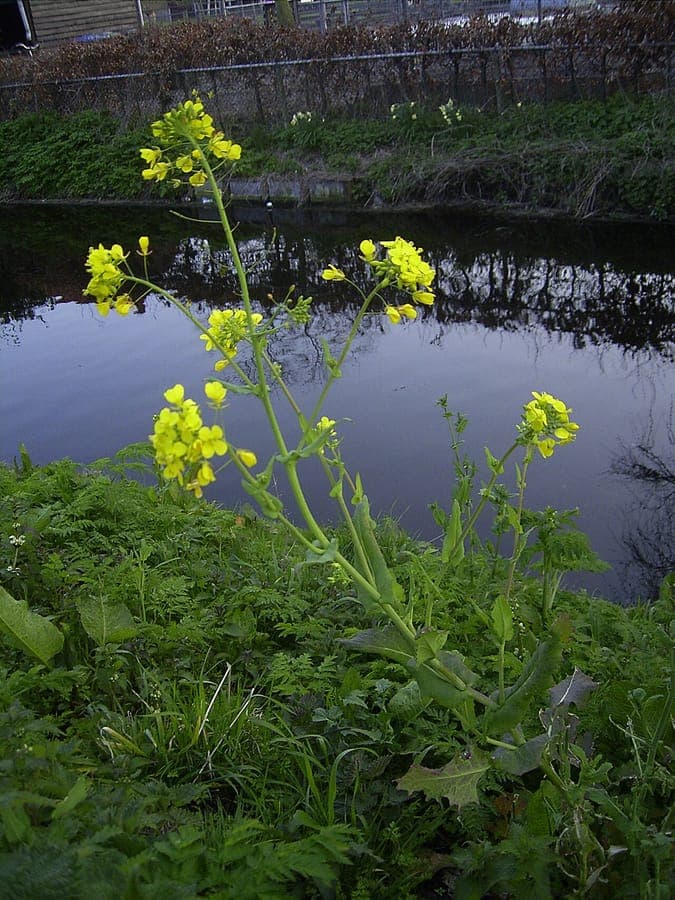
TeunSpaans / CC BY-SA 3.0, via Wikimedia Commons
Colbaga: complete guide
Brassica rapa
Want to see Colbaga: complete guide in your garden?
1 minute, no credit card
Overview
Colbaga, better known botanically as Brassica rapa, is a surprisingly versatile plant that fits seamlessly into both ornamental and edible gardens. While often confused with turnips or field mustard, Colbaga refers to specific cultivars within the Brassicaceae family that excel as leafy greens, root crops, or cover crops. Native to southern Europe and North Africa, it thrives in USDA hardiness zones 6–10 and adapts well to temperate climates across the UK and North America.
This plant is a go-to for gardeners looking to improve soil health, attract pollinators, or harvest nutrient-rich greens. Whether you're planting it as a winter cover crop or a spring salad green, Colbaga is low-maintenance and high-reward. On gardenworld.app, you can generate a planting schedule tailored to your local frost dates and soil type, ensuring optimal timing for sowing and harvest.
Appearance & bloom cycle
Colbaga grows as a herbaceous forb, reaching 30–80 cm in height. In its first season, it forms a rosette of deeply lobed, waxy green leaves. These are tender when young and develop a slightly peppery taste-perfect for salads or sautéing. If left to overwinter, it bolts in spring, sending up a flowering stalk with bright yellow, cross-shaped blooms from April to June.
These flowers are a magnet for bees, hoverflies, and other beneficial insects. After pollination, long seed pods form, each containing small, round seeds. These can be collected for next year's planting or left to self-seed in prepared beds. The bloom cycle makes Colbaga a valuable bridge crop, supporting biodiversity when few other plants are flowering.
Ideal location
Colbaga thrives in full sun, scoring an 8 out of 10 for light needs. Aim for a spot that receives at least 6–8 hours of direct sunlight daily. It performs well in open vegetable plots, rotation beds, or even container gardens on sunny patios.
Avoid heavily shaded areas or spots under dense tree canopies-these stunt leaf development and delay bolting. While it tolerates light shade, growth will be slower and plants leggier. In cooler climates, a south-facing wall can provide extra warmth and protection during early spring sowings.
Soil requirements
This brassica prefers well-drained soil with a pH between 5.0 and 8.0. It grows best in sandy loam or loamy soils rich in organic matter. Heavy clay soils can be amended with compost or well-rotted manure to improve structure and drainage.
Before planting, loosen the top 15 cm of soil and incorporate 2–3 cm of compost. Avoid fresh manure, as it can encourage bacterial diseases. If your soil is highly acidic (below pH 5.0), apply garden lime at a rate of 100 g/m² in autumn to allow time for adjustment.
Free design
Want to see Colbaga: complete guide in your garden? Make a free design now.
Watering
Colbaga has moderate water needs. During active growth (March to July), water deeply 2–3 times per week, depending on rainfall. The soil should remain evenly moist but never soggy. Overhead watering increases the risk of fungal diseases like downy mildew, so use a soaker hose or water at the base.
In dry spells, mulch with straw or compost to retain moisture and suppress weeds. Reduce watering in winter when growth slows. Young seedlings are especially vulnerable to drought-check daily in hot weather.
Pruning
Pruning isn't essential, but strategic harvesting encourages bushier growth. For leaf production, pick outer leaves when they reach 10–15 cm long, leaving the central bud intact. This allows continuous harvest over several weeks.
If growing for roots, thin seedlings to 10–15 cm apart when they're 5 cm tall to prevent crowding. For cover cropping, cut plants back just before flowering and incorporate into the soil to boost organic matter.
Maintenance calendar
- January: Plan crop rotation; order seeds from garden centres or online suppliers
- February: Start seeds indoors 4–6 weeks before last frost
- March: Sow directly outdoors when soil temp exceeds 7°C; watch for flea beetles
- April: Thin seedlings; begin regular watering; mulch to conserve moisture
- May: Monitor for aphids and cabbage worms; hand-pick or use netting
- June: Flowers appear; harvest young leaves and roots; save seeds if desired
- July: Allow some plants to set seed; cut others for compost
- August: Sow again for autumn harvest or winter cover crop
- September: Plant after early crops like potatoes or lettuce
- October: Use as green manure; protect young plants with cloches if frost hits
- November–December: Minimal care; check for slugs and waterlogged soil
Winter hardiness
Colbaga is reliably hardy in USDA zones 6–10. Established plants tolerate frosts down to -15°C, especially with a light mulch of straw or leaves. In zone 6, it may die back slightly but often rebounds in spring.
In colder areas (zones 4–5), use cloches or horticultural fleece to protect overwintering plants. Fall-sown crops act as living mulch, preventing soil erosion and nutrient leaching over winter.
Companion plants
Pair Colbaga with onions, garlic, or aromatic herbs like dill and thyme-these deter cabbage pests. Avoid planting near other brassicas (cabbage, broccoli) to reduce shared disease pressure.
Interplant with lettuce, spinach, or beets for efficient space use. The brassica's dense foliage shades the soil, reducing weeds and moisture loss. On gardenworld.app, you can visualise companion planting layouts and avoid allelopathic conflicts before breaking ground.
Closing
Colbaga is a multitasking garden staple-edible, ecological, and easy to grow. Whether you're a beginner or seasoned grower, it fits naturally into crop rotation, pollinator support, and kitchen harvests. Available at most garden centres across the UK and North America, including online retailers, it's an affordable way to boost your garden's resilience. With proper timing and placement, Colbaga doesn't just survive-it thrives, enriching both soil and plate.
Want to see Colbaga: complete guide in your garden? Make a free design now.
Upload a photo, pick a style, and get a photorealistic design with plant list in under a minute.
No credit card required


Similar plants
Brassica cretica: complete guide
Brassica cretica
Brassica cretica, the Cretan cabbage, grows wild on Aegean cliffs. Discover how to grow this drought-tolerant, yellow-flowered Mediterranean perennial.
Corsican cabbage: complete guide
Brassica insularis
Corsican cabbage is a rare Mediterranean rock cabbage with white flowers and blue-green leaves. Location, soil and winter protection.
Prostrate cabbage: complete guide
Brassica procumbens
Prostrate cabbage is a creeping North African cliff plant with yellow flowers. Discover location, soil type and winter protection.