
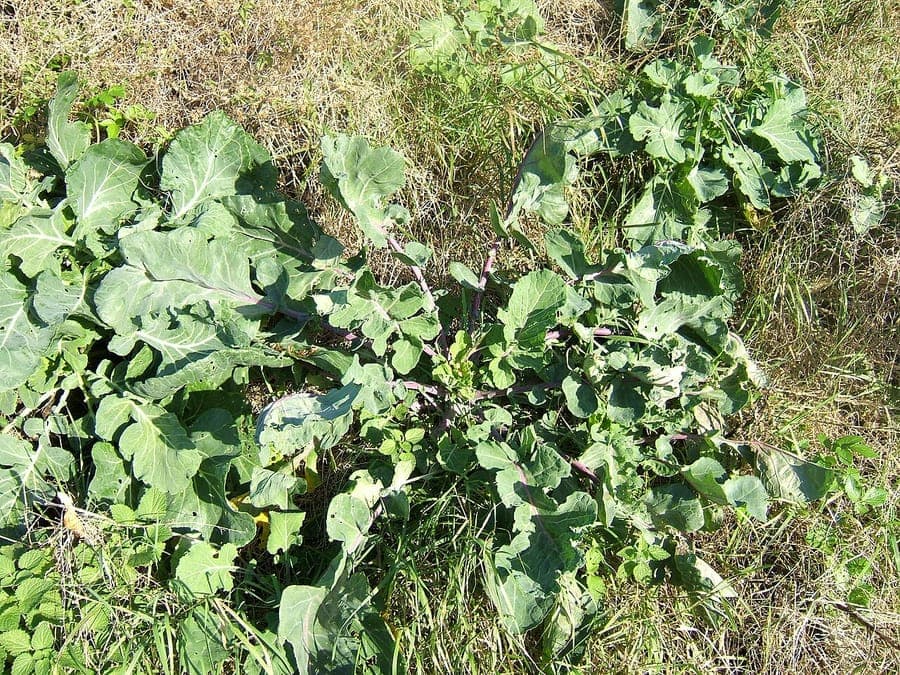
MPF / CC BY 2.5, via Wikimedia Commons
Cabbage: complete guide
Brassica oleracea
Want to see Cabbage: complete guide in your garden?
1 minute, no credit card
Overview
Cabbage, or Brassica oleracea, is a staple in temperate home gardens and a member of the Brassicaceae family. Native to coastal regions of France, Great Britain, and Spain, this hardy plant thrives where chalky soils and cool, moist air prevail. In cultivation, it's grown not just as traditional cabbage but as broccoli, kale, Brussels sprouts, and cauliflower - all selected forms of the same wild ancestor. Its growth habit is herbaceous, forming dense rosettes of leaves that can be harvested at various stages.
In the garden, cabbage is a rewarding crop if planted with care. It performs best in USDA hardiness zones 2 to 9, where it can be grown as a spring, summer, or fall crop depending on the variety. One of the biggest challenges is crop rotation - planting cabbage in the same spot year after year invites clubroot and other soil-borne diseases. Plan ahead using gardenworld.app to design a rotating layout that keeps your brassicas healthy and productive.
Appearance & bloom cycle
Cabbage plants develop tight, spherical heads ranging from 15 to 25 cm in diameter, though some heirloom varieties can reach 30 cm. Leaf color varies from deep green and blue-green to red and purple, depending on the cultivar. The texture can be smooth (like green cabbage), crinkled (savoy types), or open (kale, broccoli). While cabbage is typically harvested before flowering, if left to bolt, it produces small yellow flowers in its second year, characteristic of the Brassicaceae family.
Bolting is generally undesirable in edible crops, as it makes the leaves tough and bitter. It's often triggered by prolonged exposure to temperatures between 5–10°C after the plant has reached a certain size. To prevent bolting, avoid planting too early in spring and use row covers to moderate temperature swings.
Ideal location
Cabbage needs full sun - rate 8 out of 10, meaning 6 to 8 hours of direct sunlight daily. Choose a site with good air circulation and protection from strong winds, which can damage developing heads. Space plants 40 to 50 cm apart, with 60 cm between rows, to allow room for growth and reduce fungal pressure.
Containers work well too, provided they are at least 30 cm deep and wide. Use large pots for varieties like 'January King' or 'Marte'. In urban gardens, rooftop planters with southern exposure are ideal. When planning spacing and exposure, gardenworld.app offers a visual garden designer to help you maximize yields in limited spaces.
Soil requirements
Cabbage thrives in fertile, well-drained loam or clay-loam soils with a pH of 7.0 to 7.5. This neutral to slightly alkaline range discourages clubroot disease. Before planting, amend the soil with 5 to 7 cm of compost or well-rotted manure worked into the top 15–20 cm. Avoid fresh manure - it can burn roots and attract cabbage root fly.
A soil test is highly recommended. If pH is too low, apply garden lime; if too high (rare), elemental sulfur can help. The soil should be firm but not compacted, as cabbage has a deep root system reaching up to 30 cm. Raised beds are excellent for maintaining structure and drainage.
Free design
Want to see Cabbage: complete guide in your garden? Make a free design now.
Watering
Consistent moisture is key - aim for 2.5 cm of water per week. During dry spells, increase to twice weekly, especially in containers. Water at the base to keep foliage dry and prevent fungal diseases like downy mildew. Mulch with straw or shredded bark to retain moisture and suppress weeds.
Inconsistent watering during head formation leads to splitting. This happens when plants take up too much water rapidly after a dry period. To minimize risk, harvest just before heavy rain or use drip irrigation for steady supply.
Pruning
Cabbage doesn't require pruning, but removing yellowed or damaged outer leaves improves airflow and reduces disease risk. For kale or collards, selectively harvest lower leaves to encourage new growth. With broccoli, cut the central head at 15–20 cm tall to stimulate side shoots.
Use clean, sharp shears and sanitize between plants to avoid spreading pathogens. Never strip more than one-third of the foliage at once.
Maintenance calendar
- Jan: Plan crop rotation, order seeds
- Feb: Start early broccoli indoors under lights
- Mar: Sow late cabbage varieties, prepare beds
- Apr: Transplant outdoors after last frost, watch for aphids
- May: Side-dress with compost, weed regularly
- Jun: Monitor for cabbage loopers, apply row covers
- Jul: Harvest early varieties, check for cabbage root fly
- Aug: Plant fall and winter cabbage
- Sep: Transplant late crops, inspect for slugs
- Oct: Main harvest period, remove spent plants
- Nov: Clean beds, add compost
- Dec: Review season, plan next year's layout
Winter hardiness
Many cabbage varieties are cold-tolerant, surviving down to -8°C. Winter types like 'January King' or 'Durham Early' can withstand -12°C with protection. Use frost fleece or cloches in harsh winters. Avoid wet soils in winter, as saturated roots lead to rot.
Companion plants
Good companions include dill, thyme, sage, celery, and onions. These repel pests like cabbage moths and aphids. Tomatoes and potatoes also grow well nearby. Avoid planting near strawberries, beans, or grapes - they compete for nutrients or attract shared pests.
Nasturtiums and marigolds are excellent trap crops, luring aphids and flea beetles away from cabbage. Interplanting these flowers supports natural pest control.
Closing
Cabbage is a resilient, nutritious addition to any vegetable garden. With proper spacing, consistent watering, and smart crop rotation, you'll enjoy firm heads and healthy greens. Start seeds indoors or buy seedlings from local garden centres. Use tools on gardenworld.app to track growth stages and receive planting reminders. Whether you're growing for coleslaw, sauerkraut, or stir-fry, a well-tended cabbage patch pays off.
Want to see Cabbage: complete guide in your garden? Make a free design now.
Upload a photo, pick a style, and get a photorealistic design with plant list in under a minute.
No credit card required


Similar plants
Brassica cretica: complete guide
Brassica cretica
Brassica cretica, the Cretan cabbage, grows wild on Aegean cliffs. Discover how to grow this drought-tolerant, yellow-flowered Mediterranean perennial.
Corsican cabbage: complete guide
Brassica insularis
Corsican cabbage is a rare Mediterranean rock cabbage with white flowers and blue-green leaves. Location, soil and winter protection.
Prostrate cabbage: complete guide
Brassica procumbens
Prostrate cabbage is a creeping North African cliff plant with yellow flowers. Discover location, soil type and winter protection.