
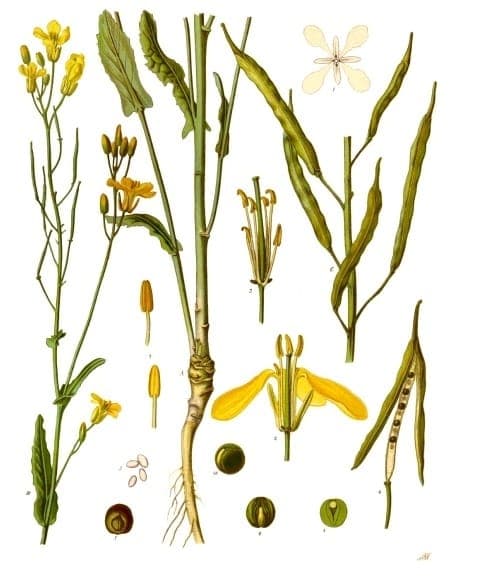
Walther Otto Müller / Public domain, via Wikimedia Commons
Rape: complete guide
Brassica napus
Want to see Rape: complete guide in your garden?
1 minute, no credit card
Overview
Rape, or Brassica napus, is a striking plant that's as functional as it is beautiful. Most people recognize it from vast yellow fields that blanket the countryside each spring. But beyond its photogenic appeal, rape serves multiple roles in the garden and on the farm. Part of the Brassicaceae family, it's grown for oil, as a green manure, or to support pollinators. For gardeners looking to add bold structure and seasonal color, it's a surprisingly versatile choice.
While often seen on a large scale, rape can work in home gardens too – if planned carefully. Its upright growth and vivid blooms make it ideal for back borders or as a temporary focal point. If you're unsure where to place it, gardenworld.app lets you design a layout that fits rape perfectly into your space, so you can visualise height, spread and seasonal impact before planting.
Appearance & bloom cycle
Rape stands 60 to 120 cm tall, with rigid, upright stems topped with clusters of bright yellow flowers. The blooms appear in tight racemes and open en masse from May to June, creating a sea of gold that's irresistible to bees and hoverflies. The bluish-green leaves are deeply lobed, slightly waxy, and form a rosette at the base before climbing the stem.
After flowering, long seed pods form – up to 8 cm in length. These mature by late summer and burst open to scatter seeds. If you're growing rape in a contained garden, consider deadheading before pods set to prevent unwanted self-seeding. Watching the full life cycle, from seedling to seed, is a rewarding experience for any hands-on gardener.
Ideal location
Rape thrives in full sun. Choose a spot that gets at least 6 to 8 hours of direct light daily. It struggles in shade, leading to weak, leggy growth and poor flowering. Good air circulation is essential – avoid tight corners or damp, stagnant areas where fungal issues like downy mildew can take hold.
It works well in open borders, cottage-style plantings, or as part of a crop rotation. Due to its height and density, don't overcrowd it with shorter perennials. Use it as a backdrop or seasonal centrepiece. Gardeners in USDA zones 7 to 9 will find it particularly well-suited. To experiment with placement, try gardenworld.app's drag-and-drop planner to test sightlines and spacing.
Soil requirements
Rape prefers well-drained loam or clay-loam with a pH between 6.0 and 7.2. It doesn't do well in waterlogged or compacted soils. Prepare the bed by digging in well-rotted compost or manure a few weeks before sowing. Avoid high-nitrogen fertilisers, as they promote lush foliage at the expense of flowering and can increase susceptibility to pests.
A simple soil test kit from garden centres can help you assess pH and nutrient levels. Correcting imbalances early leads to stronger, healthier plants. Raised beds work well if drainage is a concern.
Free design
Want to see Rape: complete guide in your garden? Make a free design now.
Watering
Once established, rape is fairly drought-tolerant. But seedlings and young plants need consistent moisture. Keep the soil evenly moist but never soggy. Water at the base to avoid wetting the foliage, which can encourage fungal diseases.
During dry spells in spring or early summer, a deep soak once a week is usually enough. A drip irrigation system or soaker hose helps deliver water efficiently. Avoid overhead watering, especially in the evening, to reduce disease risk.
Pruning
Rape requires minimal pruning. You won't need to shape it, but removing spent flower stalks before seeds form can help control spread. Cut back seed pods with clean, sharp shears just above a leaf node. Also remove any yellowing or diseased leaves to improve airflow and reduce pest pressure.
If using rape as a green manure, cut it down before flowering and dig it into the soil to enrich organic matter.
Maintenance calendar
January: Prepare soil, add compost. February: Test soil, order seeds. March: Sow directly or start indoors (depending on variety). April: Transplant seedlings, apply light fertiliser. May: Flowers begin, monitor for cabbage fly. June: Peak bloom, pollinators active. July: Seed pods form; consider cutting for green manure. August: Harvest seeds if desired. September: Clear plant debris if disease was present. October: Replenish soil with mulch. November: Plan next season's rotation. December: Rest period – no action needed.
Winter hardiness
Most rape varieties are hardy in USDA zones 7 to 9. Winter types can survive temperatures down to -10°C, while spring-sown types are typically grown as annuals. In colder zones, protect young plants with fleece or straw during hard frosts. Avoid planting in areas prone to frost pockets.
Companion plants
Rape grows well with aromatic herbs like thyme and rosemary, which deter aphids and cabbage root fly. Alliums such as garlic and chives also help repel pests. Avoid planting near other brassicas like cabbage or kale, as they share common diseases and pests.
In crop rotation, rape improves soil structure and suppresses weeds. Pair it with legumes in the following season to restore nitrogen.
Closing
Rape is more than just a field crop – it's a dynamic plant for the thoughtful gardener. Whether you're after pollinator support, soil improvement, or a burst of golden colour, it delivers. Just remember to give it space, sun, and a clear plan. Use tools like gardenworld.app to map out your design and avoid overcrowding. With the right care, rape can be a reliable, low-maintenance addition to your garden year after year.
Want to see Rape: complete guide in your garden? Make a free design now.
Upload a photo, pick a style, and get a photorealistic design with plant list in under a minute.
No credit card required


Similar plants
Brassica cretica: complete guide
Brassica cretica
Brassica cretica, the Cretan cabbage, grows wild on Aegean cliffs. Discover how to grow this drought-tolerant, yellow-flowered Mediterranean perennial.
Corsican cabbage: complete guide
Brassica insularis
Corsican cabbage is a rare Mediterranean rock cabbage with white flowers and blue-green leaves. Location, soil and winter protection.
Prostrate cabbage: complete guide
Brassica procumbens
Prostrate cabbage is a creeping North African cliff plant with yellow flowers. Discover location, soil type and winter protection.