
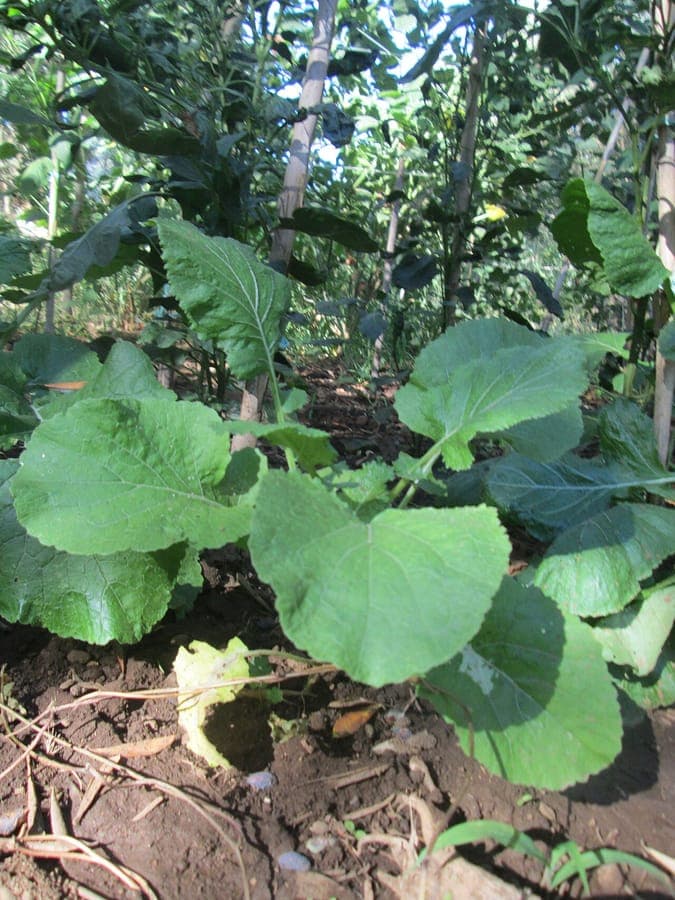
Sorelle Palmeri / Public domain, via Wikimedia Commons
Wild turnip: complete guide
Brassica fruticulosa
Want to see Wild turnip: complete guide in your garden?
1 minute, no credit card
Overview
Brassica fruticulosa, known as wild turnip, Mediterranean cabbage, or twiggy turnip, is a perennial woody crucifer (Brassicaceae) from the southern Mediterranean basin. Ranging from Spain through the Balkans and North Africa, this plant grows 50-150 centimeters tall, forming a dense, intricately branched shrub with grey-green, compound leaves. Bright yellow flowers (4 centimeters across) bloom March through June in dense racemes, followed by elongated siliques. Hardy in USDA zones 8-10, it excels in Mediterranean borders across southern Europe and the Mediterranean coast. This is a true hidden treasure for anyone wanting authentic Mediterranean charm with minimal water input. The plant naturally forms a very characteristic, natural form without formal pruning.
Appearance and Bloom
Brassica fruticulosa develops as a rugged, many-branched shrub with textured, grey-green leaves. Leaves are distinctly pinnatifid: lower leaflets small and rounded, upper leaflets much larger and linear-spoon-shaped. The plant reaches 50-150 centimeters depending on local growing conditions and water availability. In dry years it may be more compact; in wetter years taller. Bright yellow, 4-centimeter-wide flowers bloom in dense racemes from March through June in densely-packed sequences, followed by elongated siliques (5-8 centimeters). These pods remain on the plant for extended periods, providing additional visual interest throughout summer and autumn.
Ideal Location
Brassica fruticulosa demands full sun with at least eight hours of direct daily sunlight. The plant tolerates wind well and grows better in windy exposures than sheltered valleys. Place it along coastal borders, in Mediterranean borders, or in xeriscaped gardens where strong sun and air circulation are assured. Avoid low, shaded sites where the plant would languish. In protected garden situations it may occasionally grow weaker.
Soil
Ideal soil is well-draining, lightly alkaline, and of average fertility. Brassica fruticulosa tolerates salt and poor soils far better than rich, nitrogen-heavy ones. A pH of 7.0 to 8.5 is optimal. In gardens, improve heavy clay with coarse sand to a 30-centimeter depth. Excessive organic matter or nitrogen fertilizer promotes rank growth and weak structure. The plant actually prefers rather poor soils where other plants would struggle.
Free design
Want to see Wild turnip: complete guide in your garden? Make a free design now.
Watering
After establishment (3-4 weeks), severely restrict watering. During the growth phase (March-May), water moderately: allow the soil 5-10 centimeters deep to dry before rewatering. From June through August during summer drought, water infrequently. In autumn and winter, drastically reduce moisture. This plant tolerates drought far better than waterlogging and may survive most Mediterranean summers without supplemental irrigation. Excessive water is truly fatal to the plant.
Pruning and Shaping
Brassica fruticulosa benefits from annual pruning to maintain shape and compactness. In March, prune back to approximately two-thirds of previous year's growth, stimulating multi-branched, denser form. Remove dead, diseased, or crossing branches. After bloom (June), clip spent flower racemes to encourage neat appearance. No rigid formal shaping needed; natural shrub form is acceptable.
Maintenance Calendar
March: Growing season begins. Heavy pruning performed: cut back to two-thirds previous height. Apply moderate water. Prefer dry days. April-May: Bloom period. Abundant yellow flowers. Moderate watering. No fertilizer needed. Shrub displays full vigor. June: Bloom fades. Clip spent racemes. Begin strong water restriction. July-August: Complete dormancy. Withhold water except during extreme heat. Plant tolerates this readily. September-October: Prepare for winter. Light pruning of damaged branches. No water. November-February: Winter dormancy. No maintenance, no water. In cold zones monitor drainage.
Winter Hardiness
Winterhardiness in USDA zones 8-10 (minimum -5 to -15 degrees Celsius). In zone 8, it survives outdoors in well-drained soils. In zones 7 and colder, grow as a tender annual or cultivate in pots, moving to shelter. In severe zone 8 winters, protect with extra mulch around the base against extreme frost.
Companion Plants
Pair Brassica fruticulosa with other Mediterranean shrubs and plants: Cistus (rock roses) both loving full sun and dry soils; Lavandula (lavender) with purple-blue flowers contrasting beautifully; Rosmarinus (rosemary) with matching hardiness and water needs; Genista (dyer's broom) with dark yellow to orange flowers; Ruta (rue) with compact foliage offering textural play. Avoid moisture-lovers and invasive shrubs.
Closing
Brassica fruticulosa offers a rare, distinctive woody crucifer for Mediterranean gardens. With yellow spring flowers, robust drought-endurance, and twiggy growth habit, it is an underutilized secret of Mediterranean landscape design. For authentic, low-maintenance xeriscapes, Brassica fruticulosa is your special answer.
Want to see Wild turnip: complete guide in your garden? Make a free design now.
Upload a photo, pick a style, and get a photorealistic design with plant list in under a minute.
No credit card required


Similar plants
Brassica cretica: complete guide
Brassica cretica
Brassica cretica, the Cretan cabbage, grows wild on Aegean cliffs. Discover how to grow this drought-tolerant, yellow-flowered Mediterranean perennial.
Corsican cabbage: complete guide
Brassica insularis
Corsican cabbage is a rare Mediterranean rock cabbage with white flowers and blue-green leaves. Location, soil and winter protection.
Prostrate cabbage: complete guide
Brassica procumbens
Prostrate cabbage is a creeping North African cliff plant with yellow flowers. Discover location, soil type and winter protection.