
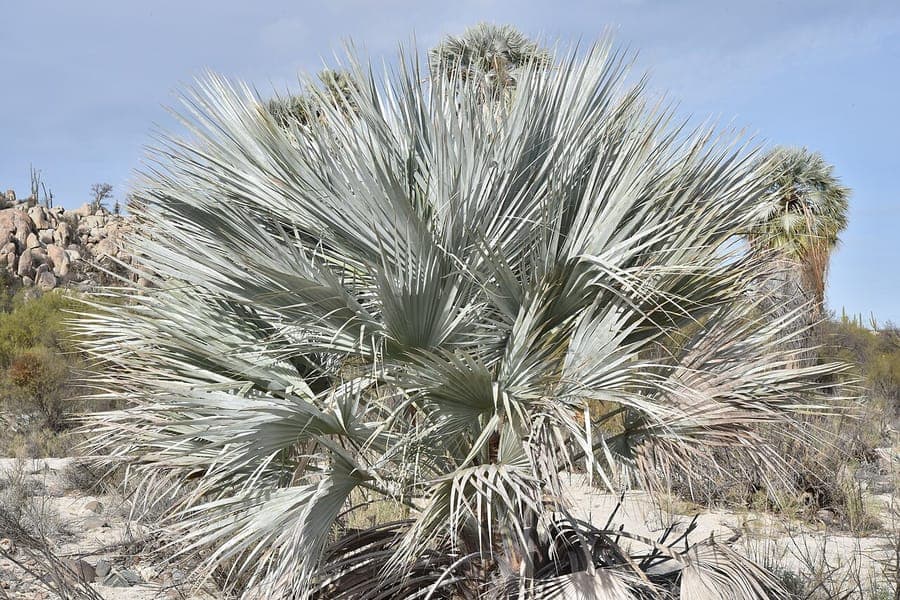
Alan Rockefeller / CC BY 4.0, via Wikimedia Commons
Brahea armata: complete guide
Brahea armata
Want to see Brahea armata: complete guide in your garden?
1 minute, no credit card
Overview
Brahea armata, commonly known as Mexican blue palm or blue fan palm, is a striking ornamental palm from the Arecaceae family. This species is celebrated for its distinctive silvery-blue, fan-shaped foliage that glimmers with an unusual iridescent quality. Native to the arid mountain regions of Baja California and Sonora, Mexico, Brahea armata thrives in drought-tolerant landscapes. With its elegant form and extraordinary blue-grey coloration, this palm creates a spectacular visual statement in water-wise gardens.
Appearance and Bloom
Brahea armata develops into a medium-sized palm, typically reaching 6-12 meters in its native habitat but remaining more compact in cultivation. The leaves are large, deeply lobed, fan-shaped (palmate), and showcase a remarkable powdery blue-grey coloration, especially vibrant on young plants. Individual fronds can reach 1.5 meters across. The flowers are small, cream to yellow, appearing in elegant, long inflorescences among the foliage. Fruits are dark brown drupes the size of berries. Flowering occurs from spring through early summer, followed by fruit development.
Ideal Location
Brahea armata thrives in full sun exposure. Plant it where it receives 6-8 hours of direct sunlight daily. Full sun promotes the most intense blue-grey coloration and strengthens the characteristic waxy coating. While the plant tolerates partial shade, foliage color becomes less vibrant. Provide wind protection, as the large fronds are susceptible to shredding in strong gusty conditions. In temperate zones, grow in containers that can be moved indoors during winter.
Soil
Brahea armata grows best in well-draining, sandy, and gravelly soil with slightly acidic to neutral pH. This palm is exceptionally drought-tolerant and even thrives in poor, infertile soils. Ensure soil drainage is excellent; waterlogging causes root rot rapidly. An ideal mix combines garden soil, coarse sand, and gravel in 1:2:1 ratio. For container cultivation, use specialized cactus/succulent potting mix amended with extra perlite.
Watering
Brahea armata is remarkably drought-tolerant once established. Water deeply at planting and regularly during the first season to ensure good establishment. After the first year, drastically reduce watering frequency. This palm thrives with minimal supplemental water in arid climates. Ensure water drains quickly and never allow soil to remain wet. In very hot periods, occasional deep watering may benefit container plants, but established landscape specimens rarely need supplemental irrigation.
Free design
Want to see Brahea armata: complete guide in your garden? Make a free design now.
Pruning
Minimal pruning is necessary. Gently remove dead or severely damaged fronds. Leave healthy fronds with brown tips intact; they eventually fall naturally, recycling nutrients back to the plant. Remove spent flower clusters after blooming ceases. For containerized palms in temperate zones, light spring pruning is acceptable, but avoid cutting palm trunks, as these species cannot regenerate from truncated stems.
Maintenance Calendar
Spring: Assess winter damage carefully. Begin feeding with slow-release, high-potassium palm fertilizer. Water new plantings regularly. Summer: Minimal watering required for established plants. Monitor for pest infestations (especially palm weevils). Ensure full sun exposure. Fall: Gradually reduce fertilizer applications. In cold regions, prepare for indoor relocation to heated spaces. Winter: In temperate zones, protect against frost with frost cloth or burlap wrapping. Minimal to no watering needed. Withhold fertilizer.
Winter Hardiness
Brahea armata is relatively cold-hardy for a palm, tolerating brief exposure to -5 to -10 degrees Celsius. In USDA zones 9-11, outdoor cultivation is feasible, though protection from surprise hard freezes is advisable. In colder zones (8 and below), this palm must be container-grown and moved indoors to heated greenhouse or conservatory space. Avoid prolonged exposure below -5 degrees Celsius.
Companion Plants
Brahea armata pairs beautifully with other drought-tolerant Mediterranean specimens:
- Agapanthus (blue flower heads, architectural)
- Lavandula (lavender, purple flowers, fragrant)
- Rosmarinus (rosemary, aromatic foliage)
- Yucca (structural plants, white flowers)
- Miscanthus (ornamental grasses, graceful movement)
These combinations create elegant, sustainable landscapes.
Closing Thoughts
Brahea armata is a statement plant for sunny, water-wise gardens. While moderately frost-sensitive in temperate climates, the beauty of its silvery-blue foliage justifies the effort. In cooler regions, container cultivation allows seasonal movement indoors. Once established, maintenance is minimal. Seek young palms from specialized palm nurseries or garden centers carrying exotic plants. Browse gardenworld.app for Mediterranean landscape design inspiration and drought-tolerant plant combinations. Discover gardenworld.app for guidance on integrating palms into front yard designs and xeriscape projects.
Want to see Brahea armata: complete guide in your garden? Make a free design now.
Upload a photo, pick a style, and get a photorealistic design with plant list in under a minute.
No credit card required


Similar plants
Needle palm: complete guide
Rhapidophyllum hystrix
Everything about the needle palm: the world's hardiest palm, suitable for gardens in temperate climates down to USDA zone 7b.
Saw palmetto: complete guide
Serenoa repens
A complete guide to saw palmetto (Serenoa repens), the iconic fan palm from Florida and the southeastern United States, prized for its toughness.
Puerto Rican hat palm: complete guide
Sabal causiarum
Grow Puerto Rican hat palm successfully. A majestic fan palm with tropical presence suited to sheltered Mediterranean-style gardens.