
Abalg / CC BY-SA 4.0, via Wikimedia Commons
Common moonwort: complete guide
Botrychium lunaria
Want to see Common moonwort: complete guide in your garden?
1 minute, no credit card
Overview
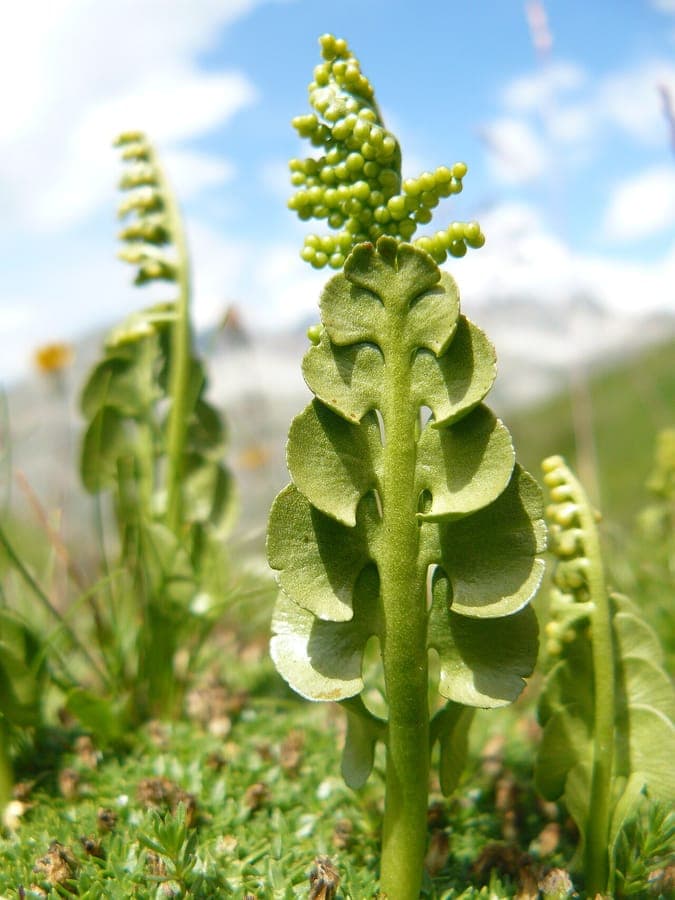
Common moonwort (Botrychium lunaria) is a subtle yet captivating fern that thrives in quiet, shaded corners of woodlands and heathlands. Native to a wide range of temperate regions, including parts of Alaska, Arizona, and across Europe, it's a rare sight in gardens due to its specific growing needs. Standing just 10–20 cm tall, it's not a showy plant, but its delicate, crescent-shaped fronds give it an almost mystical presence. If you're aiming for a naturalistic garden design, this fern can be a rewarding addition.
On gardenworld.app, you can create a custom woodland planting plan that integrates shade-loving species like moonwort with native ground covers and understory plants. This helps mimic its natural habitat and improves long-term success.
Appearance & bloom cycle
The fronds of Botrychium lunaria emerge in spring, typically from late April through May. Each plant produces a single, fleshy stem that splits into a sterile frond shaped like a half-moon – hence the name 'moonwort'. The sterile portion is light to silvery green, finely divided, and has a soft, velvety texture. Above it, a fertile stalk rises in June, bearing small, bead-like sporangia that release spores by late summer.
Unlike flowering plants, moonwort reproduces via spores, which can take several years to germinate and develop into mature plants. This slow lifecycle explains its scarcity and why it's rarely seen spreading aggressively.
Ideal location
Moonwort prefers dappled shade to full shade. A spot beneath deciduous trees like beech or maple, where sunlight filters through in spring before the canopy closes, is ideal. Avoid full sun, especially after 10 a.m., as it scorches the delicate fronds. An undisturbed, sheltered corner with minimal foot traffic works best.
For gardens in USDA zones 4–8, a north- or east-facing slope or woodland edge provides the right light balance. Use gardenworld.app to simulate seasonal light patterns and determine if your garden has suitable microclimates for shade-sensitive species.
Soil requirements
The soil should be well-draining yet moisture-retentive, rich in organic matter. A mix of loam, leaf mold, and fine sand works well. The pH should stay between 5.8 and 7.2 – slightly acidic to neutral. Avoid heavy clay or overly alkaline soils, which hinder root development.
This fern often grows in nutrient-poor, sandy-loam or gravelly soils in the wild. Adding a thin layer of natural leaf litter each spring helps maintain humidity and supports beneficial soil fungi crucial to its growth.
Free design
Want to see Common moonwort: complete guide in your garden? Make a free design now.
Watering
Consistent moisture is vital, especially from April through August. The soil should never dry out completely, but standing water must be avoided. Water lightly with rainwater when the top 2 cm of soil feels dry. During dry springs or early summers, supplemental watering every 2–3 days may be needed.
Do not use tap water if it's high in lime – it can raise the pH and damage sensitive roots. A soil moisture meter is a practical tool to prevent over- or under-watering.
Pruning
No pruning is required. The fronds naturally die back in autumn. Leave them in place over winter to protect the rhizome and decompose slowly, enriching the soil. In early March, gently remove any remaining debris if it looks unsightly, but avoid disturbing the soil around the base.
Maintenance calendar
- January–February: Dormant period. Check for waterlogging.
- March: Clear old fronds lightly. Add a thin layer of leaf mold.
- April–May: New fronds emerge. Monitor moisture daily.
- June–July: Fertile stalk develops. Avoid digging nearby.
- August: Spores mature. Begin reducing water.
- September–December: Plant retreats underground. Leave residue for winter protection.
Winter hardiness
Common moonwort is winter-hardy in USDA zones 4 to 8. In colder zones, a natural mulch of fallen leaves or pine needles helps insulate the soil against freeze-thaw cycles. Avoid heavy mulching, which can suffocate the rhizome.
Companion plants
Pair moonwort with other woodland species that don't compete aggressively. Good companions include Anemone nemorosa, Carex species, Tiarella cordifolia, and Heuchera. Avoid invasive ground covers like periwinkle or goutweed.
A well-balanced woodland planting supports biodiversity. On gardenworld.app, you can design a layered planting scheme that includes ferns, spring ephemerals, and shade-tolerant perennials for year-round interest.
Closing
Common moonwort isn't a garden staple, but for those who appreciate quiet beauty and ecological gardening, it's a gem. It won't dominate your borders, but it adds a touch of wild elegance to the right spot. Patience is key – this fern takes time to establish and may disappear for a season before returning.
Due to its rarity, it's not commonly found in standard garden centres. Check specialty nurseries or online suppliers. If available in the UK or US, it may be listed at select garden centres that focus on native or woodland plants. Always ensure it's nursery-propagated, not wild-collected. Sustainable gardening starts with informed choices – and gardenworld.app helps you make them wisely.
Want to see Common moonwort: complete guide in your garden? Make a free design now.
Upload a photo, pick a style, and get a photorealistic design with plant list in under a minute.
No credit card required


Similar plants
Azores Adderstongue: complete guide
Ophioglossum azoricum
Ophioglossum azoricum is a rare fern from Europe and Macaronesia. Learn how to cultivate this delicate, moisture-loving fern in shaded gardens.
Botrychium matricariifolium: complete guide
Botrychium matricariifolium
Master cultivation of daisy-leaf grape fern: habitat requirements, propagation challenges, and specialized forest garden care.
Northern moonwort: complete guide
Botrychium boreale
Northern moonwort (Botrychium boreale), also called boreal moonwort, is a rare fern from northern regions with distinctive moon-shaped leaflets. Discover cultivation and care tips.