
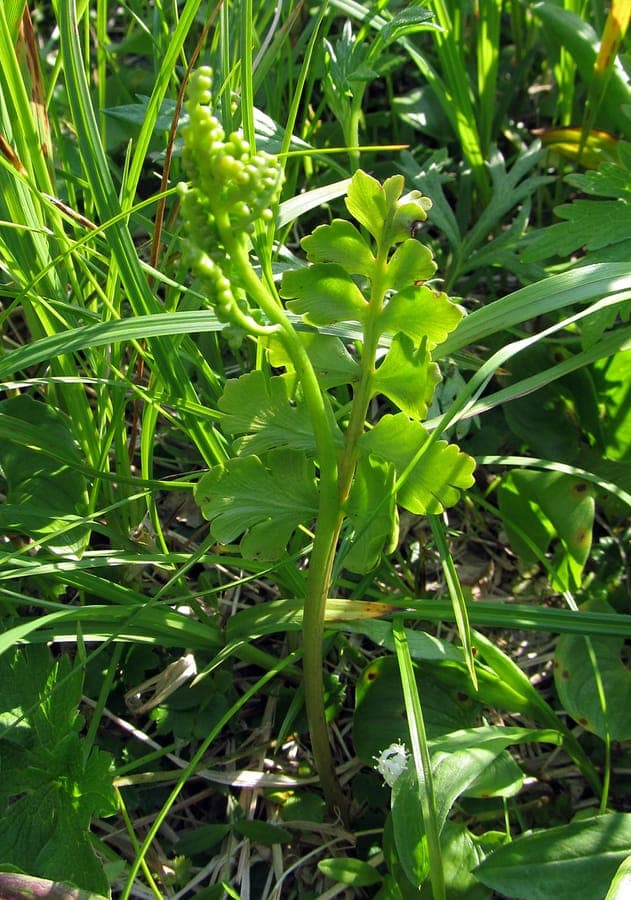
Копылов-Гуськов Ю. О. / CC BY 4.0, via Wikimedia Commons
Northern moonwort: complete guide
Botrychium boreale
Want to see Northern moonwort: complete guide in your garden?
1 minute, no credit card
Northern moonwort is a fascinating and extremely rare fern found in cool, moist forest areas of Europe, North America, and Asia. The plant belongs to the Ophioglossaceae family, an ancient lineage of ferns with origins dating back millions of years. It is known for its characteristic moon-shaped leaflets and has become increasingly difficult to locate in its native habitats due to habitat loss and over-collection. Conservation of wild populations is critical, making cultivation by horticulturists an important contribution to species preservation.
Overview and background Botrychium boreale is a small, delicate fern that occurs in cold, damp woodland habitats with undisturbed leaf litter and high humidity. The plant grows at high elevations in mountain regions and in northern lowland areas, particularly in boreal and subarctic zones. It is an extremely rare species deserving attention from plant collectors and nature enthusiasts interested in conservation. The genus Botrychium comprises small, primitive ferns that reproduce via spores and mycorrhizal associations with soil fungi. These ancient plants represent evolutionary relics from earlier geological periods and command respect for their resilience.
Appearance and growth characteristics The plant forms small, compound leaves with characteristic moon-shaped or kidney-shaped leaflets arranged alternately along the petiole. The leaves grow low to the ground and rarely exceed 15-20 centimeters in height, often much shorter in cultivation. The sterile and fertile leaves are distinctly separated, with the fertile frond extending beyond the sterile portion, a characteristic feature of Botrychium species. The plant has a delicate, fine texture that is highly decorative despite its diminutive size. Fronds emerge in spring and senesce in late summer, leaving the plant dormant underground for much of the year. The entire plant is small enough to fit in the palm of the hand.
Ideal location and site selection Northern moonwort grows best in full to partial shade with protection from direct sun and wind. The plant prefers shelter from established trees and natural woodland growth. A location beneath deciduous trees with substantial leaf litter and natural moisture is ideal. North-facing positions in gardens protect the plant from excessive sunlight and drying winds. In natural settings, these ferns occur where woodland canopy prevents temperature and moisture fluctuations. Recreating these stable conditions is essential for long-term success in cultivation.
Soil requirements and preparation The plant prefers moist, well-draining forest soil rich in organic matter and possessing abundant fungal communities. Optimal pH ranges from 5.5 to 6.5, reflecting the acidic soils of boreal and temperate forests. Adding generous amounts of peat or leaf mold is essential for success, as these amendments provide both moisture retention and fungal inoculants necessary for the plant's mycorrhizal relationships. Create a planting medium composed of 60% peat moss, 30% coarse bark, and 10% sand to simulate forest floor conditions. The plant's ability to survive depends heavily on these fungal associations, which may not be available in conventional garden soils.
Watering and moisture management Keep soil consistently moist but not waterlogged, as waterlogging kills both plant roots and beneficial fungi. In nature, the plant grows in mountain regions with fog and regular precipitation maintaining constant moisture without saturation. Simulate this by misting regularly, particularly during the active growing season from April through July. Misting several times weekly provides humidity while allowing soil surface drying between applications. In containers, ensure excellent drainage with raised beds or specialized orchid potting mixes adapted to these requirements. Rainwater is preferable to tap water for misting, as it lacks chemical additives.
Pruning and maintenance Botrychium boreale requires no active pruning. Dead or brown fronds can be carefully removed by hand after senescence in late summer. Never cut into living green tissue, as the plant lacks the ability to regenerate from damaged fronds. Allow fallen fronds to remain on the soil surface as they decompose and contribute to fungal habitat development. Maintain undisturbed conditions around the plant; compacted or disturbed soil damages the mycorrhizal network essential for survival.
Maintenance calendar and seasonal care April-May: Growing period; regular watering and misting three times weekly; monitor for emerging fronds June-July: Continued growth; water during dry spells; maintain consistent humidity; avoid fertilizing August-September: Leaf senescence and dormancy; apply leaf mold mulch; reduce watering frequency October-February: Winter dormancy; minimal care; check occasionally that soil isn't excessively dry March-April: Preparation for growth; increase misting frequency; clear debris from dormant plants
Winter hardiness and cold tolerance Northern moonwort is very hardy and tolerates temperatures well below -20 degrees Celsius without issue. In all parts of central Europe, this plant can grow outdoors year-round. In containers, overwinter in unheated frames or protected locations to prevent soil freezing. In-ground plantings require no winter protection; the dormant plant can withstand harsh conditions that would destroy active growth. Interestingly, the plant may require cold periods to trigger proper dormancy and subsequent spring emergence.
Companion plants and garden combinations Good combinations include Polystichum setiferum (soft shield fern) for textural contrast, Hedera helix (ivy) for ground-level coverage, Ajuga reptans (bugle) for low color, Geranium robertianum (herb-robert) for delicate flowers, and moss plants to create naturalistic forest floor conditions. Avoid aggressive spreaders that might compete for resources or disturb soil conditions. Slow-growing woodland plants like Asarum and Hepatica make compatible neighbors.
Propagation and spore cultivation Botrychium boreale reproduces only via spores, making propagation extremely challenging. Spore collection requires mature sporangia at the proper developmental stage. Spore germination requires extremely specific conditions including cool temperatures, high humidity, and established fungal associations. Most successful propagations occur through spore sowing directly onto living sphagnum moss in terrarium conditions. This is a project for experienced fern enthusiasts only, as success rates remain very low.
Closing remarks Northern moonwort is a rare and prized plant for shade gardens and woodland plantings, though demanding cultivation requirements make it suitable only for dedicated enthusiasts. With suitable, moist forest soil and protection from disturbance, this plant will persist for years. This is truly a plant for specialists; general availability is extremely limited. Sourcing plants should prioritize nursery-propagated specimens rather than wild-collected material. For more information on rare fern cultivation and woodland gardening, visit gardenworld.app.
Want to see Northern moonwort: complete guide in your garden? Make a free design now.
Upload a photo, pick a style, and get a photorealistic design with plant list in under a minute.
10,000+ gardens designed already
No credit card required


Similar plants
Azores Adderstongue: complete guide
Ophioglossum azoricum
Ophioglossum azoricum is a rare fern from Europe and Macaronesia. Learn how to cultivate this delicate, moisture-loving fern in shaded gardens.
Botrychium matricariifolium: complete guide
Botrychium matricariifolium
Master cultivation of daisy-leaf grape fern: habitat requirements, propagation challenges, and specialized forest garden care.
Botrychium virginianum: complete guide
Botrychium virginianum
Discover the enchanting grape fern, a rare botanical gem with unique bifid structure and spore clusters. Perfect for shade gardeners and collectors.