
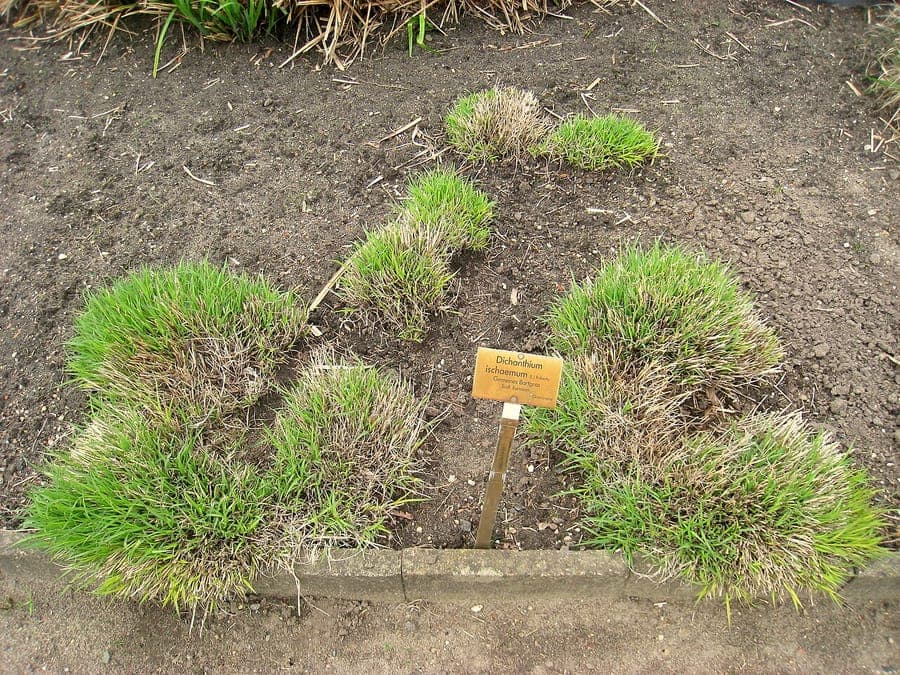
Daderot / Public domain, via Wikimedia Commons
Yellow bluestem: complete guide
Bothriochloa ischaemum
Want to see Yellow bluestem: complete guide in your garden?
1 minute, no credit card
Overview
Yellow bluestem, or Bothriochloa ischaemum, is a clump-forming perennial grass in the Poaceae family, native to parts of Eurasia and North Africa. While not as flashy as pampas grass, it brings a quiet elegance to naturalistic plantings. It's particularly useful in dry, challenging spots where other grasses might struggle. In the UK and US, it's gaining attention among gardeners who value structure, resilience, and low input.
This grass spreads slowly via rhizomes, forming loose tussocks over time. It's not invasive, but it does need space to breathe. On gardenworld.app, you'll find design templates that use yellow bluestem to anchor dry borders or soften the edges of gravel gardens.
Appearance & bloom cycle
Yellow bluestem grows 60–90 cm tall, with narrow, blue-green leaves about 30–40 cm long and 5 mm wide. The foliage has a slight silvery underside, which catches the light beautifully. From August to October, airy, golden-brown panicles appear, giving the plant its common name. These seed heads persist into winter, adding movement and texture when other plants have faded.
Growth kicks off in May, with full density by July. The bloom period peaks in September, and the dried stems remain upright through winter, especially in zones 6 and above. In early spring, you'll see new green shoots emerging from the base while last year's growth stands tall.
Ideal location
Full sun is non-negotiable-aim for 6+ hours of direct light daily. Yellow bluestem struggles in shade and will flop over if it doesn't get enough sun. It thrives in open, exposed spots with good airflow, making it ideal for south- or west-facing borders, slopes, or roadside plantings.
Avoid heavy shade or areas crowded by taller perennials. It needs room to develop its airy structure. On gardenworld.app, you can simulate how this grass fits into your sun map and spacing layout before planting.
Soil requirements
This grass isn't fussy about soil type, as long as drainage is sharp. Sandy, gravelly, or shallow rocky soils are perfect. Avoid heavy clay that stays waterlogged in winter-this leads to crown rot. A pH between 5.5 and 7.5 works well, though it tolerates slightly alkaline conditions.
If your soil is too rich, the plant may grow too lush and fall over. Amend heavy soils with grit or sand. When planting, keep the crown level with the soil surface. Plant in spring (April–May) or early autumn (September–October) to allow root establishment before extreme weather.
Free design
Want to see Yellow bluestem: complete guide in your garden? Make a free design now.
Watering
Once established, yellow bluestem is highly drought-tolerant. Water young plants weekly during their first growing season, especially in dry spells. Give 3–5 gallons per plant, soaking the root zone deeply but infrequently.
From year two onward, rainfall is usually sufficient. Overhead watering should be avoided-wet foliage increases fungal risk. This grass can survive 3–4 weeks without rain in summer. Deep, infrequent watering encourages strong root development.
Pruning
Cut back in late winter or early spring, between February and March. Leave the old growth through winter-it adds visual interest and shelters beneficial insects. Trim to about 6 inches (15 cm) above ground using sharp shears or hedge trimmers.
Wear gloves-the leaf edges can be sharp. Don't worry about removing every old stem; a light cleanup is enough. You can compost the cuttings or use them as mulch around the base to suppress weeds.
Maintenance calendar
- Jan: minimal activity, leave old growth standing
- Feb: begin cutting back if no hard frosts are expected
- Mar: finish pruning, check for new growth
- Apr: plant new plugs or divisions, monitor for weeds
- May: active growth starts, water young plants
- Jun: dense foliage develops, ensure full sun exposure
- Jul: little maintenance, avoid overwatering
- Aug: first flower heads appear
- Sep: peak bloom, enjoy golden panicles
- Oct: seed heads mature, leave for winter texture
- Nov: structure remains, avoid mulching heavily
- Dec: winter presence, no action needed
Winter hardiness
Hardy in USDA zones 5–9. In zone 5, it may die back completely but regrows in spring. In zones 6–9, it often remains semi-evergreen. It tolerates winter lows down to -20°C (-4°F). No winter protection is needed, though in wet climates, ensure the crown stays dry.
Snow cover actually helps insulate the plant. The upright stems trap snow, preventing soil erosion and adding seasonal interest.
Companion plants
Pair yellow bluestem with other drought-tolerant plants like little bluestem (Schizachyrium scoparium), purple coneflower (Echinacea purpurea), or yarrow (Achillea millefolium). It also works well with sedums, sage (Salvia officinalis), and ornamental oregano.
Avoid aggressive spreaders or heavy feeders that might overwhelm it. The grass looks best when given space to sway in the breeze. On gardenworld.app, try virtual pairings to see how it complements your existing plants.
Closing
Yellow bluestem isn't a showstopper, but it's a reliable workhorse. It asks for little and gives back with texture, movement, and year-round presence. Perfect for gravel gardens, dry slopes, or low-maintenance landscapes. Plant it where you want structure without fuss. You'll find starter plants at garden centres across the UK and US, often in the ornamental grass section. Look for local growers or specialty nurseries that stock native grasses.
Want to see Yellow bluestem: complete guide in your garden? Make a free design now.
Upload a photo, pick a style, and get a photorealistic design with plant list in under a minute.
No credit card required


Similar plants
Sporobolus pungens: complete guide
Sporobolus pungens
Sporobolus pungens is a stoloniferous Mediterranean coastal grass with outstanding salt and drought tolerance, perfect for seaside and dry gardens.
Mediterranean aegilops: complete guide
Aegilops biuncialis
Everything about Aegilops biuncialis, a Mediterranean annual grass with ornamental spikes and outstanding drought tolerance for dry gardens.
Silver bluestem: complete guide
Bothriochloa saccharoides
Full guide to Bothriochloa saccharoides (silver bluestem): site, soil, watering, winter hardiness, pruning, and garden companions.