
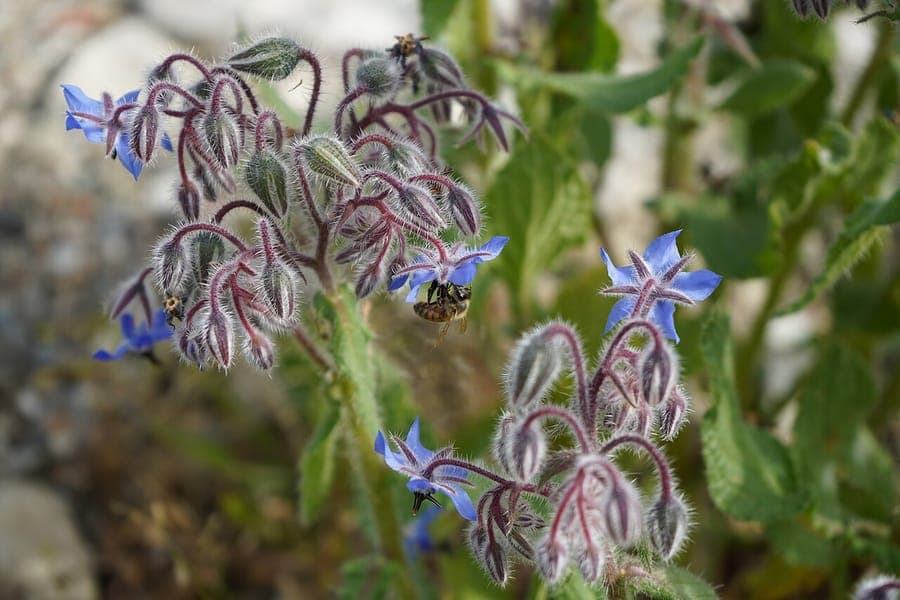
Christian Orlandi / CC BY-SA 4.0, via Wikimedia Commons
Breadbutter: complete guide
Borago officinalis
Want to see Breadbutter: complete guide in your garden?
1 minute, no credit card
Overview
Breadbutter, or Borago officinalis, is an annual herb that's earned its place in kitchen gardens and cottage-style borders across the UK and North America. Native to the Mediterranean basin-including parts of southern France, Italy, and Morocco-this rugged plant thrives in warm, open spaces and brings both beauty and utility to the garden. Often sold under the name 'Borage' at garden centres, it's known for its cucumber-like scent and vibrant blue flowers that buzz with bees from late spring through early autumn.
What sets Breadbutter apart is its dual role: it's both ornamental and edible. The young leaves can be chopped into salads or blended into herb butters, while the flowers are a stunning, mildly sweet garnish for drinks and desserts. Just be cautious with older foliage-it develops stiff hairs that can irritate the skin. Harvest early and often for the best flavour and texture.
On gardenworld.app, you can design a pollinator-rich garden layout where Breadbutter plays a starring role among other bee-friendly plants.
Appearance & bloom cycle
Breadbutter grows upright, reaching 45 to 60 cm in height, with sprawling, bristly stems and soft green leaves covered in fine hairs. The flowers emerge from spring through September, peaking in June and July. They start as pink buds before unfurling into five-pointed, star-shaped blooms in a brilliant cobalt blue-occasionally white. Each flower cluster droops slightly, adding a graceful, informal charm to borders.
Deadheading isn't essential, but regular harvesting of flowers encourages bushier growth and prolongs blooming. Leave a few flowers to go to seed if you want volunteer plants next year, though self-seeding is unreliable in colder zones.
Ideal location
This plant prefers full sun to light shade, scoring a 7 out of 10 for light needs. In USDA zones 3–10, aim for at least 6 hours of direct sunlight daily. Too much shade leads to leggy growth and fewer flowers. Breadbutter does well in cottage gardens, vegetable plots, or large containers on sunny patios. Avoid overcrowding-give each plant about 30 cm of space to spread naturally.
It combines beautifully with tomatoes, strawberries, and zinnias. On gardenworld.app, you can simulate different planting combinations to see how Breadbutter fits into your seasonal garden flow.
Soil requirements
Breadbutter isn't fussy about soil, as long as it's well-drained with a pH between 6.5 and 7.0. It tolerates poor to moderately fertile soils, but avoid overly rich mixes-they promote leafy growth at the expense of flowers. Heavy clay should be amended with grit or compost to improve drainage. Soggy soil leads to root rot, so raised beds or mounded rows help in wet climates.
Skip heavy fertilisers. A light top-dressing of compost in spring is sufficient to get it started.
Free design
Want to see Breadbutter: complete guide in your garden? Make a free design now.
Watering
Water young plants regularly until established. Once rooted, Breadbutter is fairly drought-tolerant. Water deeply once or twice a week during dry spells, letting the top inch of soil dry between sessions. Avoid wetting the foliage to prevent mildew. In pots, check moisture daily in summer-containers dry out fast.
Pruning
Pinch back the tips early to encourage branching and a fuller shape. Harvest stems and flowers frequently to keep the plant productive. Cut back leggy growth by one-third in midsummer to renew vigour. Use pruned stems in cooking or compost them.
Maintenance calendar
- Jan: Plan seeds; order from garden centres
- Feb: Start seeds indoors at 18–21°C
- Mar: Transplant seedlings to larger pots; harden off by month's end
- Apr: Plant out after last frost; protect from slugs
- May: Begin regular flowering; water as needed
- Jun: Peak bloom; harvest flowers weekly
- Jul: Continue harvesting; watch for aphids
- Aug: Optional re-sow for fall blooms
- Sep: Allow some flowers to seed; collect dry capsules
- Oct: Remove spent plants; compost
- Nov: Prepare beds for next season
- Dec: Review garden notes
Winter hardiness
Breadbutter is a true annual and not frost-hardy. It dies back completely in winter, even in mild zones. While it may self-seed in sheltered spots, don't count on it returning reliably. Re-sow fresh seeds each spring for guaranteed results.
Companion plants
Breadbutter is a fantastic companion for tomatoes, squash, and strawberries. It attracts beneficial insects like hoverflies and parasitic wasps that control aphids. Plant it near roses to boost pollination. Avoid pairing with moisture-loving herbs like basil or mint, as their needs don't align.
Combine with calendula, yarrow, and dill for a high-impact pollinator patch. On gardenworld.app, you can visualise these plant partnerships and plan your layout digitally before planting.
Closing
Breadbutter is a no-fuss, high-reward plant that adds colour, flavour, and ecological value to any garden. It's perfect for beginners and seasoned growers alike. Whether you're harvesting flowers for cocktails or watching bees dance from bloom to bloom, this plant delivers joy with minimal effort. Start with a packet of seeds in early spring, and let it shine all summer. And when you're ready to expand your planting scheme, gardenworld.app offers smart garden design tools to help you make the most of every square foot.
Want to see Breadbutter: complete guide in your garden? Make a free design now.
Upload a photo, pick a style, and get a photorealistic design with plant list in under a minute.
No credit card required


Similar plants
Western waterleaf: complete guide
Hydrophyllum occidentale
Full growing guide for western waterleaf (Hydrophyllum occidentale): shade tolerance, soil needs, watering, winter hardiness and naturalistic garden use.
Limestone phacelia (Phacelia affinis): complete guide
Phacelia affinis
Full guide to Phacelia affinis, the limestone phacelia: sowing tips, purple-blue bee flowers, drought tolerance and uses in dry or wildlife gardens.
Pyrenean viper's bugloss: complete guide
Echium asperrimum
Echium asperrimum is a striking biennial from the western Mediterranean with rough bristly stems and vivid blue flowers. A magnet for bees and a bold border plant.