
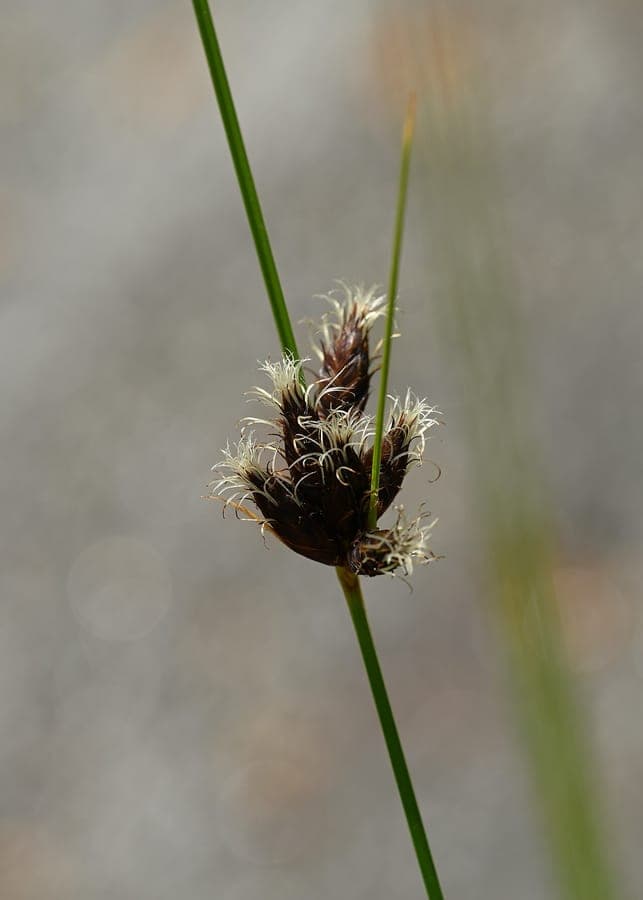
Krzysztof Ziarnek, Kenraiz / CC BY-SA 4.0, via Wikimedia Commons
Bolboschoenus glaucus: complete guide
Bolboschoenus glaucus
Want to see Bolboschoenus glaucus: complete guide in your garden?
1 minute, no credit card
Overview
Bolboschoenus glaucus, known as tuberous bulrush or glaucous scirpus, is a wetland sedge native to the Mediterranean and distributed across Africa and Asia. This member of the Cyperaceae family reaches 30-80 cm tall and plays crucial roles in aquatic ecosystems. It is ideal for marshland conditions and water retention areas.
Appearance and bloom
The plant displays typical grass-like appearance with stiff, upright leaves that are blue-green. The stem tops bear small, inconspicuous brown flowers in spikes. The plant produces underground tubers that aid reproduction and nutrient storage. During growth, it forms dense vegetative mats.
Ideal location
Select locations along waterbanks, in shallow water, or permanent wetlands. Bolboschoenus glaucus tolerates still and slow-moving water. The plant grows well in sunny to partially shaded locations. Four to six hours of sunlight daily is sufficient.
Soil
This species thrives in wet, nutrient-rich soils. Clay and silt soils are ideal. The plant tolerates saltwater reasonably well and grows in brackish conditions too. Organic matter in the soil promotes growth.
Free design
Want to see Bolboschoenus glaucus: complete guide in your garden? Make a free design now.
Watering
Water is essential - this species lives in water. Plant it in shallow water tables or directly in wetland environments. Ensure roots remain permanently moist. This plant requires water to thrive.
Pruning
Pruning is not needed. Leave dead leaves and dried shoots in water until new growth begins in spring. The plant can become rampant, so regular monitoring is beneficial.
Maintenance calendar
May: Growth begins. July: Monitor water quality. August: Flowers appear. October: Seed heads form. November: Plant expands. December: Rest.
Winter hardiness
Bolboschoenus glaucus is fairly hardy to about -5 degrees Celsius in sheltered water tables. In very cold areas, the plant can survive under the water surface.
Companion plants
Pair with other aquatic plants like Phragmites australis, Typha latifolia, and various water lilies. These combinations create layered ecosystems supporting abundant fauna, from waterfowl to amphibians.
Closing thoughts
Bolboschoenus glaucus is an tireless waterbank plant offering undeniable ecological benefits. With its nutrient-filtering and habitat-forming capacity, it is a smart choice for wetland projects.
Want to see Bolboschoenus glaucus: complete guide in your garden? Make a free design now.
Upload a photo, pick a style, and get a photorealistic design with plant list in under a minute.
No credit card required


Similar plants
Flat-stemmed club-rush: complete guide
Bolboschoenus planiculmis
Everything about Bolboschoenus planiculmis: growing conditions, watering, care, and use as a pond margin or wetland plant in garden design.
Great Plains flatsedge: complete guide
Cyperus lupulinus
Everything about Great Plains flatsedge (Cyperus lupulinus): growing conditions, care, garden uses, and ecological value. Tips for pond margins and dry sandy soils.
Golden beak sedge: complete guide
Rhynchospora corymbosa
Everything about golden beak sedge (Rhynchospora corymbosa): a dramatic tropical marginal for pond edges, bog gardens, and wet habitats.