
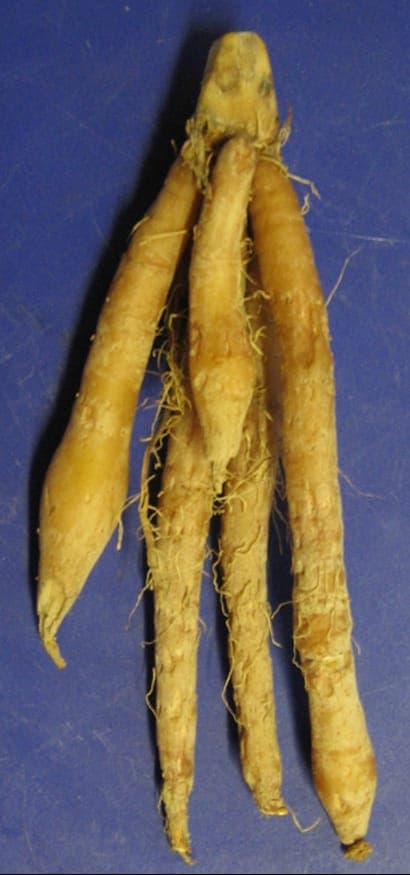
Kembangraps / Public domain, via Wikimedia Commons
Chinese-keys: complete guide
Boesenbergia rotunda
Want to see Chinese-keys: complete guide in your garden?
1 minute, no credit card
Overview
Chinese-keys (Boesenbergia rotunda), also called Temu kunci (Malay) or Chinese Ginger, is a fascinating plant from the Zingiberaceae family (ginger family). Native to tropical Asia (from Assam through South Yunnan in China and Malesia), it is a true exotic for warm climates.
This plant is grown for its unique, finger-like underground rhizomes used in traditional Asian cuisine and medicine. Also decoratively attractive with beautiful green leaves.
Appearance and bloom
Chinese-keys typically reaches 30-50 cm tall with large, elliptic, glossy green leaves (up to 30 cm long). The plant forms dense clusters of leaf stems from underground rhizomes (horizontal root systems).
Flowers are small, white-red and appear at the base of leaf stems in May-June, but are not particularly showy. Most distinctive are the underground rhizomes with a highly unusual finger-like shape, appearing like a whole handful of tiny, round ginger pieces.
Ideal location
This plant thrives best in partial to dappled shade. In warm, humid climates it can tolerate full sun, but protection from intense midday sun is preferred. Plant in a sheltered spot away from strong wind.
In temperate climates, this plant grows best in containers you can move or in warm gardens behind walls or under eaves where heat is reflected.
Soil
Chinese-keys loves well-draining, humus-rich soil with pH 5.5-7.0. Work in compost or leaf mould for extra organic matter. The plant also grows well in container potting mix.
Ensure the soil never stagnates or is waterlogged. Adding perlite or gravel helps drainage. The plant thrives in moist, but not waterlogged conditions.
Free design
Want to see Chinese-keys: complete guide in your garden? Make a free design now.
Watering
This plant loves consistently moist soil during the growing season (May-September). Water regularly so the soil feels like a wrung-out sponge - moist but not drenched.
In winter, as growth slows, reduce watering. Let soil dry out somewhat but never completely. Check regularly and adjust to your climate.
Pruning
Pruning is not strictly necessary, but you can remove yellowed or damaged leaves to keep the plant tidy. Dead leaf stems at the base can be cut away.
At season's end (October) you can gently remove dead or weakened growth. Leave foliage to feed the rhizomes with nutrients.
Maintenance calendar
May: Start of growing season, regular watering, light feeding possible. June-July: Peak growth time, monitor moisture. August-September: Growth continues, water remains important. October-April: Growth slows, reduce water drastically, no feeding, winter rest.
Winter hardiness
Chinese-keys is a tropical plant and not winter-hardy outside USDA zones 10-11. In temperate zones (8-9) you can overwinter the plant in a warm indoors and set it outside in summer.
In cold climates (zone 7 and colder) you must dig the rhizomes and store them in cool, dry conditions (5-10 degrees Celsius) during winter. This is essential for survival.
Companion plants
Chinese-keys grows well with other tropical or moisture-loving plants in containers: ginger, turmeric, Thai basil and other Asian herbs. In gardens it combines nicely with large tropical foliage plants.
Avoid windy spots and do not plant near strong competitors.
Closing
Chinese-keys is a unique, exotic plant interesting to grow in warmer climates or in containers. It combines beauty with utility (you can harvest the rhizomes for culinary use). Source plant material from tropical plant suppliers or online. For more information on growing tropical crops in temperate climates, visit gardenworld.app. Good luck growing this fascinating ginger family plant!
Want to see Chinese-keys: complete guide in your garden? Make a free design now.
Upload a photo, pick a style, and get a photorealistic design with plant list in under a minute.
No credit card required


Similar plants
Etlingera elatior: complete guide
Etlingera elatior
Grow this exotic Torch Ginger indoors. Expert tips on warm conditions, humid soil, and care for spectacular blooms.
Indian crocus: complete guide
Kaempferia rotunda
Indian crocus offers purple flowers and tropical atmosphere. Discover how to successfully grow this fascinating bulbous plant in cooler climates.
Zingiber zerumbet: complete guide
Zingiber zerumbet
Discover Shampoo ginger (Zingiber zerumbet) - a tropical ornamental plant with spectacular flowers and exotic allure. Perfect addition to refined front garden designs.